Teaching your child through inspired learning

by Mary Ann on October 12, 2010

Open a Door and Invite a Child to Walk Through

The best way to teach your child effectively is through inspired learning. Inspired learning happens when a child  learns or asks questions by themselves because of their interest in the subject and not because of any compulsion.
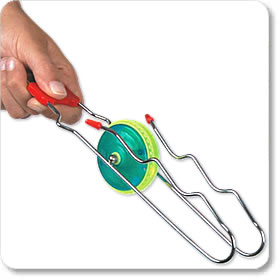
gyroscope pictureWhen I was a young girl one of the things we received each year for many Christmases was a gyroscope. We never got tired of getting them because they were so fascinating to play with.

The first couple of times that I received this particular toy for Christmas I only wanted to play with it. I would pick it up and observe how it worked for long periods of time.

At about 9-10 I began wondering why it did what it did  why it seemed to defy gravity ora gyroscope what use was it outside of a child’s toy. Maybe I asked my mom who would have replied “I don’t know”. I possibly asked my dad who would have said, “It’s too hard to explain”.

No one ever opened a door for me to walk through. I was ready to move on and engage with greater knowledge. I wanted to understand this amazing instrument. I was open to finding out how it was used beyond fascinating a child for a few weeks. It was my parent’s opportunity to inspire me and allow me to choose to engage in learning.

Creating an inspiring environment and responding to a child’s sparks was something that was foreign to my parents both for the times and their own family upbringing. In our family children did their thing, parents did theirs and learning was a “school” thing.

Yesterday I talked about the importance of play, of taking the hand of a child and walking along with them, opening a door and letting the child choose to walk through to greater learning. We need to walk with our children, not drag them around to fulfill our need that they learn. We need to open doors and invite children to enter, not try to push them through. It will help us to see play with new eyes!
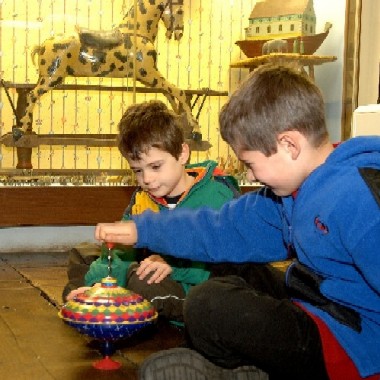
kids playing with toys

In a series of articles I walked you through the steps of finding an idea you wanted to teach your child or responding to a Spark, by researching the information, getting your materials ready and then implementing the learning by using The Spark Station. This is important to effectively and efficiently use your time and to inspire children to love learning.
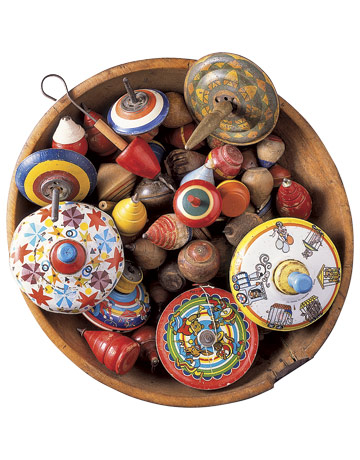
 varieties of gyroscopesI remind you of this because I want to use that pattern today to show you how to take an isolated item from the list of possible Spark Station materials and then link that to inspired learning. Because of that past pleasant memory of the gyroscope and because I am still interested in why they work I picked it from the list of possible Spark Station contents to demonstrate.

If you put a gyroscope in your Spark Station and your child plays with it that is wonderful. At some later time that same child might ask you the same types of questions that I asked. How could you open the door and invite them, inspire them, to learn more?

I spent about 15 minutes on the computer doing some research. I started with one site which had links to all that I needed. http://www.howstuffworks.com/gyroscope.htm

This site showed:

Introduction to how gyroscopes worked

Precession

The cause of precession

Uses of gyroscopes

Lots more information

In the body of the article I found that bicycles and space shuttles  use gyroscopes.  An airplane  uses about a dozen gyroscopes inhubble-above-earth-telescope-pictureeverything from its compass  to its autopilot. The Russian Mir space station uses 11 gyroscopes to keep its orientation to the sun , and the Hubble Space Telescope  has a batch of navigational gyros as well. Gyroscopic effects are also central to things like yo-yos, Frisbees and boomerangs! Each topic had a link to more information. There was also a link to an activity on how to make a bycicle wheel gyroscope (scroll down to 1.3)

That was interesting because I had seen a video on the site showing how a bicycle wheel gyroscope works. Children would be able to see how it works and then make one.

On my library list I would add books about bicycles, airplanes, the Hubble, and anything else I could find about gyroscopes.

When I look at the list of possible Spark Station contents, think of something I want to share with my children or catch a “spark”, I want to be prepared to respond. It doesn’t matter if we are talking about magnets, gyroscopes or slime. I want to know how to open the door of learning for them and invite them to enter. Maybe they will walk through!

Possibly Related Posts:


{ 1 comment }

Children and the Power of Play

Parent’s and children’s brains don’t work the same. That statement won’t surprise any parent. Here is a story you will all relate to. Ted age two hits Sally age 9 months. Sally begins to cry. You hear Sally and come running because lately Ted has been hitting her more often. Hitting his sister is not ok and you feel very angry. You grab Ted by the shoulders hard, sit him in a chair, and for the 50th time yell at him that it’s not ok to hit his sister. Of course, Ted begins to cry.

In your mind it’s obvious that your grabbing and yelling are connected to Ted hitting his sister. You are wondering why Ted isn’t getting the lesson yet. You are angry and want this behavior to stop. That’s the message you are intending to send, right?  It might not be the best method, but it’s a reasonable message.

This is how Ted’s brain works, “Mommy’s angry so she yells and hurts me.” Despite your well intended message, the message Ted’s brain gets is that we yell and strike out when we’re angry. Unfortunately, there’s no connection between your yelling and the hitting of Sally, although in our minds it should be obvious.

My point with this example is not to discuss discipline issues, but to simply show that children’s minds don’t process or see the same as our adult minds do.

This is especially true in the arena of learning. Children and adult brains see or process learning differently.

Bottom line, children learn through play, play that may look to adults like meaningless, directionless, frivolous time-wasting.

“Many scientists believe play is hard-wired; a central part of neurological growth and development — one important way that children build complex, skilled, responsive, socially adept and cognitively flexible brains. NYT:Taking Play Seriously 2/17/08

Psychiatrist Stuart Brown, president of the National Institute for Play created in 1996 said “If you look at what produces learning and memory and well-being, play is as fundamental as any other aspect of life, including sleep and dreams.” NYT:Taking Play Seriously 2/17/08

“Parents bobble between a nostalgia-infused yearning for their children to play and fear that time spent playing is time lost to more practical pursuits. Alarming headlines about U.S. students falling behind other countries in science and math, combined with the ever-more-intense competition to get kids into college, make parents rush to sign up their children for piano lessons and test-prep courses instead of just leaving them to improvise on their own; playtime versus résumé building.” NYT:Taking Play Seriously 2/17/08

Decades of research has shown that play is crucial to physical, intellectual, and social-emotional development at all ages. This is especially true of the purest form of play: the unstructured, self-motivated, imaginative, independent kind, where children initiate their own games and even invent their own rules.

“Play is motivated by plea sure. It is instinctive and part of the maturational process. We cannot prevent children from self-initiated play; they will engage in it when ever they can. The problem is that we have curtailed the time and oppor­tunities for such play.” David Elkind, Ph.D., The Power of Play: Learning That Comes Nat­urally.

The temptation we have as adults, especially if we care about our children’s education, is to interfere with our children’s play, trying to make it more structured, directed, with meaningful outcomes. All with good intentions, to enhance their learning experience.

But remember, children’s brains don’t process the same as adults. Managed, directed, structured play ultimately becomes something other than play, and its play that our children’s brains really need.

“For most of human history, children played by roaming near or far in packs, large and small. Younger children were supervised by older children and engaged in freewheeling imaginative play. They were pirates and princesses, aristocrats and heroes. But, while all that play might have looked a lot like time spent doing nothing much at all, it actually helped build a critical cognitive skill called executive function. Executive function has a number of elements, such as working memory and cognitive flexibility. But perhaps the most important is self-regulation— the ability for kids to control their emotions and behavior, resist impulses, and exert self-control and discipline. Executive function — and its self-regulation element — is important.

“Poor executive function is associated with high dropout rates, drug use and crime. In fact, good executive function is a better predictor of success in school than a child’s IQ. Unfortunately, play has changed dramatically during the past half-century, and according to many psychological researchers, the play that kids engage in today does not help them build executive function skills. Kids spend more time in front of televisions and video games. When they aren’t in front of a screen, they often spend their time in leagues and lessons — activities parents invest in because they believe that they will help their children to excel and achieve. And while it’s true that leagues and lessons are helpful to children in many ways, (researcher Deborah Leong says) they have one unfortunate drawback. (Leong is professor emeritus of psychology and director of the Tools of the Mind Project at Metropolitan State College of Denver.)(She says) when kids are in leagues and lessons, they are usually being regulated by adults. That means they are not able to practice regulating themselves. “As a result,” (Leong says,) “kids aren’t developing the self-regulation skills that they used to.” Creative Play Makes for Kids in Control  by ALIX SPIEGEL

Please do not misunderstand me. What I am NOT saying is that we should allow our children to run feral, although more feral activities would probably do our children some good. I am also NOT saying that as parents we don’t have a role to play in bringing some direction and structure to our children’s activities.

What I AM saying is that we would do well, or more accurately, our children would do better if we resisted the temptation to make their play better, more meaningful and directed, so that we could feel better about their learning outcomes.

I have a favorite analogy that I like to use to help me better internalize what my real role is as a parent mentor for my children.

What a great teacher or mentor does is walk along with a child, hand in hand. As they walk together the great mentor opens doors and invites and inspires the child to walk through.

Our temptation is to drag our children along pushing them through doors that we feel would be best for them to enter.

My hope is that you begin to have a mental shift about what’s happening in the brains of your children as they engage in natural core and love of learning activities. Rather than feeling desperate or discouraged about their endless play and seemingly lack of interest in more academic attentions, rather walk along with your children as their brains and learning naturally develop and mature. As you walk hand in hand together through core and love of learning, prepare appropriately to open doors along the way, and do the work necessary to effectively invite and inspire your children to walk through. And by the way, it’s fine if they don’t. The door isn’t closed forever.

What does it actually look like to walk hand in hand and effectively open doors, and invite and inspire your children to walk through? Consider reviewing the Leadership Education Continuum that identifies what your three jobs are as a parent mentor.

Check out the Leadership Education Continuum HERE.

Possibly Related Posts:


{ 2 comments }

In this post  I talk about implementation and how to home school your child effectively with The Spark Station, based on all the basics we have discussed in the previous six posts. This is the last and final post in my series of posts starting at home learning basics.

Implementation

how-to-home-school-closet

Many parents feel anxious at the thought of keeping their Spark Station filled with inspiring materials for their children. Parents are busy people with lots of other irons in the fire. I understand that concern having raised seven children.

I can assure you that you can learn to do this efficiently and effectively. The articles below will walk you through the process that I used to prepare information on the Lewis and Clark Expedition.

I only take thirty minutes to do my research. Then one, possibly two trips to the library. Most of the materials for projects can already be found in your home. Information, color pages and worksheets can be copied online.

The information found in these articles can help you prepare this one topic to cover ten days to ten months depending on how you run your Spark Station. As I said I want to help you be efficient and effective.

Real Life Planning Overcome issues in planning ahead for home schooling

Real Life Planning Part II – Finding Inspirational Ideas home school resources online

Real Life Planning Part 3 – Using the Library    how to use library with home school

Real Life Planning Part 4 – Turning Your Plan Into Inspiration For Your Children

Creative lesson plan example

The Leadership Education Family Builder Program

Possibly Related Posts:


{ 2 comments }

Highly effective home school teaching strategies

by Mary Ann on October 6, 2010

This is the seventh article in a series of posts, starting at basics of using The Spark Station

WHAT MAKES THE SPARK STATION WORK?

kids-teaching-strategies-home-school

THE FIVE RULES OF ENGAGEMENT

I use the term engagement because if parents are going to engage in the process of creating and using The Spark Station as an educational tool there are five “musts” that if missing doom you to less than stellar success. If children are going to engage in the Spark Station contents in a meaningful and inspired way then the same five “musts” apply.

1. Structure time not content. In home school it is “structured family learning time. On Sunday it is “at home rest and worship time”. In any family it might be “family time”, either once a week or every evening after work and school public or other wise. It could be a set time in the car while traveling to grandmas or another long trip. It might be the days of a vacation. It is anytime that your family plans to meet together for a specific purpose. In all of these situations you structure time not content. Now on a vacation you may all be doing the same thing at the same time but there is still latitude for structuring time not content. Possibly one child will choose to record the family trip in a journal and another will choose to take photographs. Another may choose to just be part of it and not record anything. On a long car trip the parents may have 3-4 CD’s to choose from.Maybe the family sings together but doesn’t chide the one who just listens. Maybe theyall listen to a book on tape and materials have been provided for note taking [yes I like to take notes on books], picture drawing of what they hear, hand sewing to engage in while listening, coloring books or dot to dot or …you get my drift.

2. Be present. Being present means that you are engaging with your children, you are inthe same space with them. It doesn’t mean getting them settled and then going off to do your own thing. It means, being together as a family. You learn together, play together,and have fun together. When you are present, whether we are talking about using “The Spark Station” or any other family activity, it helps with management and order. It does not however, mean micro managing everyone’s activity or efforts.

3. Make it special. If we are talking about The Spark Station,then it is available only during structured family learning time. If we are talking about a road trip the items you bring are given out at the beginning of the trip, collected at the end and saved for the next road trip. Or new items are provided each time there is a road trip. There are special things that might be available during vacations but aren’t ever used at home. Possibly you have a game that you always take on vacation and don’t play any other time. This may seem silly to some but whatever is not always available is more special when it is available.

4. Keep it simple. When you add an item remove an item. This rule keeps The Spark Station from becoming a mess so that it isn’t usable. It keeps The Spark Station exciting. We can however expand this idea to other areas where we need to create an atmosphere of inspire. Let’s look at the vacation. Don’t over load it. A few activities, well thought out and engaged in beat a schedule that wears everyone out and leads to misbehaving, irritation and contention. A few well chosen activities on a long road trip will always trump a messy car filled with everyday toys that we hope keep everyone happy and quiet. This also applies to life. When we add a new commitment we should remove something else. One of the great tragedies for families is that we are so “booked” that we do not have time for one another; we cannot enjoy one another. Running from one thing to the next until we are totally worn out is a good way to miss our family life, which is really the life we want.

5. Weekly planning. This planning schedule can apply to home school, The Spark Station, daily family reading time, or any activity that occurs daily or weekly. As Stephen covey has said, weekly planning is not too big a chunk of time and no too little. It helps keep the activity manageable and enjoyable. If you are talking about a road trip, vacation or life,then planning is an obvious necessity. I don’t care whether you are talking about home school, family solidarity, Sunday observance or any number of other “family engagements.” The principles that make The Spark Station work make families work.

FOR MORE INFORMATION:

The Five Rules of engagement –

The Five Rules of engagement – what Makes The Spark Station Work

Inspiration and the Five Rulesof Engagement

The Five Rules of Engagement-baisic

The Spark Station Isn’t About Insects

Rule 1 – Structure Time and Be Consistent–

Honor Your Family Learning Time

What Does Structured Time Look Like structured-time-for-homeschooling

What Does Structure Family Learning Time Look Like at the Palmers

Rule 2 – Be Present –

Don’t Get Distracted

Be Present being-present

Really Being Present

Practice Being Present

Rule 3 – Make it Special – It is only available during the structured time.

The Importance of Anticipation Importance of Anticipation

Rule 4 – Keep it Simple – When you put something in take something out

Keep it Simple

Rule 5 – Weekly planning

Regular Preparation Makes Me Cringe Planning ahead weekly for home schooling

Possibly Related Posts:


{ 0 comments }