Family mission statement- more examples

by Mary Ann on September 4, 2010

Here are more examples of family mission statements, as I promised in the previous post.

Sample mission statements.


V.

The Palmer Family Mission Statement

The Joyful Palmers are a Team! Yeah!

Maggie, Jodie, Doug, Jack Palmer

We love, create, and protect family time, both one-one and everyone together.

We talk about our needs, thoughts and feelings, and we carefully listen to each other.

We treat each other with respect, patience, and kindness.

We speak and act in a way that allows the spirit to be with us.

We nurture, support, and celebrate each other’s ambitions, dreams and missions.

We are always honest and do the right thing even when no one is looking.

We courageously commit to public virtue.

We know that God loves us and we are wonderful and amazing!

We build our knowledge, skills, and attitudes of self-reliance and freedom.

We make everything around us better and more beautiful.

We build others up through service, sharing and love.

We protect our home and the Spirit dwells here.

We learn, live, and share the gospel of Jesus Christ.

Love is our compass and our anchor.

VI. Family Mission Statement

We, the [family name], believe that our purpose as a family is to [general mission statement]. We will accomplish this by:

• valuing [principal] and [principal] as our main guiding principals
• making our home a place of [adjective], [adjective], and [adjective]
• prioritizing [value or action] above lesser values
• interacting with each other in a spirit of [adjective]

VII.

Our Family Mission Statement


To encourage others to become like Christ through loving relationships,
healthy lifestyles, and stimulating experiences.

VIII.

[Last name]’s Family Mission Statement

We are compassionate and kind.
We are committed to family.
We will be caring in our relationships with our family and friends.
We want to be role models and guides for our children.
We will encourage creative expression in each other.
We will lovingly support each other as we strive to reach our individual potentials.
We will grow old and wise together.

Our home will be filled with love and laughter.
Our sanctuary will inspire and renew us, enabling us to contribute our best to the world.
Our home will be a haven for our family and friends to gather and share life’s ups and downs.
Our home will be a nurturing place for children and animals.
Our home will be a safe and comfortable place for self-expression.

We enjoy helping others in our daily lives.
We strive to work with passion and discipline.
We want to bring the love and positive energy from our relationship into our careers and the world around us.
We will live our lives in a manner that is free from harm to other living beings.
We want to bring the peace within our home to our world community.

The happiest moments of my life have been the few which I have passed at
home in the bosom of my family.

-Thomas Jefferson

For on line help in building your own mission statement try Franklin Covey.  http://www.franklincovey.com/msb/

Possibly Related Posts:


{ 1 comment }

Sample Family Mission Statements

by Mary Ann on September 3, 2010

As we think about the Foundational Phases of learning (core and love of learning) it’s important to “remember that during these phases, children learn more by what we are and the environment and feelings that surround them than through the explicit teachings or activities we provide” (DeMille, Leadership Education: The Phases of Learning, 2008, 41).

If this is true, ask yourself, “how do we, as a family, consciously develop who we are and the environment and feelings that make up our home? What are we doing to consciously articulate the ‘curriculum’ of the Core development of our family?”

A family mission statement is this articulation of your families Core Curriculum.

A family mission statement becomes part of our family cannon and the inspiration of our family culture. In other words, it is what helps us consciously design the environment and feelings in our home that directly influence both the Core development of our children and the effectiveness of their later academic learning.

It will be helpful to re-read the wonderful posts by my guest blogger Jodie Palmer for detailed information on how to write a family mission statement.

Here are some samples for those that just some want inspiration.

I.

Dots Happy Family

Habits of Our Home
We obey the Lord Jesus Christ.
We love, honor and pray for each other.
We tell the truth.
We consider one another’s interest ahead of our own.
We do not hurt each other with unkind words or deeds.
We speak quietly and respectfully to one another.
When someone is sorry, we forgive him.
When someone is happy, we rejoice with him.
When someone is sad, we comfort him.
When someone needs correction, we correct him in love.
When we have something nice to share, we share it.
We take good care of everything God has given us.
We do not create unnecessary work for others.
When we have work to do, we do it without complaining.
When we open something, we close it.
When we turn something on, we turn it off.
When we don’t know what to do, we ask.
When we take something out, we put it away.
When we make a mess, we clean it up.
We arrive on time.
We do what we say.
We finish what we start.
We say please and thank you.
When we go out, we act as if we are in this house.
When necessary, we accept discipline and instruction.

II.

Our Family Mission

To encourage others to become like Christ through loving relationships,
healthy lifestyles, and stimulating experiences.

III.

Child’s Mission Statement


IV.

The Olsen Family Mission Statement

·  We love and obey God with all our heart, soul, mind, and strength.

·  We celebrate our family’s faith, heritage, and traditions.

·  We show our love for one another in word and deed; we pray for each other; we are

courteous, caring, positive, supportive, and considerate.

·  We live a healthy lifestyle, and maintain order and cleanliness in the home.

·  We raise up children in the way they should go; making learning together an integral

part of daily life with books and enriching experiences.

·  We optimize the competing forces in our lives for good: health, wealth, aesthetics, rest,

exercise, recreation, work, skills, and knowledge.

·  We enjoy life today and live it fully; we accept the wonderful gifts from God:

forgiveness of sins and eternal life through the sacrifice of His Son.

·  We are wise in the way we use our time, talents, and money; we establish good habits,

help others, and teach them the truth of God’s salvation.

·  We contribute something of worth to the community; maintain the environment, mankind’s institutions, and religious, political, cultural, social, and individual freedoms, all to glorify God.

More examples coming in the next post,Family mission statement-more examples.

Dots Happy Family,Image Courtesy to Nick and Miriam Family blog

Possibly Related Posts:


{ 0 comments }

Creating a structured time for homeschooling

by Mary Ann on September 1, 2010


Structuring time, not content, is one of the Seven Keys of Success found in Thomas Jefferson Education: Teaching a Generation of Leaders for the Twenty First Century by Oliver DeMille.  If you look at the lives of truly great leaders you find three things in their education – time, mentors, and classics. No method of learning is effective without adequate time. Time takes structure!

So let’s look closely at this structured family time. What does it look like? In most of the home school families I work with it plays out like this or some variation of this: the family gets up and eats. Many families get organized, dressed and get chores out of the way. Family time begins with an opening of some kind. For some families it is a devotional with music, prayer and reading from their spiritual cannon. For others it is a pledge, show and tell, organizing the day or some combination of both.

At some point the parent reads to the children from a classic piece of literature that they have chosen. Reading time varies from 15 minutes to one hour and from one chapter to a whole thin book. It is different for each family and sometimes different each day. After that, in some families, children read to each other or each member of the family takes a turn reading in a classic the children have chosen.

Then there is usually free study time. For children in core and love of learning phase this is “play”. Marie Montessori said that play was the child’s work. The Spark Station  is really helpful for parents here, because they can keep things on hand that they would like their children to “play” with, to learn about, and to engage with. They have a means to inspire their children. This free study time can last from one hour to five or more depending on the family.

This structured family time has a lot of different names. For those educated at home it is “structured family learning time”, “school time”, or “home school”. On Sunday it is “at home, rest and worship time”. In any family it might be “family time”, either once a week or every evening after work and school, public or other wise.

Every family needs to have some structured time where parents and children can be together on a regular basis and parents can use tools and systems to inspire their children. Take a look at your weekly schedule and decide where you can structure time for your family and then be consistent about using that time. Allow your children to be able to count on it.

Possibly Related Posts:


{ 0 comments }

The art of responding-inspiring kids to learn

by Mary Ann on September 1, 2010

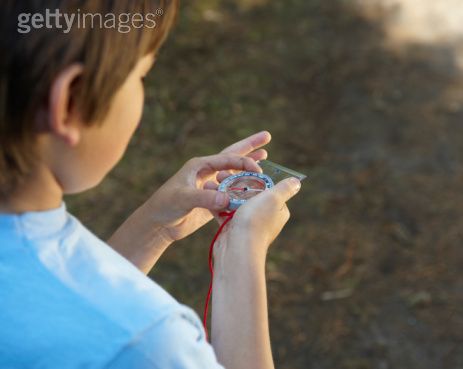
kid with compass picture

A friend dropped by today to pick something up. She had a baby, a toddler

Michael, who loves his compass

and a four year old in her car so I met her at the curb. I gave her what she had come for and then like women do we talked for a few minutes about the projects we had going. Soon a small voice in the back said, “I got a new compass.” I looked back to see four year old Michael engrossed in the compass he was holding. He never looked up from it, just kept turning the case while watching the needle stay in the same place. Then he would give it a quick shake and go back to rotating the case. He was very interested in that compass.

Wow, what a great Spark that was. Now I know that his parents really want to

The future Scout

get him involved with Scouts when he is old enough so I said, “You’d better hang onto that compass Michael. You’ll need it in Scouts for camping and stuff”. At that happy and interesting news he looked up at me and smiled. His mom picked up there and said a few more things about compasses and Scouts.

Now I don’t know if these parents have a Master Inspire Plan or not but if they did it would have Scouts under the organizations segment. How else could they use this little Spark to move the interest and idea of scouting along?

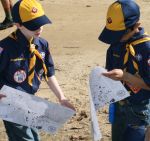
boy scouts with compass picture

They could find a scout in their neighborhood to come and show Michael their compass and talk about how they have used it. I know Michael is having a birthday in a couple of weeks. Maybe it could be a father and son birthday party with dads helping little boys search out a treasure in the back yard using two or three coordinates; just something simple.

How could this little Spark be used along with a Family Mission Statement? Suppose a portion of your Family Mission Statement looked like this:

Habits of Our Home
We obey the Lord Jesus Christ.
We love, honor and pray for each other.
We tell the truth.
We consider one another’s interest ahead of our own.
We do not hurt each other with unkind words or deeds.
We speak quietly and respectfully to one another.
When someone is sorry, we forgive him.
When someone is happy, we rejoice with him.
When someone is sad, we comfort him.

You could have your child show his compass to the whole family and tell the fact that the needle always points north. Then you could use that as an analogy to show how the very first sentence in your mission statement is like the needle on a compass to help you reach all the other important things in your statement.

Moving to The Spark Station, how can we use this Spark to inspire a four year old or anyone for that matter?

You could have the directions for making a compass at home , in your kitchen. This would be a fun activity for a four year old with the help of a parent.

chinese hanging compass picture

chinese hanging compass

These directions could be tucked inside a book on pirates, sailors, or privateers. Read the book or look at the pictures. Have a familiar conversation about sailing and the need for a compass. Then make a compass.

While you are engaged in these activities you can give your child a clear and short explanation of how a compass works. Remember that you are not attempting to help your child learn and understand all this information. You are responding to a Spark and allowing him to be exposed to new and interesting information.

You could put some books in your Spark Station on famous Privateers like Sir Francis Drake and Sir Walter Raleigh. You could have books on famous sailors like Leif Ericson and Ferdinand Magellan. You could have books on pirates. You could have books on sailing ships. If your child still seems interested in this topic you could begin adding things of interest from the countries where these men came from such as Norway and Portugal. Add coloring books on these topics. I found books on pirates, sailing ships and Vikings for example at Dover Publications.

compass rose pics

compass rose

Make a drawing of a compass rose and hang it on the inside of  The Spark Station door. When your child asks about it explain that it is a compass rose which helps people know the directions of the earth. Then you can introduce some activities associated with the compass rose. You can engage in these simple activities as a family or one on one. These activities can demonstrate what a compass rose is, what the four directions are and the basic use of a compass. You can also play a great game called Compass Tag using a compass rose.

You can post the website for a simple interactive game on the door to The Spark Station so they can learn the directions on a compass rose .

Write as story about a child and their compass with missing words and let your child fill in the blanks as you read them the story. Leave blank pages so they can illustrate the story. It doesn’t have to be long or complicated. For example: When Ted turned four his __________ gave him a compass. Ted was so ___________. He wanted to know what this wonderful new gadget could do. He asked his ____________ to help him learn about it.  You get the idea.

If you have a GPS unit in your car you could have a familiar conversation with your child about how finding directions has changed over time and how you use the GPS in your work and life.

Depending on the age of your children you can then explore and inspire them with many more subjects that are spin offs from the compass: shells from the sea, sea animals, map making, boat building, the wonderful book Carry on Mr. Bowditch, more geography of countries that sailed, explored and claimed land.

Following a Spark in this manner is the Art of Responding. You can also use the Art of Inspiring by putting a compass in your Spark Station and seeing where the inspiration takes you and your family.

Possibly Related Posts:


{ 0 comments }