Five useful tips to teach preschoolers

by Mary Ann on February 4, 2011

18 month old pictures

Need some preschool ideas?

Preschool children are wonderful!! They are funny and smart. They say the darndest things and taking the time to listen to them can really make your day. Here are some tips that will help parents teach preschoolers.

  1. Have your children help you with everyday tasks and talk to them about what you are doing. e.g. when washing, cooking or gardening. Small children are anxious to “help” and they learn best by ‘playing’ at whatever you are doing. Anything in their every day life makes a lesson for a preschooler. While you are letting your child help you take a few moments from your work and be present with them. We all get involved in getting the job done but if you can look down at them, speak directly to them and watch their learning take place you will enjoy the work so much more. It may take you longer to make the bed but it will surely give you more satisfaction.
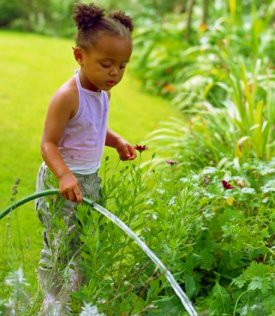
    child with hose pictures

    Everyday tasks make great preschool activities

  2. A good preschool lesson or two can be found while driving in the car. When you are in the car, talk about the things you see as you drive along. Read the road signs, point out land marks, look for letters of the alphabet, find colors, help them get the lay of the land.  Turn off the radio and be present. This will also make a big dent in fighting and whining.
    kids in car pictures

    Teach preschoolers while in the car

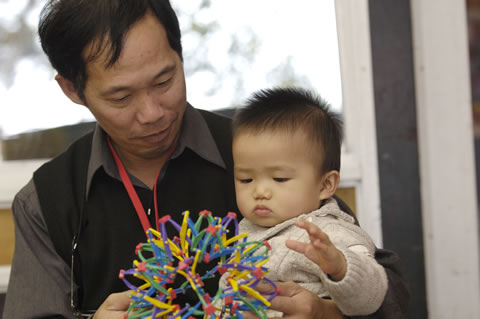
  3. Ask your children questions about what they are doing when playing. Join in your preschoolers activites. You being with them will be a gift to both of you.
    father and baby pictures

    Give your time and play with your preschooler

  4. Answer your children’s questions. When they ask a question you know they are trying to understand something, and answering it will help them build their concepts of how the world works. It is also a sign that they are seeking your presence. Stopping what you are doing and answer the question, while speaking directly to them, can give your child a deep sense of being loved and cared about. Grandparents do this naturally but parents can learn! : )
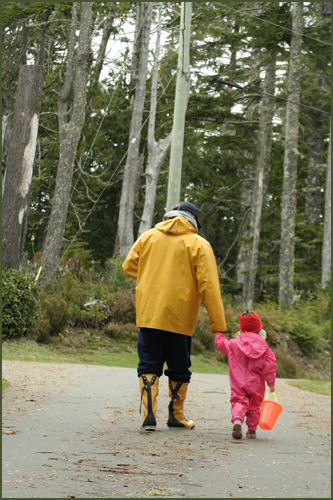
    You can learn to listen and talk with your preschooler like a grandparent : )

  5. Speak to your children in full sentences. Knowing sentence structure is important for understanding how language works. Children who only hear one or two word answers learn to speak that way, and will often have difficulty communicating with others. One and two word sentences usually happen because our mind is still on the task at hand and not on the child or their question.
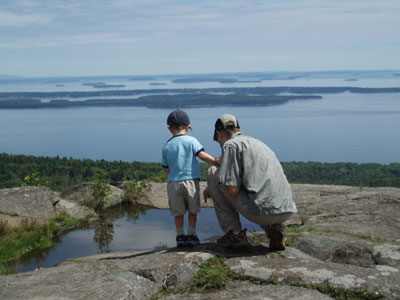
    Be "present" and enjoy your child more

The most important thing of all is to enjoy being with your children. I know that is not always easy, and there will be many trying times with them as they grow up, but just a few moments of positive conversation and your undivided presence can make all the difference.

You might want to tell your preschooler about interesting people like  Teddy Roosevelt.

Possibly Related Posts:


{ 0 comments }

Listening and responding to children

by Mary Ann on February 3, 2011

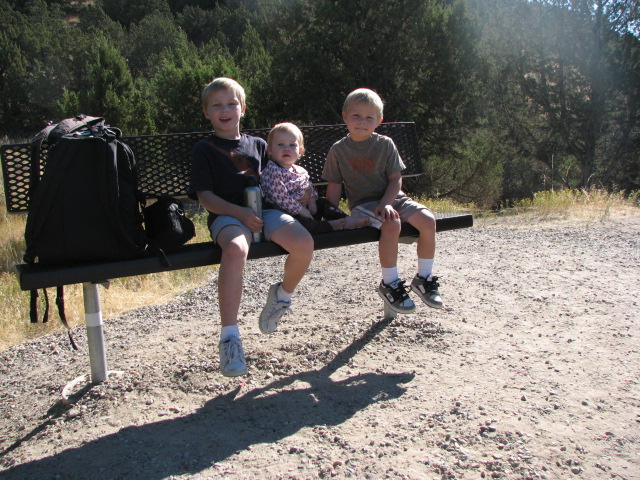
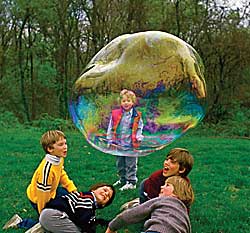
three boys pictures

The Freeman boys and their interest in "burps"

When we think of getting “sparks” of ideas from our children about things that may interest them we can be surprised by what comes up. Here is a funny letter I received and I think you will laugh too.

laughing boy picture

Evan, age 6

Hi MaryAnn, I am working hard, but it took me longer than I expected to get

boy on bench picture

Owen, age 4

my Spark Station organized! But, success at last! I just picked up my five books at the library last night. One of the books that I picked up at the library is about the human body and burps (lol! yes, two boys in my family) and I was following a spark! Their obsession with bodily functions is hilarious and they are wondering why these things happen! What fun! (funny! is more like it!) Anyways, I will keep you posted! Thanks so much for your wisdom…really and truly. Luvs, Hana

So here are two boys interested in all the gas that can escape from a body in many different ways. Not a mother’s fondest topic! However, this mom knows how to listen and respond!! Who knows what other wonderful things they may learn about our majestic bodies as they unravel the mystery of burps and…well you know!

Even little boys interested in burps can grow up and be President [woodrow wilson president].

Possibly Related Posts:


{ 0 comments }

Five classical education methods

by Mary Ann on February 1, 2011

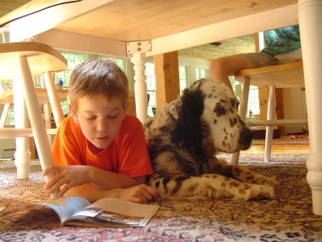
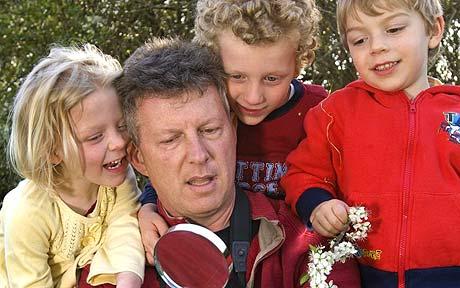
home school pictures
Classic learning includes reading and being read to

Trivium/Quadrivium Education – The Romans created a system of study known as the “seven liberal arts” which were divided into two phases:  the trivium and the quadrivium. Students pursued the first level of learning, the trivium, which included gaining skill in grammar, logic, and rhetoric. Once these three skills were mastered, students studied arithmetic, geometry, astronomy, and music theory which together comprise the more difficult mathematically oriented quadrivium. The purpose of this type of education is to be able to engage in critical thinking. It is in short, a Classical education

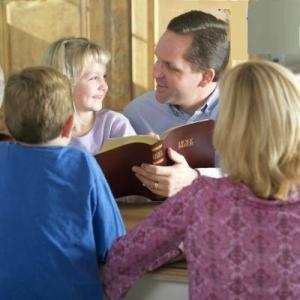
family study time pictures
Classical Christian Education

Classical Education – This is interpreted in a number of ways.

* An education in the Classics, especially in Ancient Greek and Latin

* A Classical Education Movement, based on the trivium (grammar, logic, rhetoric) and

quadrivium (astronomy, arithmetic, music and geometry)

*Classical Christian Education, an application of the classical education movement with

an emphasis on the Christian faith.

These classical education styles teach rhetoric, the art of speaking, communicating, and writing.

father and kids pictures
Thomas Jefferson Education

Thomas Jefferson Leadership Education (TJED) – This is also called leadership education. It was explained and organized by Oliver and Rachel DeMille. It is an educational philosophy and a methodology by which great individuals throughout history were educated.

Leadership Education has three primary goals. The first is to train thinkers, leaders, entrepreneurs, and statesmen. The second is to perpetuate freedom by helping people understand what freedom is and what must be done to maintain it. The third is to teach students how to think, which is how the first two goals are accomplished(TJEd blog).

To accomplish these goals classics and mentors are used. The student studies the greatest works ever created, and submits to the guidance of great mentors, who customize the education for the student’s mission in life.

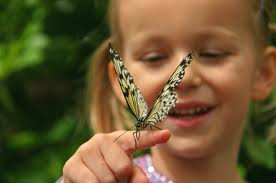
girl with butterfly pictures
Enki education

Enki Education – This method draws from the best of Waldorf, Montessori, the United Nations International School, Theme Studies and even the discovery learning of John Holt. The central task of education is the integration of body, heart, and mind – this is the fundamental premise of Enki Education.

Theme study – This is in-depth research on a topic, issue, person, or content-area idea, in which reading and writing are used as tools for learning. It is used to encourage students to think as researchers, writers, and presenters. It builds enthusiasm, curiosity and provides children with purposes for high-level learning.

Whew, that was a lot to take in.  First we learned about Waldorf, Montessori & Charlotte Mason educational methods.  Next we learned about about some varied home schooling styles and methods, and today we learned about some  types of classical education. Now you and I are more conversant with some of the educational options, styles and methods that are available.  A big thank you to the person who sent me on this adventure in learning!

If you want an adventure in learning for your children read Cherokee Indians for kids.

Possibly Related Posts:


{ 0 comments }

Varied home schooling styles and methods

by Mary Ann on January 29, 2011


kids park pictures

Children learn when they play

Here are the definitions for a few styles of homeschooling.

Unschooling – The term “unschooling” was coined in the 1970s and used by educator John Holt, widely regarded as the “father” of unschooling. It is a range of educational philosophies and practices centered on allowing children to learn through their natural life experiences, including child directed play, game play, household responsibilities, work experience, and social interaction, rather than through a more traditional school curriculum.

kids playing beach pictures

Unschooling

Unschooling encourages exploration of activities led by the children themselves, facilitated by the adults. Unschooling differs from conventional schooling principally in the thesis that standard curricula and conventional grading methods, as well as other features of traditional schooling, are counterproductive to the child reaching their full educational potential.

Popular critics of unschooling tend to view it as an extreme educational philosophy, with concerns that unschooled children will lack the social skills, structure, and motivation of their peers, especially in the job market, while proponents of unschooling say exactly the opposite is true: self-directed education in a natural environment makes a child more equipped to handle the “real world.”

kid in snow pictures

Resting and learning

Free range – This term applies to a method of parenting which stays calm and lets the child out of their sight without being afraid. When speaking of this type of parenting the term Free Range Kids is used.

It is also an educational method which allows plenty of free time to play, think, hum, stare at the clouds and so forth.

It is based on the assumption that children need long hours of unscheduled time;  leisure. All of the random things children encounter in their wanderings add to their knowledge of the world. With enough time and enough wandering children will gain a lot of knowledge. During the down time they process all the productive information they have picked up during the more purposeful activities they have engaged in: school, homework, lessons.

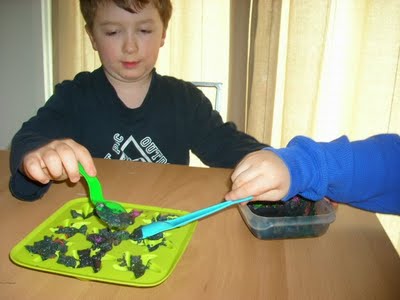
playing with clay pictures

Eclectic Homeschooling

Eclectic Homeschooling – A traditional definition of “eclectic” from the Webster’s Unabridged English Dictionary says, “Made up of or combining elements from a variety of sources.” Based on the definition of eclectic, an eclectic homeschooler is one who looks at the different approaches and methods of homeschooling and takes from each, forming their own unique philosophy.

As in many aspects of life, nothing is all “good,” even a great concept such as eclectic homeschooling. There are some drawbacks to this mode of teaching. The most common is that many children thrive on routine, and routine is not an ingredient in eclectic homeschooling.

Montessori Homeschooling – This is merely when parents embrace Marie Montessori’s teachings and use Montessori materials at home.

Today we have looked at four homeschooling styles, and yesterday at a few educational methods: Waldorf,Montessori & Charlotte Mason. Tomorrow we will learn about  five more styles of education which are in the realm of Classical education, Five classical education methods.

Want to do something fun in your home school? Check out teaching kids about levers.

Possibly Related Posts:


{ 0 comments }