Benefits and importance of play for children

by Mary Ann on April 20, 2011

children in 1950 picture

Play is a child's world

“Too little playtime may seem to rank far down on the list of society’s worries, but the scientists, psychologists, educators and others who are part of the play movement say that most of the social and intellectual skills one needs to succeed in life and work are first developed through childhood play. Children learn to control their impulses through games like Simon Says, play advocates believe, and they learn to solve problems, negotiate, think creatively and work as a team when they dig together in a sandbox or build a fort with sofa cushions.” (read the article)

Isn’t that an interesting quote! Of course I have written about this very important subject, Encouraging creativity and creative thinking in children, a number of times, however, it never ceases to amaze me that I have to write about it at all. It is a very different world from the one I grew up in, in the 1950’s.( Want to get kids into college? Let them play).
children in field pictures

Most of the social and intellectual skills one needs to succeed in life and work are first developed through childhood play.

So, how were children raised in the 1950’s. Of course, I went to public school but when I got home we played, a lot. We played on Saturday. Cartoons lasted only until about 10am on Saturday but we didn’t always watch them, especially in the summer. After all, the fort was calling. We had no video movies, no video games, no Xbox, no MP3 players, no computer. Play was what we did. Play was importance and that had its own benefits.

I want to share some more information from this article with you because I hope we are not part of the vanishing of play in America!

“For several years, studies and statistics have been mounting that suggest the culture of play in the United States is vanishing. Children spend far too much time in front of a screen, educators and parents lament — 7 hours 38 minutes a day on average, according to a survey by the Kaiser Family Foundation last year.”
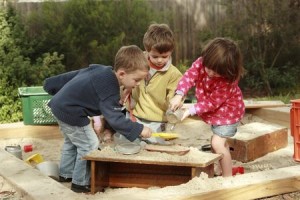
children in the sandbox picture

Imaginative play is the way children learn

What is the reason for this reduced play in children? “Behind the numbers is adult behavior as well as children’s: Parents furiously tapping on their BlackBerrys in the living room, too stressed by work demands to tolerate noisy games in the background. Weekends consumed by soccer, lacrosse and other sports leagues, all organized and directed by parents. The full slate of lessons (chess, tae kwon do, Chinese, you name it) and homework beginning in the earliest grades.”

Sarah Wilson visited the kindergarten her child would attend in a few months. What she found was a row of computers and small desks. She was appalled. She remembered the sandbox, blocks and toys in her own kindergarten class in 1985. Gee, we don’t even have to go back to the 50’s to find play!

“There’s no imaginative play anymore, no pretend,” Ms. Wilson said with a sigh.
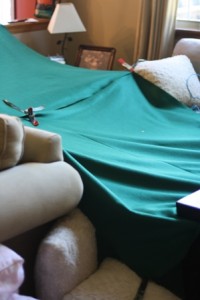
sofa cushion fort picture

"Children learn to think creatively and work as a team when they dig together in a sandbox or build a fort with sofa cushions.”

So her children are home and her home is messy. She has decided to embrace the sometimes untidiness of her children’s play.

It is important to understand the benefits and importance of childhood play,especially pretend play and imaginative play for children. “When I was growing up, there was a culture of childhood that children maintained,” said Jim Hunn, vice president for mass action at KaBOOM, a nonprofit group that is a leading voice in reducing what it terms the “play deficit.” He learned how to play games from other children.

That is how we did it in my day. We played in groups of mixed ages, often siblings, teaching one another. No adults. No rules. No interruptions, except for the call to dinner. We knew how to play and we were allowed to do it. We had space and time.


Possibly Related Posts:


{ 0 comments }

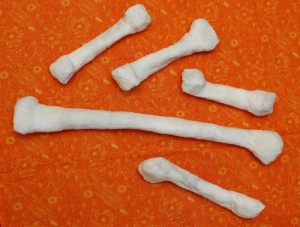
paper bones picture

Home made bones!

I spent the weekend in Arizona at the HIP Women’s Retreat. What fun! So the Spark Station and grandma school went on the road a bit early last week.

Now it is important to remember the age group I am working with. There are 4-6 children all under the age of 5. So in my Spark Station there is only one topic offered with lots of possible activities. They all like to play and learn and work together so most often we just do one thing at a time out of the Spark Station offerings.

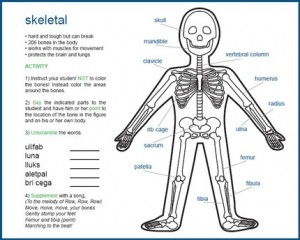
This week we learned about the bones in the human body.   We played a bone identification game. We tickled our rib bones, our neck bones, our back bones and our hip bones. That was a laughing good time.

human skeleton picture

Human skeleton

We talked about the difference between our skin and our bones. Our bones hold us up and our skin holds us together. Our skin is soft and our bones are hard. Our skin can tear but our bones can break. We talked about how we can keep our bones healthy and strong.

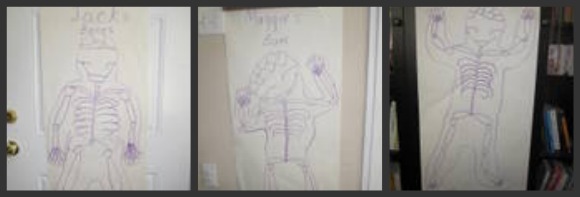
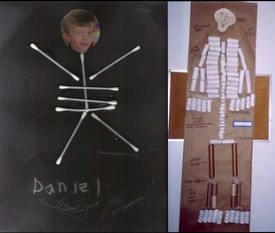
We did some activities to learn about bones. We took large pieces of paper and traced everyone’s body. Then we added the bones in our head, spine, legs, arms, hips and chest. Hanging the bodies was the most exciting part. We made a Q-tip skeleton.

sketch of human skeleton

Jack’s bones, Maggie’s bones and Mary’s bones

We read three wonderful books about what we can do with our body. One book talked about how many fingers we have. Another book was about running. Another was about eating. You can’t eat well without a jaw bone!

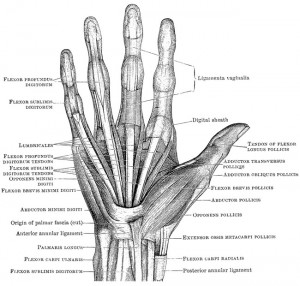
Wonderful books on anatomy with large colorful pictures from the library would be great. In my Dover file, where I store free coloring pages and worksheets, I have some great anatomy pictures to color like the hand below.

skeleton with Q tips toilet paper tubes picture

Skeleton with a. Q tips b. Toilet paper tubes

If you save ahead of time you could make a skeleton out of toilet paper tubes. Check it out here:  Toilet paper roll crafts

Share these fun facts about human bones with your children:

  • The human hand has 27 bones; your face has 14!
  • The longest bone in your body? Your thigh bone, the femur — it’s about 1/4 of your height. The smallest is the stirrup bone in the ear which can measure 1/10 of an inch. What do those measurements look like on a ruler?
  • Did you know that humans and giraffes have the same number of bones in their necks? Giraffe neck vertebrae are just much, much longer!
  • Have you ever thought about the number of joints in the human body? You have over 230 moveable and semi-moveable joints in your body.
hand bone muscle diagram

Hand bone muscle diagram

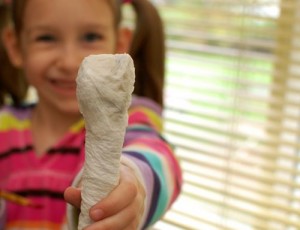
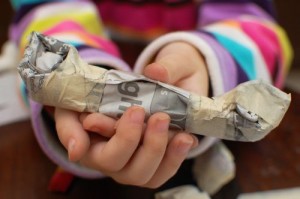
Try making some bones yourself out of newspaper and tape. I found these wonderful pictures on the internet.

paper bone picture

What a great bone!

bone with paper masking tape pic

newspaper and masking tape


Possibly Related Posts:


{ 1 comment }

The Daffodil Principle- A spring story

by Mary Ann on April 14, 2011

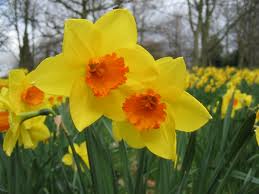
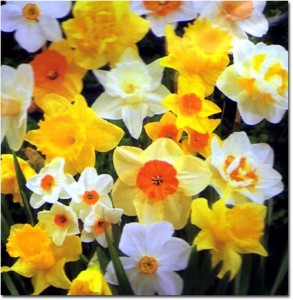
daffodil principle pictures

The Daffodil Principle

It is spring! Oh I love this season with its newness and cleanliness. It is fresh!

In honor of this beautiful time of year I am sharing a spring story that I like from the book The Daffodil Principle by Jaroldeen Asplund Edwards

This little story reminds me of the 1% principle. We make major changes in our lives and families 1% at a time. We should never give up or quit on any worthwhile endeavor. We should just keep making 1% improvements and then, like the field in this story, miracles will happen.

Several times my daughter had telephoned to say, “Mother, you must come and see the daffodils before they are over.” “I will come next Tuesday,” I promised…

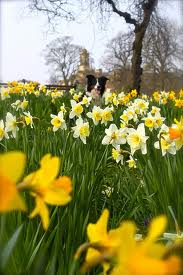
daffodils flowers pictures

Learn to move toward your goals and desires one step at a time

We parked in a small parking lot adjoining a little stone church. On the far side of the church I saw a pine-needle-covered path, with towering evergreens and manzanita bushes and an inconspicuous, lettered sign “Daffodil Garden.”

We each took a child’s hand, and I followed Carolyn down the path…Then we turned a corner of the path, and I looked up and gasped. Before me lay the most glorious sight, unexpectedly and completely splendid. It looked as though someone had taken a great vat of gold and poured it down over the mountain peak and slopes where it had run into every crevice and over every rise. The flowers were planted in majestic, swirling patterns, great ribbons and swaths of deep orange, white, lemon yellow, salmon pink, saffron, and butter yellow.

“But who has done this?” I asked Carolyn. I was overflowing with gratitude that she brought me…This was a once-in-a-lifetime experience.

“It’s just one woman,” Carolyn answered. “She lives on the property. That’s her home.” Carolyn pointed to a well-kept A-frame house that looked small and modest in the midst of all that glory.

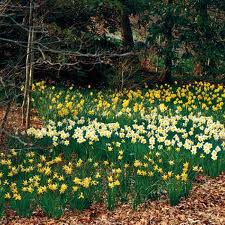
daffodils field pictures

Planted one bulb at a time

We walked up to the house, my mind buzzing with questions. On the patio we saw a poster. “Answers to the Questions I Know You Are Asking” was the headline. The first answer was a simple one. “50,000 bulbs,” it read. The second answer was, “One at a time, by one woman, two hands, two feet, and very little brain.” The third answer was, “Began in 1958.”

There it was. The Daffodil Principle.

For me that moment was a life-changing experience. I thought of this woman whom I had never met, who, more than thirty-five years before, had begun – one bulb at a time – to bring her vision of beauty and joy to an obscure mountain top. One bulb at a time.

There was no other way to do it. One bulb at a time. No shortcuts – simply loving the slow process of planting. Loving the work as it unfolded.

Loving an achievement that grew so slowly and that bloomed for only three weeks of each year.

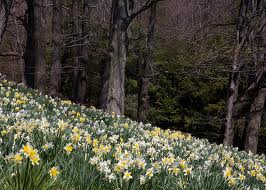
daffodils field images

We make change 1% at a time. That is what creates a miracle.

Still, just planting one bulb at a time, year after year, had changed the world. She had created something of ineffable magnificence, beauty, and inspiration.

The principle her daffodil garden taught is one of the greatest principle of celebration: learning to move toward our goals and desires one step at a time – often just one baby-step at a time – learning to love the doing, learning to use the accumulation of time.

When we multiply tiny pieces of time with small increments of daily effort, we too will find we can accomplish magnificent things. We can change the world.

The thought of it filled my mind. I was suddenly overwhelmed with the implications of what I had seen. “It makes me sad in a way,” I admitted to Carolyn. “What might I have accomplished if I had thought of a wonderful goal thirty-five years ago and had worked away at it ‘one bulb at a time’ through all those years? Just think what I might have been able to achieve!”

My wise daughter put the car into gear and summed up the message of the day in her direct way. “Start tomorrow,” she said with the same knowing smile she had worn for most of the morning. Oh, profound wisdom!

daffodils blossom pictures

Take baby steps knowing they are taking you somewhere wonderful in your family

Possibly Related Posts:


{ 1 comment }

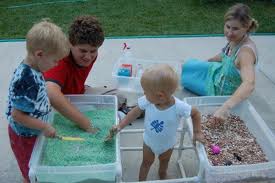
colored rice pictures

Playing with colored rice

The  Spark Station and The Spark Station Mastery Course really work!

I just had to share my experience with all of you. I finished lesson 5 of the Spark Station Mastery course yesterday. I went through my home to see what I could find. I cleaned out the entertainment center (that is what we are using for our Spark Station). I was excited but nervous.

I found sand in the garage that I forgot we had, rice, material, art supplies, wooden blocks, Lincoln Logs, math wrap-ups, and the list goes on. I filled totes with the items I wanted to start with. The kids saw me doing this and were anxious to know when they could use all that cool stuff.

I dyed the sand, I dyed the rice and I put the stuff in the Spark Station this morning. We did our devotional and then we talked about how the Spark Station would work. I was really nervous.

The kids immediately went to the fabric and wanted to make capes, unfortunately the pieces we had were rather small so we talked about using those pieces for other things and talked about how much fabric we will need to make a cape (it will appear in the Spark Station soon).

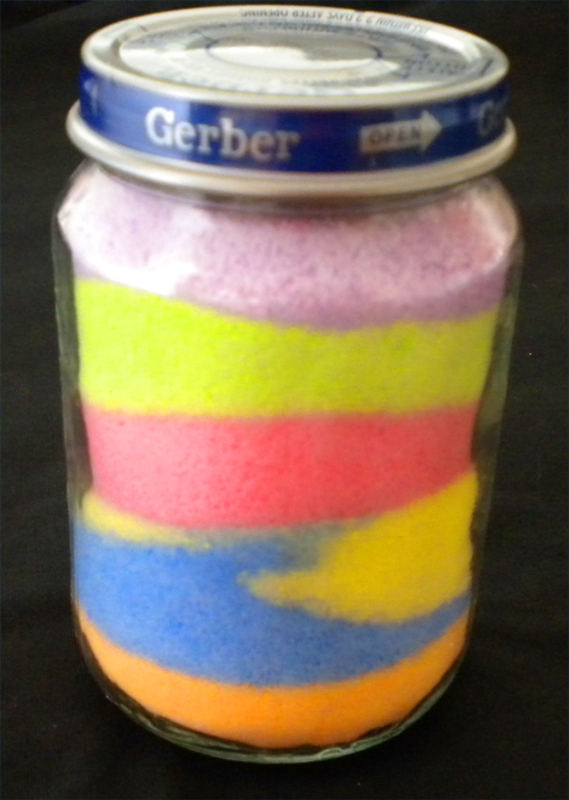
colored sand art picture

Colored sand art

Then they found the colored sand, mason jars, and lids that I had in there. They used the funnel that was in the box to help pour sand into the jars and made beautiful designs with different colored layers of sand.

While the older 3 were working with the sand I pulled out the tub of rice and set if up on a blanket. I had spoons, cups, bowls, etc. in with the rice. I just let it sit there and as soon as my 18 month old saw it he was occupied until Structed Family Learning Time was over. The older kids went to play with him when they had finished their sand project.

When they bored of the rice my older son pulled out the art box. He found cupcake liners in the box. Immediately the girls wanted some too. They asked me what they could use them for and I told them anything they wanted. They seemed unsure, I told them I could see one making a pretty flower. My son immediately said he wasn’t going to make a flower, he thought his would make a great head for a lion. They glued their cupcake liners to the paper and used the chalk in the box to draw the rest of their pictures.

I just sat there and grinned the entire time. I couldn’t believe how easy it was. Why was I so afraid of this, it’s not scary, it’s incredible. I now have a learning tool at my fingertips that gives me the perfect way to ‘Inspire, not require’. I can’t wait for tomorrow and neither can my children.     Stacey S.

Colored Rice picture, Image Courtesy : Storybleed.com

Possibly Related Posts:


{ 1 comment }