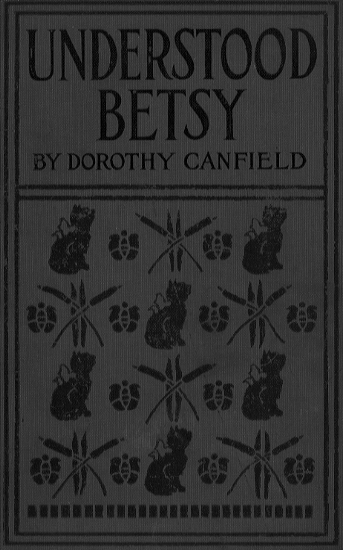
understood betsy image

Don't help too much or too soon

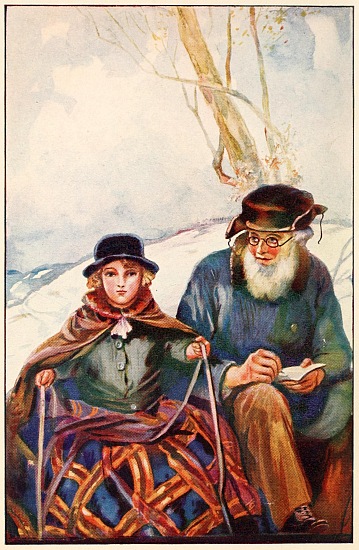
There was Elizabeth Ann alone with her much-feared Great-uncle Henry.

She sat very still on the high lumber seat, feeling very forlorn and neglected. She felt herself to be in the most dangerous place she had ever dreamed of in her worst dreams. Oh, why wasn’t Aunt Frances there to take care of her!  She looked up at Uncle Henry with the wild eyes of nervous terror which always brought Aunt Frances to her in a rush to “hear all about it,” to sympathize, to reassure.

Uncle Henry looked down at her soberly, his hard, weather-beaten old face quite unmoved. “Here, you drive, will you, for a piece?” he said briefly, putting the reins into her hands… “I’ve got some figgering to do. You pull on the left-hand rein to make ’em go to the left and t’other way for t’other way, though ’tain’t likely we’ll meet any teams.”

Elizabeth Ann had been so near one of her wild screams of terror that now, in spite of her instant absorbed interest in the reins, she gave a queer little yelp. But Uncle Henry seemed not to have heard her little howl, or, if he had, didn’t think it worth conversation..

Elizabeth Ann drew a long breath….Oh, there they were going to the left!…in her flurry, she made a mistake about which hand was which and pulled wildly on the left line! The horses docilely walked off the road into a shallow ditch, the wagon tilted…help! Why didn’t Uncle Henry help!

Elizabeth Ann, the perspiration starting out on her forehead, pulled on the other line. But she must think of some way to remember, for sure, which her right hand was, and avoid that hideous mistake again.

And then suddenly something inside Elizabeth Ann’s head stirred and moved. It came to her, like a clap, that she needn’t know which was right or left at all. If she just pulled the way she wanted them to go–the horses would never know whether it was the right or the left rein!

It was possible that what stirred inside her head at that moment was her brain, waking up. She was nine years old, and she was in the third A grade at school, but that was the first time she had ever had a whole thought of her very own. At home, Aunt Frances had always known exactly what she was doing, and had helped her over the hard places before she even knew they were there; and at school her teachers and been carefully trained to think faster than the scholars. Somebody had always been explaining things to Elizabeth Ann so industriously that she had never found out a single thing for herself before. This was a very small discovery, but an original one. Elizabeth Ann was as excited about it as a mother-bird over the first egg that hatches.

She forgot how afraid she was of Uncle Henry, and poured out to him her discovery. When she finished–”Well, now, that’s so,” he admitted, and returned to his arithmetic.

It was a short remark, shorter than any Elizabeth Ann had ever heard before. Aunt Frances and her teachers always explained matters at length. But it had a weighty, satisfying ring to it. The little girl felt the importance of having her statement recognized. She turned back to her driving.

The slow, heavy plow horses had stopped during her talk with Uncle Henry. They stood as still now as though their feet had grown to the road. Elizabeth Ann looked up at the old man for instructions. But he was deep in his figures… so she sat still and waited for him to tell her what to do.

The early winter twilight was beginning to fall, and she felt rather empty. She grew very tired of waiting, and remembered how the grocer’s boy at home had started his horse. Then, summoning all her courage, with an apprehensive glance at Uncle Henry’s arithmetical silence, she slapped the reins up and down on the horses’ backs and made the best imitation she could of the grocer’s boy’s cluck. The horses lifted their heads, they leaned forward, they put one foot before the other…they were off! The color rose hot on Elizabeth Ann’s happy face. If she had started a big red automobile she would not have been prouder. For it was the first thing she had ever done all by herself…every bit…every smitch! She had thought of it and she had done it. And it had worked! (from Understood Betsy)

This little snippet from a wonderful book is all that needs to be said on the importance and value of standing back and letting children learn on their own. There will be mistakes, ruined projects, imperfect crafts, cookies that crumble; but learning to do things for yourself, figuring it out, builds confidence and trust in oneself. Don’t help too much or too soon. Just be present and watch!
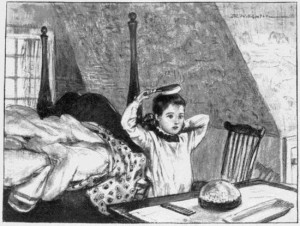
understood betsy book clips

Doing things for yourself builds confidence

Possibly Related Posts:


{ 1 comment }

understood Betsy book pictures

Understood Betsy-A book you will like very much

“In the intervals of the game, while Uncle Henry was pondering over his moves, the little girl looked down at her pets and listened absently to the keen autumnal wind that swept around the old house, shaking the shutters and rattling the windows. A stick of wood in the stove burned in two and fell together with a soft, whispering sound. The lamp cast a steady radiance on Uncle Henry bent seriously over the checker-board, on Molly’s blooming, round cheeks and bright hair, on Aunt Abigail’s rosy, cheerful, wrinkled old face, and on Cousin Ann’s quiet, clear, dark eyes. . . .

That room was full to the brim of something beautiful, and Betsy knew what it was. Its name was Happiness.”

These are the final two paragraphs of a book I enjoy so much, Understood Betsy. I liked it as a young girl and I just reread it to myself a couple of weeks ago. Then I read it to my granddaughters. Classics are wonderful!

Do you know why I like this book so much? I really enjoyed the writing style. I liked the way the author made clear what was happening with the hearts of the characters without really ever saying it out loud. But what I liked most is that this is a book about being present, what it isn’t and what it is. It is a whole book about a very loving person who thought she was “present” and about a family that really was “present’ without ever thinking about it because they knew how to value people. Oh I just loved that about this charming little book.

On March 1, I shared an experience I had and a tip that can change your family . It was about being present. I promised then to

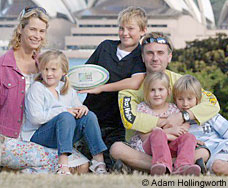
nigel marsh family picture

Nigel Marsh and family

share a bit from Understood Betsy and also to share a video that although not about being present, gives information that can be easily translated from his word “balance” into my word “presence”. Nigel Marsh tackles the thorny issue of work and life balance. Just change the words to work-presence in the work and life balance video.

That is the problem that we face the most isn’t it; too busy to really be present with those we love, hence we lack balance. The corporate executive is not the only one who gets caught in this tangled web. Try mom and dad!!

Don’t forget our Forum contest. Share your experiences on the 5 rules of engagement, maybe one on presence. It only needs to be a few paragraphs to help another mother! You will have your mind jogged about them by the video. Enjoy!

Possibly Related Posts:


{ 0 comments }

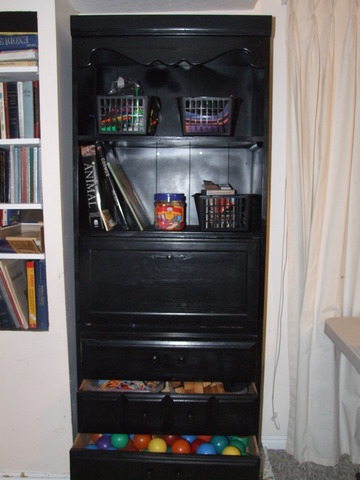
The Spencer’s Spark Station – a beautiful dresser

In recent weeks, as we have finished up the pilot, I have been reviewing the surveys the participants took. A couple of things seem important to address.

1.  “I think I was on about lesson 5 before I really understood what the Spark Station is.” Right up front I say “So what is the definition of the Spark Station? Simply put, it is a space where parents have put items that they think will inspire their children to further exploration and learning.”

Hmmmm, not enough I guess. So let me say it differently. The Spark Station is a tool you can create. It can be an actual closet space or it can be a box, a dresser or any other place you can put interesting items to inspire your children. It is not the same as a storage space where you keep all of your learning materials and craft items. Its purpose is to create a time and place when your children will be exposed to new and interesting ideas that will help them love learning. It is managed in a specific way to create a sense of anticipation for your children.

2. “It would be really helpful to see some pictures of Spark Stations so I can get an idea of what we are talking about.” That is a good idea. The blog is sprinkled with all kinds of Spark Station pictures but I will put them all here in one place. I will also add some pictures of places we have educational items that are not our Spark Station, to give you an idea of the different educational spaces you  may have in your home.

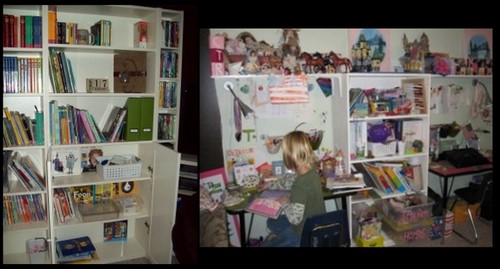
The Jones Spark Station – some shelves in a cupboard

I think an advantage of this is that you will get a very clear idea that just about anything can work as a Spark Station. Where it is, is not the most important thing, as long as it is within easy reach of where you have your structured family learning time.

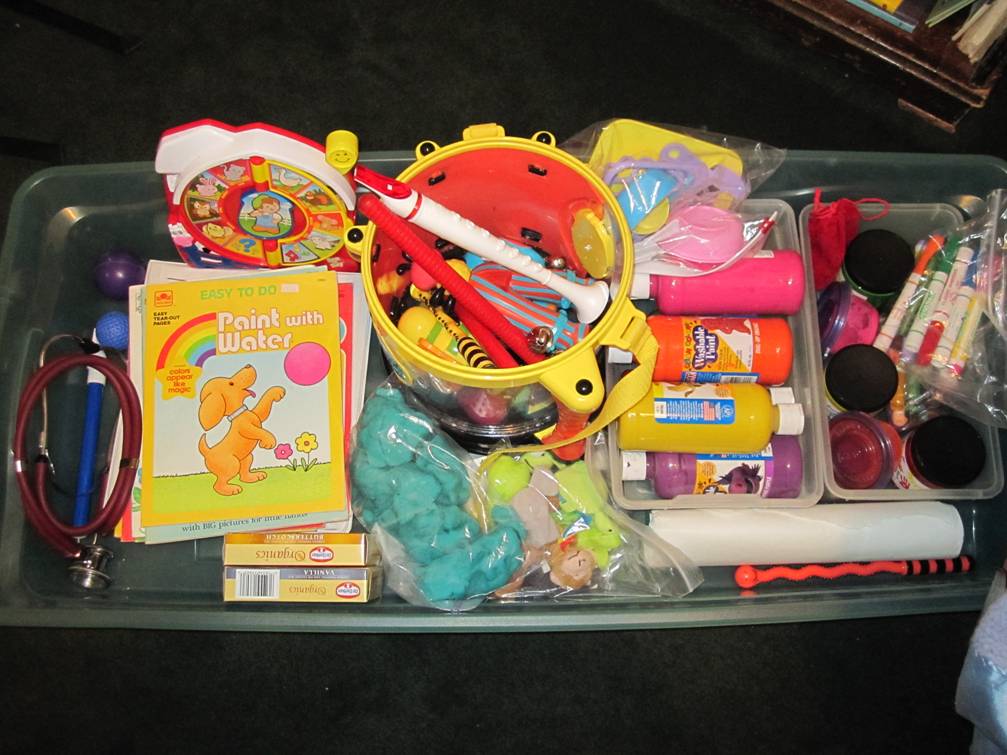
Also you will see the varied contents of each persons Spark Station. What you put in it is also not the most important thing.

I won’t go into it at length but it bears repeating, the most important thing about the Spark Station are the Five Rules of Engagement. If you want real success then learn what they are and begin practicing them!

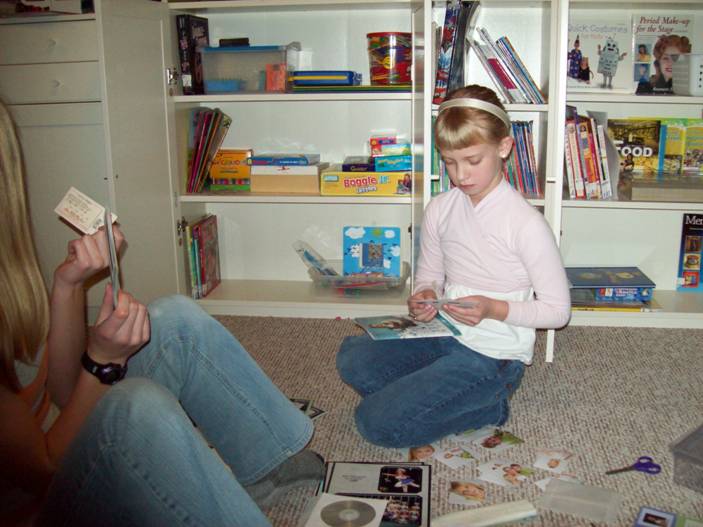
mini library learning space pictures

Part of the Jones library and part of the Jones “any time” learning space

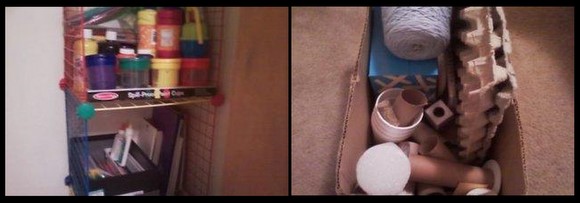
craft cupboard creation box picture

Johnson’s craft cupboard and “creation box”, not part of the Spark Station

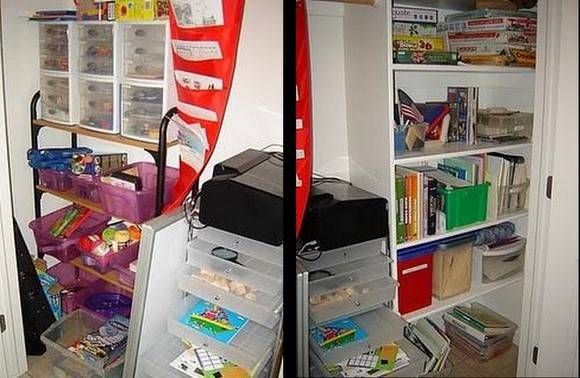
Johnsons closet pictures

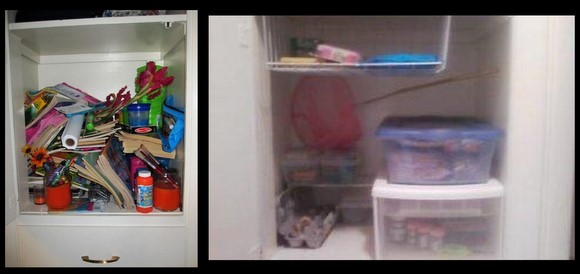
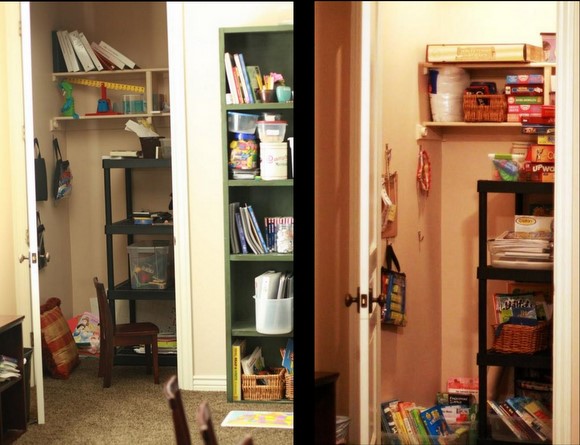
Johnson’s “before ” and “after” Spark Station (a hall cupboard)

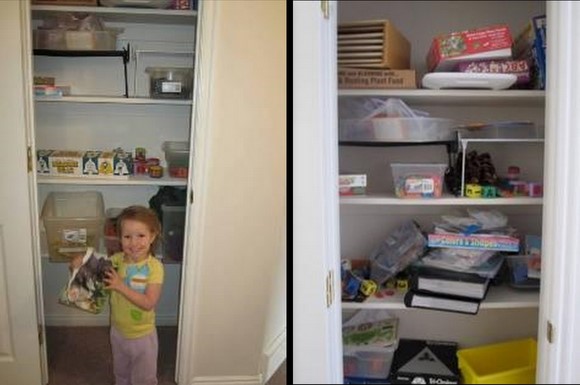
Jodies closet

Palmer’s first Spark Station. The kids are growing up and now they use a free standing Spark Station

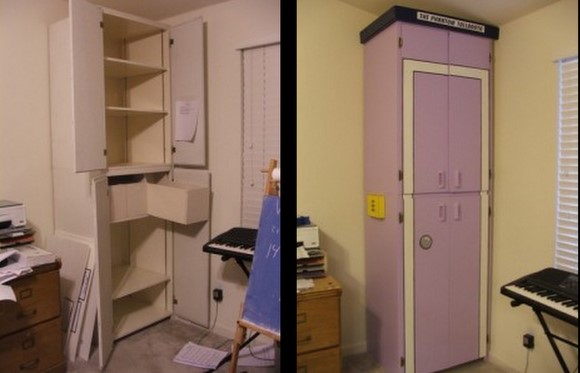
Jarvis Phantom tollbooth picture

The Jarvis “before” Spark Station and the Jarvis “after” Spark Station

The Pates Closet picture

The Pate’s spillover containers that are part of their Spark Station and their main Spark Station

The Garretts Closet picture

The Garrett’s “after” Spark Station where they have “lots of fun” and the Garrett’s Spark Station before she learned how to make it work

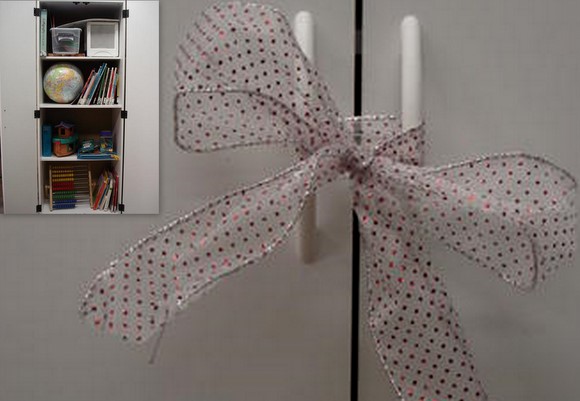
The Robbins Closet picture

(inset) The Robbins Spark Station and the Robbins “lock” – Be creative in problem solving

Martineau Closet picture

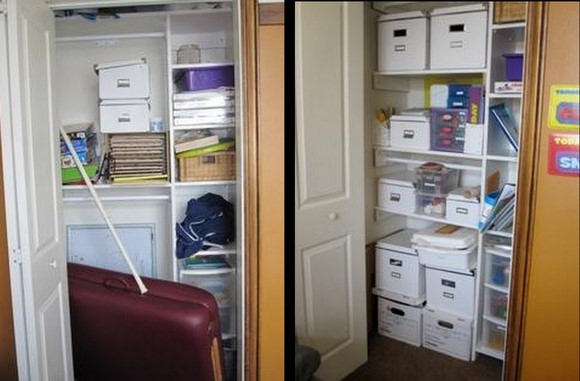
The Martineau’s Spark Station “before” and the Martineau’s Spark Station “after”

Jones Closet picture

The R. Jones Spark Station before she learned how to make it work and her second try. She needed to change her containers. Children need to see content and there needs to be color. 

Possibly Related Posts:


{ 0 comments }

TJEd Forum images

Guess what? I have three tickets for the Salt Lake City TJED Forum that I want to give away. Yup, that’s right; I want to give them away. So how can you win a ticket?

I want to hear your stories of experiences using any of the Five Rules of Engagement [effective home school teaching strategies] with your family. What struggles have you had implementing them in your life? What is the response in your family when you use them? What are some of the stories you can share about the difference they make?

making tornado in bottle pictures

Allan and Gracie Donaghey making a tornado in a bottle

Implementing the five rules and learning to use them takes practice, practice, practice. It is worth the time and effort because these five little rules can really transform your family, not just educationally, but they can transform the quality of your relationships.

One mom who came to me to learn how to create and use a Spark Station said, “You help to heal homes and relationships. I may walk away from your program and never know anything about the Spark Station but my home is healed.”

Here is how I learned about rule two, Be Present, for the first time.
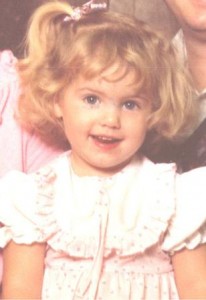
When my daughter Marie was about three she and I had an experience that opened my eyes to the importance of being present, even for small amounts of

little girl smiling pictures

Marie at 3

time. I was in the middle of a sewing project. I do not love sewing! Worse, this project had a deadline which was fast approaching. Marie kept coming in and bothering me. She asked questions, whined about this and that, asked for food and on and on.

Finally, I was ready to yell, maybe swat! Fortunately for me a thought came into my mind from somewhere outside of myself. I like to think that Heavenly Father was teaching me this principle. The thought was, “Why don’t you just hug her.” So that is what I did. I gathered her up and I gave her a loooong hug and said “I love you”. She went off happy as a clam and interestingly enough, never came back. She just wanted a moment of my presence.

The Five Rules of Engagement are powerful in helping families have the type of feeling and environment that we all wish we had. They are amazing in helping parents love spending time with their children. They help parents to see their children as people and not problems to solve or annoyances. They bring joy.

So share your experiences with how the five rules have helped your family and maybe you will win a ticket to the Forum. I will choose the three top entries. Deadline is midnight March 11.

Submit your entry in the comment section below.

Submission assumes your permission to use your story in printed form or in presentations. All identifying information will be changed at your request.

Here is a great article about children reading together that highlights Rule 1, Structure time and be consistent.

Possibly Related Posts:


{ 0 comments }