Teaching Kids to Organize – Book Review

by Mary Ann on September 7, 2011

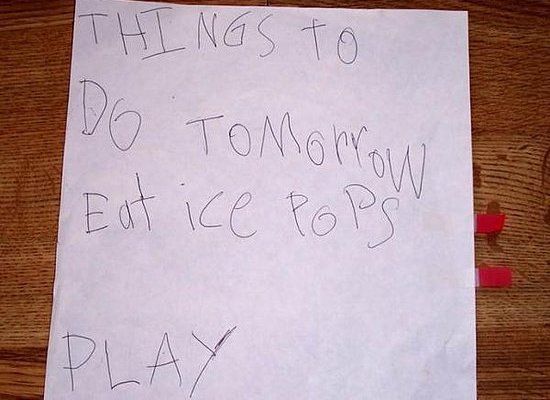
picture of a to-do list made by a kid

An "all kid" to do list
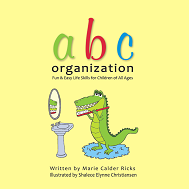
abc organization book pictureI had the opportunity recently to review a book called “ABC Organization”. It was delightful to be asked to review ABC Organization by Marie Calder Ricks. I have not had this opportunity before in any official capacity and it was fun getting the book in the mail and then sharing it with my grandchildren.

Marie is a professional organizer, and teaches children how to organize. She understands how important

Marie Calder Ricks photo

Marie Calder Ricks

it is to get children organized as young as possible. Her latest book, ABC Organization, is aimed at the preschool age child and goes over the basics of organization.

In a fun and simple way this little book is a conversation starter so you can begin teaching your young child how to manage themselves and their belongings. It brings up some good food for discussion.

As I read it I thought that it would be perfect for giving any parent the information that they need to organize a series of good kid school lessons on organization and family solidarity.

Here is what I loved most about the book – the words. This is not your ordinary ABC book. It uses the most wonderful words, many of which will be new to your children. You can have a good time teaching them what each word means and then pratice “doing” the word.

This book was a fun way to look at organization. Each page is something that can be talked about, systematized and then practiced. You can find out more about the book and how to get a copy here.

Just for fun I thought I would share some wonderfully fun ways to get your children interested in cleaning, organizing and FUN!

Fun Cleaning/Organizing Ideas for Kids

1. Plan to have snacks and drinks on hand. Play some up-tempo music to keep everyone’s energy level up.

2. Let everyone in on the fun. Preschoolers enjoy helping with cleanup, and can easily dust lampshades, books and tabletops, or line up CDs. Pair up an older child with a younger child.

3. Want to make room in the closets; why not have a fashion show? Put a big invitation in the Closet. Invite them all to be models. Have everyone try everything in their closet on. Whatever doesn’t fit gets handed down to a sibling or packed up for donation. (Have some packing boxes ready to go.) This might also be a good time to have each child make a list of what clothing items they need. Have some simple note pads and cool pencils available in the Closet for some writing practice.

4. What about those messy dresser drawers? Have badges in the Closet marked Clothes Drawer Inspector. Have the children sort all the clothes looking for anything too small, out of season or in poor shape or torn. Do this on the same day as the closet cleaning and then have ice cream on the way to donate anything you aren’t keeping. (You will see this ice cream reward being used more than once.)

5. Want to clean out the toy box and those toy shelves? Create a treasure hunt for your younger children by hiding chocolate coins or other small incentives among the toys. Send everyone searching for the treasures while collecting any toy found on the search. When each person’s box, bag or basket is full have them meet in a central room and dump the toys in a pile. Now make a game of sorting into “keep” and “go” piles. Then find a permanent place for the toys that are staying. Maybe buy ice cream on your way to donate the “go” pile.

6. Maybe the cleanliness of the toys is the problem. Haul all the toys outside in baskets or boxes that need to be washed. Fill buckets with soapy water and let the kids have rags and soft bristled brushes. Plan to get wet. Line up the toys and spray off the soap. In your Closet have some empty squeeze bottles and when you are done cleaning the toys have a glorious water fight.

7. Book shelves need a good dusting? Give everyone a shelf and a time limit. Now race to see who can remove the books, dust the shelves and put the books back on the shelf within the time limit. Whoever makes it gets a cool summer activity page to work on. (I actually did this game with my grandchildren. I had a pile of about 60 activity sheets of all kinds. They loved it and couldn’t wait to choose one. We did a number of jobs with the timer and they got a page after each job. They kept them in a colored file until we were done working and then they were free to work on their sheets. By the way I got them free from the internet and the Dover sampler.) Have the sheets in a bin in your Closet to introduce the activity for the day.

8. Do you have too many kids’ papers and memorabilia hanging around in the bedroom and on the kitchen counter? Purchase a really cool, beautiful or corny box for each child. Put them in your Closet. Then have each child sort all their “stuff” and put what they are going to keep into the box. Have them label their box. You could add a few frames from the dollar store to your Closet so that as they find really special items they can be framed and hung. In place of the box you could use pocket folders which they decorate before the sorting activity.

9. Want to clean out that pencil drawer in the kitchen? Purchase some small baskets to fit the drawer or use a utensil holder. Let your children sort the pens, pencils and markers. Give your kids a piece of paper and let them test drive the markers and pens tossing away the ones that don’t work. Buy some inexpensive pencil sharpeners at the dollar store and let them sharpen all the crayons and pencils. Throw all the broken crayons into a muffin pan and make some cool mixed crayons. Directions.

10. Make a “to-do” list that’s clever and inspiring. Try a tongue-in-cheek menu of cleaning tasks, and let your child decide which jobs to tackle by ordering from the menu. For example:

Surf and Turf: Clean the garage, organize sports equipment, hose off boogie boards and surfboards, inflate basketballs and beach balls, and rake the lawn.

Hot Tamales: Clean the stovetop, dust the radiators, and empty the crumbs from the toaster.

High Tea: Banish cobwebs from the ceilings, replace burned out light bulbs, and dust the chandeliers.

11. Let your children chose wacky clothes for their cleaning outfit, the wackier the better. Give them a party hat to wear and blast some great music in the house. End your cleaning party with a treat.

12. If there is a lot of laundry to fold hide a prize in a sock and see who finds it. You can also do this with a room by hiding a prize in a hard to clean spot. These can be inexpensive items from the dollar store or even small amounts of money. You can also use coupons for a trip to the park, etc.

Books About Cleaning  for kids

Allie and Scratchy: Spring Cleaning by Keisha Fulton
The Berenstien Bears and the Trouble with Chores by Stan Berenstain
Cliford’s Spring Clean Up by Norman Bridwell
Clean Up Time by Elizabeth Verdick
Arthur Helps Out by Marc Brown
Chicken and Cat Clean Up by Sara Varon

 Share these really fun ideas and a new book with your friends by clicking the tabs below. : )


Possibly Related Posts:


{ 2 comments }

Toilet Training for Children-The Traveling Closet

by Mary Ann on September 6, 2011

Learning about using the potty

This weeks Traveling Closet is definitely for preschoolers! I worked with a group of non-potty using kids. The mom of these children asked me to please come up with some fun things to do to reinforce those who were making progress and those who aren’t even started yet. So that was the topic of this weeks Traveling Closet – Learning to go on the potty!

Sorry guys, but there is just no way to make this pertinent to your older children. However, sometimes we are going to have content in our Closet that doesn’t apply to all of our children. That is why top shelves are for older kids and lower shelves are for younger kids.

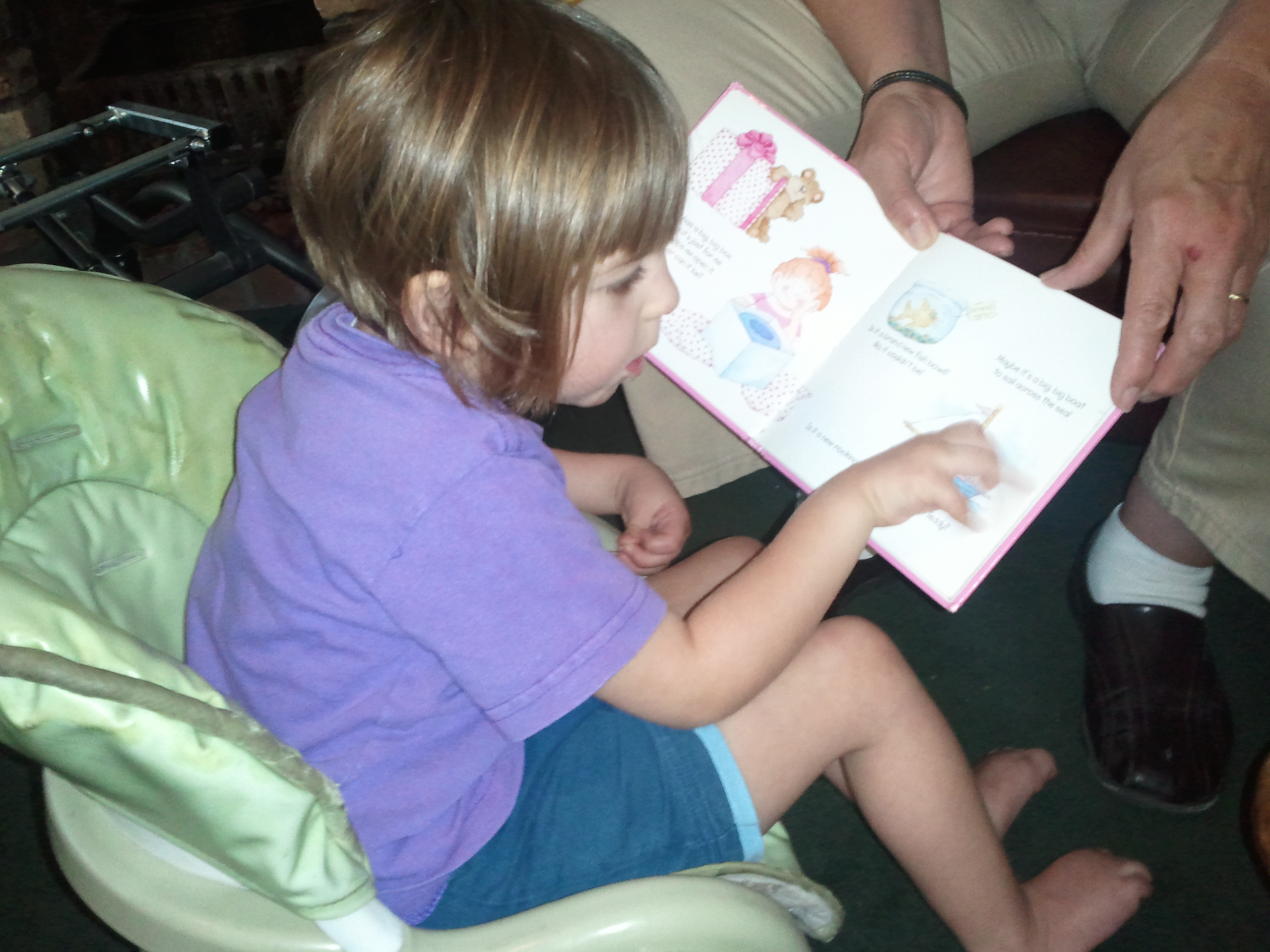
I had some great books on potty training but two really caught Jacks eye. He is the one doing OK but needing reinforcement. He really wanted to read No More Diapers for Ducky! He listened to every word. He was so interested that ducky had a friend who used the potty but she didn’t yet. In another book he wanted to stay on one page for about three minutes. On this page the little girl had had an accident. He asked many questions about what happened, why it happened, what the mommy did, etc. Jodie told me later that the day before he had had many accidents. His interest was high!

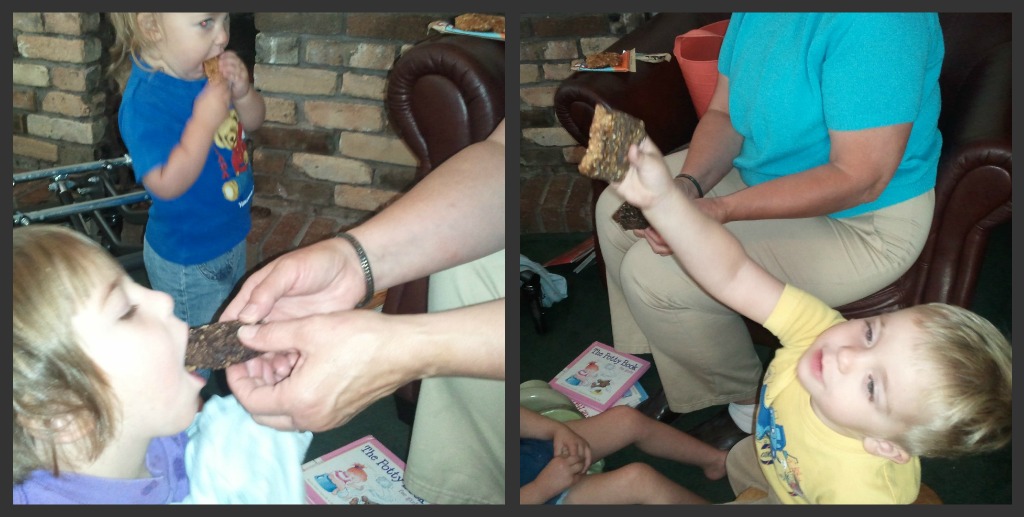
The other book was called Zoo Poo. I know, I know, gross. But little kids don’t find it gross. We laughed and laughed about all the different kinds of poo you can see at the zoo. We talked about the fact that animals can poo on the ground but not people! This will gross you out too but we really liked it, we ate some zoo poo. (Cliff Bars– peanut butter work the best, very authentic!) Jack really liked asking for more poo!!!!

Eating Zoo Poo

Maggie is five but she has cerebral palsy and she cannot walk, use her hands really efficiently or talk. So the subject of potty training has never come up with her. But now it is a big thing in the Palmer household. Jack won a prize, a super wonderful sword, for going pee in the potty. I wondered what Maggie thought about all of this. Was she feeling left out?

Interested in potty training but NOT ready!

I had two books about girl potties. We read the first one and she had her nose practically on the page. She was fascinated with the story. After we were done reading I said, “Maggie, when your legs are strong enough to walk then you will be able to go on the potty.” Then I asked her if she would like to try sitting on it to see what it felt like. After all there was big fuss being made over Jack and his sitting on the potty. You could see her little mind working over that question. She was really pondering it. Finally she looked at me and indicated “no”. She didn’t even want to read the second girl potty book. Maggie is not ready! Interested, but not ready.

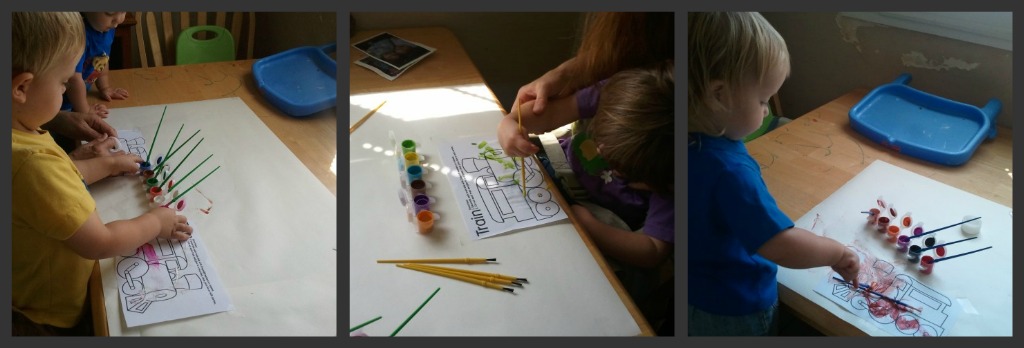
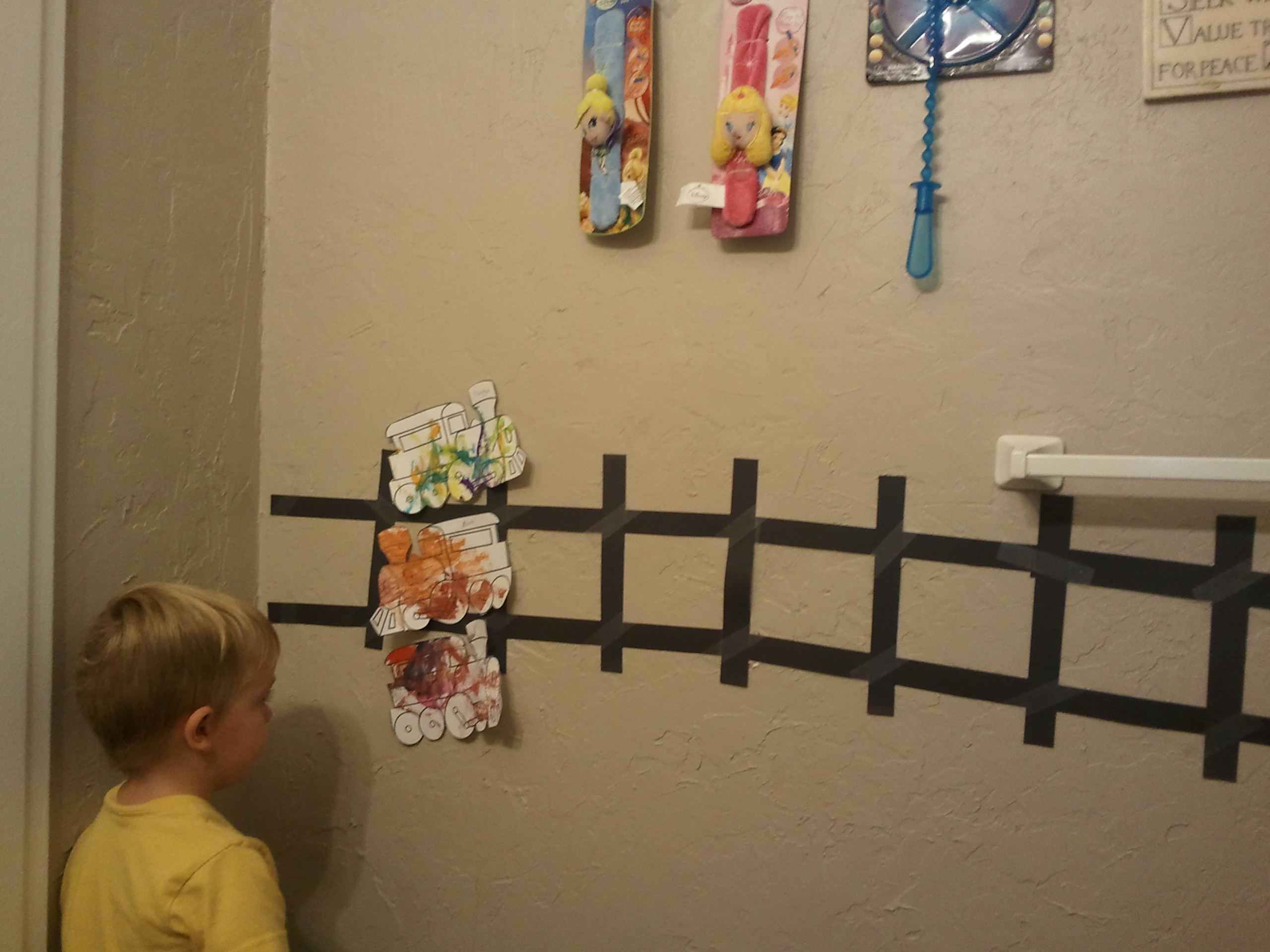
We finished our time together by making a cool train (after all we keep talking about potty train-ing) which we hung on the wall. Then Maggie and I went to the dollar store and she picked out three prizes to tape on the wall. Every time Jack goes potty he gets to move his train down the track. Every time Maggie and Mary (age 20 months) brush their teeth they get to move their trains down the track. (Train pattern)

Making our "potty train" using big kid paints

Our wonderful "Potty Train" and the rewards

Below I have provided some basic potty training information for all those moms facing this learning topic. Enjoy and good luck. : )

A child may be ready to be toilet trained from as young as 18 months or as old as 3 years. Every child will be different on when he or she is ready to be trained. On average, most children are ready by the age of two to two and a half years old.

Signs that indicate a child readiness for toilet training:

  • Able to stay dry for a couple of hours
  • Wakes up dry from sleep
  • Will let you know when he or she soiled the diaper
  • Can tell you when he or she wants to go to the bathroom
  • Has bowel movements about the same time every day
  • Able to follow simple instructions such as, “let’s go and pee”
  • Knows how to pull his/her pants up and down
  • Able to understand simple words
  • Shows interest in the bathroom
  • There are also some behavioral changes that show a readiness for toilet training:
  • Your child wants to do things for himself/herself
  • Imitates what you and others do
  • Learns to question your actions

Potty Training Tips:

  • Let the training sessions be a fun learning experience
  • Do not force your child to sit on the potty. If he/she refuses, try again another time
  • Don’t rush. Let your child learn at their own pace. This will reduce stress
  • Give encouragement and be generous with your praises at every successful attempt
  • Do not pressure or punish your child for unsuccessful situations or accidents. You will need a lot of patience.
  • Encourage practice by increasing your child’s fluids intake
  • Be consistent – once tots are out of diapers – they stay out of them. It’s proven that toddlers train faster if they don’t switch back and forth between diapers and training pants.
  • To sustain a child’s interest, use interactive approaches, such as games, videos, songs, books, progress charts and role modeling.
  • Let them pick out some books or toys to have next to the potty while they sit.  Sometimes they don’t know when they need to go and this gives them time to sit for a while so they have success
  • Have them pick out some fun underwear that they like
  • Read books about potty training with them
  • Pick a fun potty chair and Keep the potty chair out where your child will see it
  • Instill a sense of potty ownership in him or her by wrapping it as a present or decorating it with stickers
  • Be prepared to begin the process. Potty training takes time and energy.
  • Practice putting on training pants, washing his or her hands at the bathroom sink and sitting on the potty chair before he or she starts using it.
  • Use team work, make sure everyone in the child’s life is on board with a consistent potty training philosophy, encouraging your little one throughout the process (Sources of compiled information)

 Printables for Potty Training

Potty training Games for Children

Potty I Spy – if you’re spending time with your toddler while they’re on the potty, why not have a game of I Spy? If your potty is in the bathroom, add a few objects that you can use for the game in advance. Then change them now and again to add to the fun!

 Potty Training Books for Children

 No More Diapers for Ducky by Bernette Ford

Zoo Poo by Richard Morgan

My Big Girl Potty by Joanna Cole

My Big Boy Potty by Joanna Cole

The Potty Book for Girls by Alyssa Satin Capucilli

The Potty Book for Boys by Alyssa Satin Capucilli

The Potty Train by David Hochman

Everyone Poops by Taro Gomi

Potty by Leslie Patricelli

A Potty For Me by Karen Katz

Where’s the Poop? by Julie Markes

Calliou: Potty Time  by Joceline Sanschagrin


Possibly Related Posts:


{ 1 comment }

How to deal with family opposition to homeschooling

by Karen Davis on September 2, 2011

Guest blogger Karen Davies photo

Karen Davis

Over the years homeschooling, I have learned three basic rules for dealing with extended family. I learned these the hard way. And I have noticed that others have found them helpful. So I am writing them out and posting them in this season of lots of folks deciding to homeschool. Please feel free to pass them on to individuals or to groups where you think it would be a blessing.

By the by, I no longer use words like never and always lightly so that word choice is not accidental.

Many, perhaps we could even say most, new homeschoolers deal with opposition for their choice from extended family members. This can be difficult to face, especially when you are still shaky yourself. Here are three rules that I have found invaluable in warding off, or at least diminishing, family opposition. They are not rules for how you think about homeschooling, but rather for how you present it to extended family members and in family gatherings.

Rule Number One

Always keep homeschooling about your family and your children. Relate those reasons that are positive. Do not make negative statements about schools in general. I think we can help Sally catch up on her reading skills better at home as our school does not have a program that quite fits her right now will be a lot easier to accept than the schools are terrible at teaching reading so we are pulling Sally out! Making general negative statements puts other family members on the defensive and can really put grandparents in a tough place. Defensive people get angry and mean. If you can avoid putting other family members on the spot, it really helps.

Rule Number Two

Always make it about one year at a time. Not sure why this helps but it does, trust me. If your kids aren’t school age yet, then make it only about preschool or kindergarten. Nothing more – you will evaluate and decide from year to year. Now you may have decided once and for all; however, this still isn’t lying, you really never know for certain what life will throw at you. Trust me on that one, too!! So adopt a see every year attitude around family and see if it doesn’t help diffuse the what about algebra questions that you are getting at kindergarten age.

Rule Number Three

Never forget that you do not need to convince anyone else! It can be difficult to convince someone else when you still have doubts deep down yourself. Reminding yourself that you do not have to convince them will take a lot of pressure off. It will also help you stay off the defensive. My brother did not agree with my homeschooling right up until my oldest graduated. Now he thinks it is great at least for my kids. That is a long time to wait but it is sweet when it comes. Homeschooling is YOUR decision. Never forget that.

Some people will still be difficult but I think that you will find that these three rules will diffuse a lot of family opposition. Remember that they have not done the reading and the research that you have. Sometimes you can drop in a bit of that learning but do wait for the opportune moment. Grandparents face peer pressure, too – what will they tell their friends? And most family members sincerely care about your kids. That can be difficult to keep in mind when they are being so unsupportive but try, it all helps! You never know when the fiercest opponent will suddenly become your greatest ally.

Karen Davis – Karen’s oldest child is 23 and they have always home schooled. She has home schooled in six different states.  She has become a strong area networker which has given her a peculiar kind of “fame” – her husband finds it highly amusing when they meet someone and that person realizes that she is  THAT Karen Davis. She and a friend have organized a “Getting Started Homeschooling” workshop which is widely attended and has been extremely valuable to parents in her area.

The Charlotte No. Carolina homeschooling community is very large and very diverse. About 7% of the school age population is home schooled. Karen is a community leader and an amazing teacher in this very busy home school area. Her theory, developed over many years, is that a high enough confidence level tends to deflect negativity towards your home schooling efforts. It has been a pleasure getting to know her! Visit her history site.

Possibly Related Posts:


{ 5 comments }

Children learn when interest is high

by Mary Ann on August 31, 2011

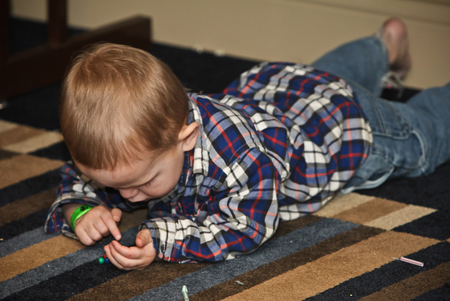
kid exploring and learning with interest

When a child is interested they become absorbed in learning.

SPARKS, they are an amazing thing!!! They are the key to truly inspiring Closet content. Catching them is usually easy but responding to them can take some time to develop as a skill.

I go to the library once a month and I get four weeks worth of material for my Closet. This can be parceled out a bit everyday for the whole month or just added in a couple of days each week. On my last trip to the library I had gotten a bunch of pre-math ideas and books. My focus was on that. However, Jacks was on elephants.

Two weeks ago when the Closet went traveling Jack said, “Hi grandma you brought the Closet.” (It is actually a smallish plastic basket) I asked him if he knew what we were going to do today and he got a huge grin on his face and said, “Yes, elephants.” I showed them the contents and although we had a lot of fun it wasn’t elephants.

The next week when I arrived I asked Jack, “What do you think we are going to learn about today.”  With a huge grin and a face that was lit with the sure knowledge that he knew he yelled, “Elephants”. I knew right then that it should have been elephants. I had missed my opportunity to respond when the spark was fresh.

Jack understands how the Closet works. When he said that he wanted to learn about elephants he fully expected that he would find the materials available to learn about them. I could see his disappointment when it was something else. We had fun but sensed that he wasn’t fully enthusiastic because what he really wanted to know about was elephants.

Well this last week I was prepared with information about elephants. Guess what – I had let the window of opportunity pass by! We did have fun but I could see that the enthusiasm he had had the week before was not present. Imagine how joyous would have been our experience if I had had the materials about elephants last week. It would have made a difference.

So I will spill it and tell you why I didn’t have things going well when it came to elephants. Frankly, the first week I missed it. I heard him say elephants and I let it pass right through my head. I didn’t want to go to the library again, I wanted to use what I already had prepared and I was excited about the pre-math stuff and then I forgot about elephants until the next week when Jacks happy and anticipation filled face reminded me.

So the second week when he was sure I had elephants in the closet I wasn’t ready. I had been thinking about my needs and not Jacks, so I had completely missed the spark.

When I did show up with elephants in the Closet on the third week it was fun but Jack wasn’t as engaged as he sometimes is and we didn’t do even half of what I had prepared. The younger the child, the more important it is to hear and respond to a spark quickly. They move from one interest to another fast.

So here are a few tips to help you do better at responding than I did when it came to the elephants.

  • Have a consistent place to make notes to yourself. When Jack mentioned elephants I should have immediately written it down so I wouldn’t forget about it.
  • If you can’t make it to the library for the right books then use the internet. It will only take 10 minutes max to print off a page of info that you can read and prepare in your mind, as well as a few pictures. Then while you all look at the pictures you can ask questions and slip in some facts.
  • There are always a bunch of craft ideas and cute lunch and snack ideas on line for just about any subject.
  • There are free worksheets and color pages on line for any topic you can choose, including elephants. Add another 5 minutes and you can have those downloaded and printed. If you have trouble using the internet effectively and efficiently then why not take a look at the DVD “Filling your Closet on a Dime with No Time.” It will teach you step by step how to be a master at keeping inspiring content in your Closet without breaking the time bank. You will find it under the products tab.
  • Take another 10-15 minutes to gather your materials for crafts and plan snacks so that you can put them in your Closet over the next few days. I always use what I have. I rarely make a special trip to the store. I am averse to buying when I can make do. So if I need a straw and I don’t have one I call my husband and he stops at Wendy’s after work. If I need a feather and I don’t have one I make one from paper. If I need sliced turkey and I don’t have it I figure out how to make peanut butter or tuna work.
  • So in 30 min or so you can have wonderful Closet content that can work for a week and can help you respond to your children’s sparks immediately.
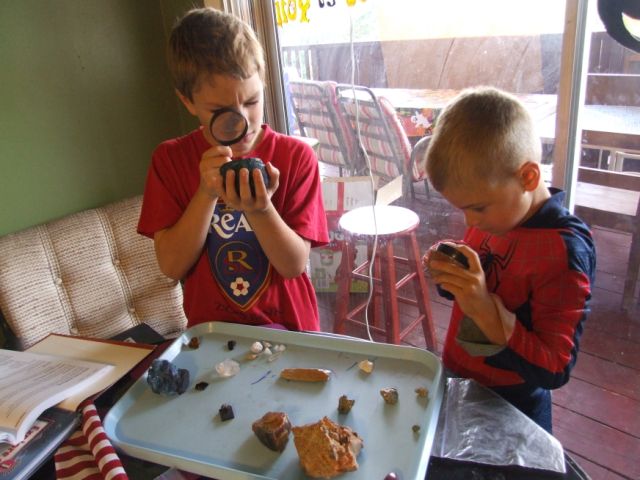
  • kids studying rocks and learning about them

    Rocks - A Spencer spark. Miles and Payton Spencer

  • If you have other plans put them on hold and respond to the spark. Your child will be excited and much more engaged and you may just start a fire. For an example of what I mean check out Sparks Lead to Joy and learning style in children
  • Most of all, remember that the Closet is about your children, their interest and needs and not about yours. The Closet is about creating anticipation and having a magical place where children love to learn!

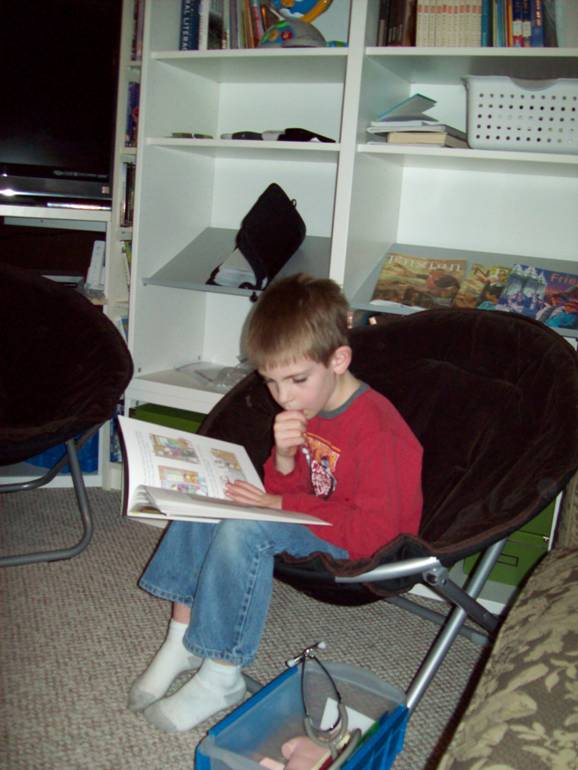
    kid reading thinking picture

    When their interests are responded to, children LOVE learning

Possibly Related Posts:


{ 0 comments }