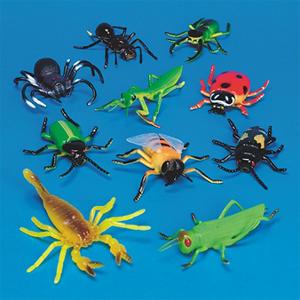
“Last Saturday I found $1 insect items at Target. We are having a blast—and it hasn’t all showed up in The Spark Station yet. I almost passed up the big plastic insects as “toys” but realized, no, they are inspiration (for my little boys) and models for insect body parts. What was I thinking?”    Cathy Duncan

The first thing to realize is that if you are choosing to home school, you are choosing to budget for it.  It doesn’t have to be a large budget but this is an effort which will take and deserves some of your funds.

In fact, this doesn’t just apply to those who home school but to any one who has children. When you had children you made a choice that would require you to budget for their growth and development. We budget for their physical needs but it is just as important to budget for their mental and educational needs.

That said, what do you do when you learn about this magical and inspirational tool and your budget is very small to non existent? Well, take heart because we all have the means right in our homes, right now, to begin!

  1. Use what you already have in your home – craft supplies, games, toys, books, flash cards, and curriculum. Remember that what is in The Spark Station doesn’t matter as much to children as time together learning and the consistency.
  2. Utilize the dollar store, sales at Wal-Mart and Kmart and other budget stores.
  3. Gather odds and ends in a box – empty toilet paper rolls, corks, old keys, broken beads, paper clips, rubber bands, bottle caps, old cards, scrap paper, feathers, popsicle sticks, plastic spoons, etc. Keep this box filled for tons of creation fun. As I tell parents, go through your junk drawers.  Do you recall the movie “Apollo 13”?  There is a scene that I just love. The space ship was out of commission and NASA hadn’t been able to figure out how to repair it. So they gathered a bunch of engineers in a room and dumped a box of junk in the middle of the table. Then they said, “Figure it out”. That is what your children will do, they will figure something out.
  4. Utilize your local second hand store. You can purchase an old toaster, old watch, an alarm clock and other items for “taking apart”. Supply plenty of assorted screwdrivers, some pliers and a wrench or two.
  5. You can also fill a box with superb dress up clothes and costumes. You can buy used books and toys.
  6. The lumber yard – At many lumber yards you can buy small scraps of two x fours for little or nothing. Let your older children sand and paint blocks for their younger siblings.
  7. Print Shops – You will be amazed at the scrap paper you can purchase inexpensively at many print shops. You can get all types of odds and ends of scrap paper.
  8. The Internet – There are many sites where you can download games and pictures to color, as well as work sheets, free of charge.
  9. You can also find many sites on the Internet where you can access science experiments that use what you have at home.
  10. Use the Library! Kids love finding new books in The Spark Station.

Remember, just start. Don’t wait for more money, time or anything else. It just never seems to show up until you step out and start. Then means, materials and ideas begin to come your way. You can always upgrade and add as you go.

Possibly Related Posts:


{ 0 comments }

Inspire Children to Love Learning

by Mary Ann on May 1, 2010

Who knew? It was a big surprise for the whole Salt Lake Forum Board!

One of the delights of hosting the Salt Lake Thomas Jefferson Education Forum is the discovery of new GEMS!

First time Forum speaker, Mary Ann Johnson (now christened “The Spark Station Coach”) has wow’ed us all by becoming one of the TOP FIVE most attended classes at the 2010 Forum, with standing room only, and rave reviews afterwards.

Mary Ann, mother of seven and grandmother of ten has taken the concept of the Spark Station and turned it into a little super charger of inspiration for children ages 0 through 12-13.

I recommend Mary Ann’s workshops and coaching to anyone who is looking for a playful and innovative way to inspire children to fall head over heels in love with learning and leave them begging for more!

Diann Jeppson, founder and chairman of the Family Forum

Possibly Related Posts:


{ 0 comments }

Ideally, the “Spark Station”  is a closet in the room where your family studies together or gathers to spend time together. In many cases, however, such a closet isn’t available. If that is your situation then this blog will give you some ideas to help you create a Spark Station despite that. The important things to remember about choosing a closet:

  1. It needs to be able to segregate items for older and younger children
  2. It needs to be easily movable if you have to take it into your study or family area
  3. It needs to lock or be secure from your children during non-family times
  4. It needs to be of a size to accommodate what your children need
  5. It needs to be easily accessible to your children during study and family time

Here is a list of possible Closet alternatives:

  1. An old dresser or two would hold many things. You may need to provide a stool for easy access.
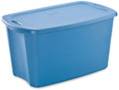
  2. Some large plastic tubs can be stacked in a corner. Cardboard boxes can work on the spur of the moment.
  3. Plastic bins which are low enough to slide underneath your bed or other furniture.
  4. Shelves placed around the top part of the room.
  5. If you only have one or two very small children and lack space, a clear plastic shoe holder on the back of a door can work for awhile.
  6. If you have older children who will keep the items just for study or family time, a book shelf can work. Most children can be trusted to use the items only during school time.
  7. Plastic drawers or bins on rollers.
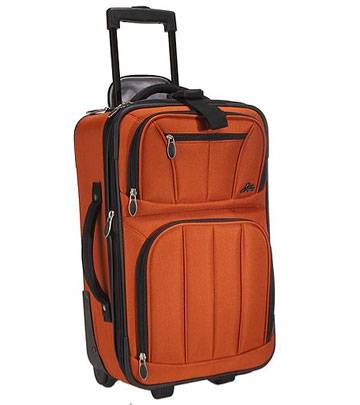
  8. Luggage with wheels.
  9. An armoire.

It has been my experience that parents worry far too much about what, where and content. It paralyses them and then children are cheated out of this marvelous tool that will create a magical learning space for them. Just be brave and do something. You can always upgrade later.

“Your class was wonderful! I loved it. In fact, I used a “Spark Station” today for the first time in our home school. I have always been waiting for that perfect day in a perfect world when I had the perfect Spark Station…which day was not coming anytime soon! After going to your class, I threw together some fun things in some clear Tupperware containers, and voila, our temporary Spark station. How liberating! It was wonderful! We had a great school day together. Thank you so much.”      Elizabeth Little

“I came home from the FORUM two Saturdays ago and started a “Spark Station box”. My girls, 10 and 3 love it! My husband was cuddling our three year old a few nights ago and asked her if she was ready for school in the morning. She said “Yeah”. He asked her what she was going to do for school. She said “We do ‘Spark Station box’. It’s fun!”         Melissa Draper

So set a date (not too far out), grab a box or two and get started!

Possibly Related Posts:


{ 0 comments }

Spark Station Contents in homeschooling

by Mary Ann on April 30, 2010

The number one question I am asked regarding The Spark Station is, “What goes in it”? In fact, next to, “I don’t have a closet I can lock” this is the thing that stops most people from even attempting to get a Spark Station going in their home.

When I first started working with families on this topic one of the early surveys asked, “Have you implemented this tool in your home.” The following is a quote from one of those surveys and is typical of the response. “We attended the first Core and Love of Learning Seminar when the TJEd Ingredientswere first given.  That is when we learned the concept of The Spark Station.  We left the seminar excited and ready to implement a dozen new things in our home school.  Unfortunately everything didn’t go as planned.”

“Our biggest stumbling block was trying to decide what went in The Spark Station.  I needed suggestions or examples.  The concept was too broad.  I also didn’t have an actual closet that could be closed or locked and at the time my children were all under the age of 6.  We made a couple of tries (which amounted to about 2 days each) and let the idea kind of fall by the wayside with the hope that we would come back to it later. 4-5 years later, here we are and are ready to try again. “

I am definitely going to address this question here but want to make a couple of points first. In my experience kids don’t care what is in The Spark Station when you start. What they really get jazzed about is the fact that you are together, doing something that has been planned, with consistency. Really, this is true. We as parents think that the contents would be the most important, a make or break item. But kids don’t care. In fact, I can’t recall even one family where kids even mentioned content when I asked them what they liked most about The Spark Station.

The first two keys that I teach, in children’s minds really are the main two keys. Have a structured family learning time that you are consistent about and second, be present. Enough said!

So what does go in The Spark Station?


  1. Anything that you have in your homealready that is interesting and fun and doesn’t belong to a specific child. If it is someone’s personal possession don’t put it in the closet without their permission! One of the assignments I give parents is to go from room to room with pencil and paper in hand and think about what is in each room that would work in The Spark Station and to write it on the list. Then gather all those items and put them in your Spark Station.
  2. Toys – As Marie Montessori said, play is the child’s work. They learn by playing. Choose toys that don’t do the work for children; toys that encourage imaginative play, toys with cause and effect, toys that require some thinking or creativity to use.
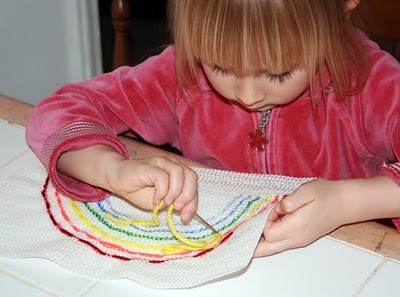
  3. Materials for projects – I was watching a short video on a blog called The Pioneer Woman. In this video of children creating a volcano the parent said, “The use of project learning is an incredible way to encourage the child to venture into new areas of study.” So a box of old socks, scrapes of cloth and yarn, buttons and large needles fits the bill perfectly as does a bottle of vinegar and a box of soda.

4.  Anything that you would like to inspire your children to engage with. What are your goals for your children this year, what do you want to expose them to, what concepts do you want to teach. Use The Spark Station to do that. For example: astronomy, art, geography, stationary for writing, notebooks, math, what you loved as a kid, etc

5.  Books from the library.

6. Kitsor make your own kits.

7.  Respond to Sparks; those things that your children say or do that let you know what they are interested in.

8.  Academics – Some parents really need workbooks, worksheets and the like available to their kids. If that is you, put it in. Please remember “inspire not require”.

Just remember that starting is more important than mulling over the contents for years.

Possibly Related Posts:


{ 0 comments }