So how do you avoid these common time problems?

It is vital that you come to understand your importance in the healthy development of your child’s life. Then you will need to rethink your priorities. Once you have done this there are three things that you can do to avoid the time problems that I mentioned in my previous post Parenting Issues of Fathers

1. Share Your Experience
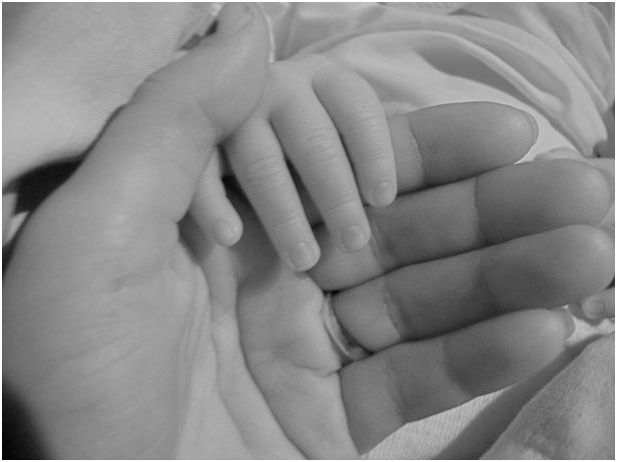
Have familiar conversations with your children. Sharing takes place when you and your child talk and listen. It happens when you exchange ideas, experiences and concerns, interests and ambitions, likes and dislikes. Tell your younger child what you liked to do when you were their age. Tell them about a train ride you took or airplane you flew on.  Tell an older child about a book you read at their age or about your first car or first job. Let your children be a part of your life’s experiences. While there are personal and intimate experiences which should not be shared, most fathers could be much more open with their children.

2. Do Things with Your Children

A child loves family activities and traditions. But they also need moments when they can be alone with a father on a one-to-one basis. Participating in planned activities (such as camping, building a tree house, going to the museum or library) as well as enjoying spur-of-the-moment activities (such as going for a walk, working in the yard, going to the store together) are important ways to spend time with your child.

Doing things together is especially significant to the child if the activity is something he or she wants to do. Have you noticed any sparks lately that you can respond too? But remember that the activity is secondary in importance. Being present is what counts, focusing all your attention on the child. That means with your daughter, as well as your son.

3. Make “Later” Now

Fathers often have a “later” attitude toward their children. “I’ll help you later. I’m busy now.” Or, “Don’t bother me now; maybe later.” Make “later” now. Start right now to take those precious moments of time to respond to the needs and sparks of your children in positive ways. Your children will grow up, but they’ll never outgrow the need to spend time with their father.

Review your schedule for the coming week and set aside individual time for each of your children, even if it’s only fifteen minutes a week before bedtime. If it will help, use a calendar. Begin by marking out all the times you have commitments that can’t be changed. Ask each of your children to do the same. Then schedule a time from the remaining hours or minutes that you and your child can be together. Remember, what your child really needs is YOU, being present, on a consistent basis.

Possibly Related Posts:


{ 0 comments }

Parenting Issues of Fathers

by Mary Ann on August 31, 2010

As I stated in my previous post Fathers Role In Parenting there are some common problems for Fathers,when it comes to parenting .

Lack of Time

You never seem to have enough time. You work long hours. You may be involved in church and civic responsibilities. Home seems to be a stopping place between other obligations. The few conversations you have with your children sound like this, “Please don’t bother me now. I’m busy.” or “Have you done________ yet?”

Preoccupied with Other Matters


You give time to your children, but often you are so preoccupied with your own thoughts or activities you may as well not even be there. You are not really present . You try to watch the football game while reading your children a bedtime story. You think about how you’re going to fix the car while helping your child with homework. You’re physically present, but mentally and emotionally absent.

Frustration

You give time to your children, but what a burden you feel it is! You take them to the park, but wish you didn’t have to. While you are involved with them you’re thinking of the time being taken away from something else you’d rather be doing or that you feel has a greater priority. You feel frustrated about responsibilities as a father and may even resent being one at times. It feels overwhelming.

Almost every father, on occasion, becomes too busy, too preoccupied, or too frustrated to relate well with his children. Your children are your most important assets and they need your time.

Next – How to resolve these common issues.

Possibly Related Posts:


{ 0 comments }

Fathers Role In Parenting

by Mary Ann on August 31, 2010

My little grandson Jack is two years old. He does everything his father does. Everything! Jack has a small pink doll stroller. Actually, it belongs to his four year old sister Maggie but Jack has confiscated it. He needs it for his work – his “daddy” work. When Doug mows the lawn there is Jack following right behind with his pink stroller “mowing machine.” He pulls the imaginary cord and away he goes following his dad’s every footstep, walking with his dad’s swagger as perfectly as he can match it on his small stubby legs.

The other day Doug was cleaning out the garage. Jack, of course, was right there helping. His father was sweating profusely with heat and exertion. Doug was wiping his brow to clear his eyes. Jack looked for a long time at his dad and his dripping face. Then he walked over to the dog dish, put his face in the water and turned to his dad and said “we’re sweaty” and then wiped his head. As I said, he copies his dad. He loves his dad. He wants and needs to be with his dad.

Being a parent is one of the most influential roles you will ever have. Sometimes fathers have a difficult time being involved with their children after a long day at work, caring for one of their primary stewardships – providing for their family. Because of the dilemma of work and family, too often “parenthood” becomes simply “motherhood.” Professional research has found that a child’s intellectual, emotional, and social development, masculinity and femininity, even the ability to function effectively in a future marriage, appear to be influenced by the father’s personal relationship with the child and with the child’s mother; dad’s need to be involved with their children,because,“Fathers do matter”.

As with all important responsibilities, to be successful with our children requires making them an important priority. One of the most important gifts a father can give is his time. Richard L. Evans on the The Spoken Word said: “In all things there is a priority of importance … and one of our urgent opportunities is to respond to a child when he earnestly asks remembering they don’t always ask, that they aren’t always teachable, that they won’t always listen. And often we have to take them on their terms and at their times. But if we respond to them with sincere attention and sincere concern they will likely continue to come to us and ask. And if they find they can trust us with their trivial questions, they may later trust us with the more weighty ones.” (The Spoken Word, KSL broadcast, 31 Jan. 1970.) In order to respond at the time of need, a parent, a father, has to be present, in body, mind and heart!

When over two thousand children of all ages and backgrounds were asked, “What makes a wonderful father?” the essence of their replies was, “He takes time for me.” If you were to add up the time you actually spend with your children, the total may not be as much as you think. In one study of three-month-old infants, it was found that fathers spent only thirty-eight seconds a day with their young children! How long has it been since you took your children, whatever their size, in your arms and told them that you love them?

Father’s Common time issues explained – Next post

Possibly Related Posts:


{ 0 comments }

The Lessons of Core Phase

by Mary Ann on August 27, 2010

When I was ten years old I went to stay with my grandparents for two weeks. They lived in a very small town in Wyoming. I went for the express purpose of earning enough money to buy a pair of cowboy boots from my grandfather who owned The Shoe Shop. They were white with gold decorations. They were the most beautiful boots in the whole world and I had coveted them for many months. I envisioned myself as an accomplished horse rider in my beautiful boots, even though I was, basically, a city girl.

The Shoe Shop was on Main Street. It wasn’t really a shoe store although that was its name. It was actually a boot shop because that is what he sold and repaired most. He catered to cowboys and farmers.

I was only ten that summer. However, I would go to work in the morning with my granddad and he

Grandpa “Ted”

would put me to work sweeping up and dusting the rows and rows of boot boxes. In the early afternoon he would leave the shop and go next door to the Golden Spur Cafe for a break. He would tell me that if anyone came in I should measure their feet and then help them try on the boots that they were looking for.

Sure enough one or two cowboys or farmers would come in. I would ask them to sit down and measure their feet. Then I would ask them what type of boots they were looking for. Did they want cowboy boots or work boots. Did they need steel toes? The cowboys would try on a few pair, thank me for my help and then head out. I was proud of my ability to do this important work with adult customers. It wasn’t until many years later that I learned that my grandfather would send them over. He was teaching me how to work by letting me work, despite being only ten.

My grandfather would occasionally say, “Any darn fool can run water down the swails and gullies, I want to see those brown spots turn green!” I learned through example that what he was talking about was doing better than just good. He wanted us to do our very best even if it took more effort.

My grandfather wanted to teach his grandchildren about the value of a good work ethic, the importance of a full effort in every task, honesty in our work and how to deal with people in life and in the work place.

When I think about my grandfather letting me work for him I think of a wonderful quote from Oliver DeMille in the classic book, Leadership Education: The Phases.

“A good Core Phase naturally provides the foundation for a good life, a great Core Phase for a great life…”

As we think about children ages 0 through about 12, the foundational period, it is important to remember that they learn more by what we are, the environment we create and the feelings that surround them than through the things we are teaching or the activities they are engaging in.

My grandfather didn’t have the foggiest idea about Leadership Education or the Phases. What he did understand was that children need to be loved, they need to be inspired, they need opportunities to work and to obey and they need to have values modeled for them. My grandfather understood that what we saw and felt would impact us far more than anything he said to us.

Play is a huge part of Core Phase. As Maria Montessori taught, a child “Learns everything without knowing he is learning it, and in doing so passes little from the unconscious to the conscious, treading always in the paths of joy and love.” Work is another essential part of Core Phase. The time children spend learning how to work and obey parents rules provide valuable lessons they will use in many circumstances (including later academic work) and through the rest of their lives.

The summers I spent working for my grandfather were play and work. I played at working like adults work. It was fun. My love of work and learning were strengthened during those summers.

Children in core phase should be instructed and trained in a gentle, loving manner. It should be constructive and positive. During this foundational phase there are critical abstract lessons that need to be taught. This is when children feel and observe the answers to deep questions such as: “What is success?” “What is maturity?” “How do I resolve conflict” “What is my relationship with God?” “What is my relationship with others?” “What role does money play in life?” “What is home?” “What is my duty?”

We want our children to read and write and chiper. My grandfather wanted that for me also. But he took the time to help my parents provide a firm foundation of understanding about life and how I fit into it so that I would be capable and able to go forward on my own and learn all those important academic lessons. I did learn to read, write and cipher. But I am most grateful for the sound values which were transmitted to me in kind and loving and practical ways by the adults in my life in those early and foundational years.

Possibly Related Posts:


{ 2 comments }