guy with sunglasses picture

Kane, the reader!

Children love to receive mail. I have even sent mail to my children when they were living at home.  It is a great way to get a child’s attention when you want to share. I used this particular Spark Station Letter to help my fourteen year old grandson see what I was doing with my own education; to share my excitement and enjoyment of learning with him. He had just discovered the joy of reading and I wanted him to know how much I loved reading too. I also wanted to teach him how to remember what we read and that learning is really all about us. This is a part of what mentoring is and helps you to be a mentor to your children and grandchildren.

Dear Kane,

Do you know who George Wythe was? He signed the Declaration of Independence, and was a delegate to the
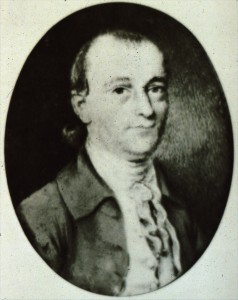
george wythe pictures

George Wythe, Statesman and Mentor

Constitutional convention. He was the first law professor in America, a famous judge, and a Chancellor of the State of Virginia. He was a very great teacher. One of his students was Thomas Jefferson. He wasn’t a teacher in the normal way of thinking. He was a mentor to Jefferson. He actually mentored two presidents, two Supreme Court justices, over 20 senators, representatives, governors and judges. That was his greatest legacy, his ability to help people learn love to learn.

What is mentoring?  How did Wythe mentor Jefferson? He asked Jefferson what he wanted to learn and then he would help him set up a course of study. Then Jefferson would read all the classics that Wythe suggested and write about what he had read and have discussions with his mentor and others. That is how he did it. He had Jefferson read, write and then discussed what he learned with him.

Jefferson was so well educated that Pres. John Kennedy said this about him when he was hosting a group of Nobel Prize winners; this is “the most extraordinary collection of talent and human knowledge that has ever been gathered together at the White House – with the possible exception of when Thomas Jefferson dined alone.” I LOVE that quote.

Thomas Jefferson picture

Thomas Jefferson

The cool thing about Jefferson was that he didn’t have as much formal education as he did education with a mentor and reading the classics. So he basically taught himself. Of course you know that is the very best way to learn anything – to study it out for yourself and then find someone who knows more about the subject you are studying than you and then talk to them.

Jefferson was very articulate in English, and spoke Latin, Greek, Spanish, Italian, French, and more than 10 Native America dialects. He was a master in law, physics, mathematics, theology, philosophy, zoology, and chemistry. He was an accomplished farmer, attorney, businessman, and inventor. He served as United States Minister to France, Secretary of State, Vice President and finally president. He was founder and president of America’s first university. He wrote the Declaration of Independence, the Statute for Religious Freedom and other notable works. In short he was amazing, as well as  knowledgeable. That is a very short biography of Thomas Jefferson. : )

I really like Thomas Jefferson and have a wonderful painting of him hanging in my home. I have an extra if you ever want one.  Anyway, the reason that I am telling you about him is because I wanted to share something about him with you. When he was young and was trying to learn things he kept a book called a Commonplace Book. It was basically a journal of what he studied and learned each day. I was thinking about the wonderful books that you have been reading and thought you might like to keep a Common Place book. You could write a bit about what you read each day and your thoughts about it. Every time you read a new book you could write a summary of what you learned, thought and felt about what you read. This practice is what helps us really learn and remember.

This has been on my mind for a reason. I have two mentors – one is helping me learn to think more deeply and meditate. The other helps me with major projects I have at work and in life, to stay on track and make progress. They both assign me books to read. I am reading about 6 books right now, all at the same time. I try to read a few chapters out of each one every day. Whew.

When I complained to one of my mentors that I felt I just wasn’t getting enough out of the reading she flatly said that it was because I wasn’t doing any work to remember. She said that I just read, which is what most of us do. So I am keeping a Common Place book of sorts now. I write down things that I learn or that I want to remember as I go. She is right; I am learning more and remembering more. Just thought you might like the suggestion. Oh, by the way, this works whether you are reading a science book, a philosophical book or a work of fiction.

Let me know how you like the books that I sent you. I would especially like your thoughts on the Giver.

Love,

Grandma

Possibly Related Posts:


{ 2 comments }

grandparents photo

Ted and Rose Cazier

My grandfather owned the Cazier Shoe Store in Afton, WY when I was a girl. My grandmother owned the Cazier Sweet Shop. These were the places that I spent many summer days and nights. I loved my grandparents.

My grandmother had Alzheimer’s when I was in my 30’s. One day she and grandpa were visiting my parents and she was lying on a bed in the family room. I was lying by her and she said, “Mommy can I stay with you?” I looked with loving eyes at my grandmother, patted her hand and said, “Don’t worry Rose. You can stay here.” I realized then that I had rarely talked with my grandmother about her life. I knew how she and grandpa met and how she came to start the Sweet Shop but there was so much I had never asked her. I didn’t know much about her mother and father, her siblings or her school days. I knew that she stopped going to school in about 4th grade to cook for the farm hands. I never asked her about that or about her mother’s illness.

Two years later I was visiting my aunt. Grandpa had gone to live with her. As I walked down the hall I heard him crying. I went into his room and lay down on the bed by him. “Grandpa why are you crying”, I asked. “Life goes by so fast’” was how he answered. My grandpa was very ill by then and died a short time later. I hadn’t asked him how he came to love sheep or how he lost his first herd. I hadn’t remembered why he was called Ted when his name was Edgar Leroy. I was the only one who asked him but I was a little girl, I didn’t write it down and I didn’t remember.

Some years after they passed away I put together a family history book about Ted and Rose Cazier. It was filled with words from their children who were still living and their grand children and great grandchildren. There weren’t many words from them. Their living children didn’t know much more that we did.

Yesterday we were talking about inspiring children to read and write. I mentioned helping them keep their own scrapbooks and letting them help to make family photo albums. I have a few more ideas about that today.

grandmother granddaughter pictures

Encourage a strong relationship with grandparents

*Encourage children to keep a strong relationship with their grandparents and show them by example. Teach your children to ask specific questions in order to get family history stories from their relatives. They can listen to stories as you ask questions. Then they can learn to ask their own questions. You can help them write the stories in their own words and even draw pictures for the stories to add to their own personal histories.

journal writing pictures

Help children keep a journal

*Journal writing is another way to help children keep their personal history. As you sit with them at bed time take the time to ask them about the important things in their day and encourage them to write about them. When your children are small you can write what they tell you in their books. Those that can write themselves can read you their stories. You can read a child’s stories to them that you have written down. You can really expand this history keeping opportunity by experimenting with making short videos, blogs, writing stories and publishing them, besides  keeping a handwritten journal.

I happened to see a blog that is being kept by a nine year old. It was great. She talked about her cat, reading, her favorite movie, a story she wrote, a video of her and her sister singing.

grandmother grandson pictures

Personal history is a great way to practice reading and writing.

Let’s summarize the last two blogs. A good way to help your children practice reading and writing is to  help them become interested in their own history.

* Let them compile a scrapbook of their own lives

* Encourage strong relationships between your children and extended family members

* Have your children ask family members about specific stories in their lives and help them record their life stories

* Help them write their personal history through journaling

* Let them help collect and mount photos from past generations and their family

* Try making family videos, have a blog or help them write and publish their stories and life experiences

Be creative as you help your children to find meaningful ways to learn to read and write.

You might want to look at these family mission statement examples. After your family has created a family mission statement let your children write it out and frame it. Then take turns reading it aloud each day.

Possibly Related Posts:


{ 1 comment }

girl reading on bed pictures

Inspire a desire to read and write with something interesting to read and write about

I am frequently asked “what can I put in the Spark Station to inspire my children to read and write.” Why not start with some family history. One of the families I worked with did just that.

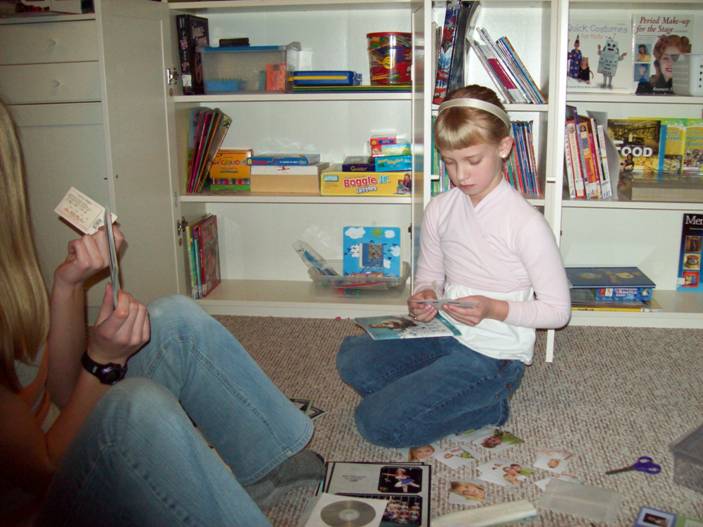
Annette is a great scrap booker and her intention was to create a masterpiece for each of her children. I talked her into letting them create their own scrapbook.

So she sorted all the school papers, birthday cards, vacation pictures, etc. that she had been saving in boxes for her three children. She put the individual boxes in her Spark Station along with some scrapbooks, glue, photo sleeves, etc.

Her two older children were delighted. They spent a full structured family learning time sharing what was in their boxes, telling each other stories and asking their mom lots of questions. They loved it. Then they worked on their own books for a good long time. Family history is a great way to help your children have some reading and writing practice.

making scrap book pictures

Cedar and Tannin working on their scrapbooks

*Begin with their own immediate lives. Let them fashion their own history books from their own personal and shared family experiences. They can write stories about school, vacations and events. They can label all the pictures and mementoes.

*Another good project is to have your children compile your family photo album. Children can work together to separate photos into years or events. You will find that on different days, different children will want to do the job of sorting, putting into the album and labeling the pictures.

*Small children who do not read and write yet will also love this activity for short amounts of time. It may be wise to have your pictures sorted. As you talk about each picture with your younger children let them secure it into the book. You can write out very simple labels which they can then copy into the book.

Let me share something with you to help all you perfection prone parents. I made scrap books for all of my children. Fortunately it was before scrapbooking was a hobby or I might have spent countless hours and a small fortune to make them perfect. I am glad that I didn’t because over the years they have been somewhat manhandled and dismantled as children have needed different things for school, church and other events, as well as just plain enjoying the contents over and over.

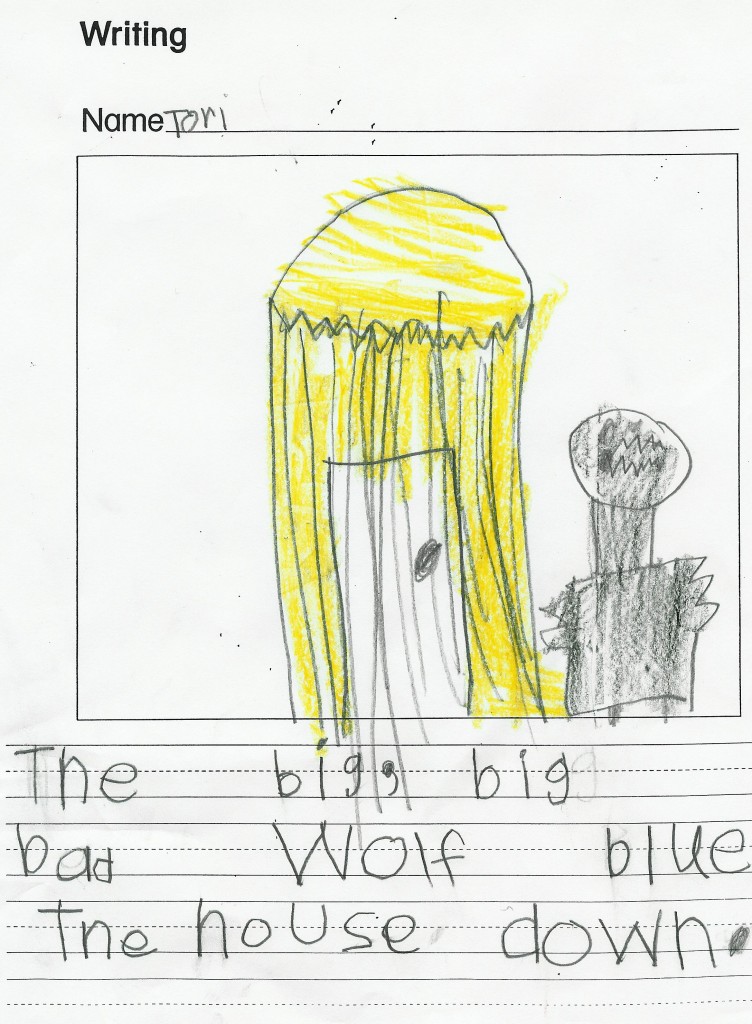
I did however do a very nice job. There is no childish writing wiggly crookedly across any pages. It is all legible; and it is boring. In my own personal box of saved treasures what matters most are the cards, letters, and crafts that have misspelled names and illegible I love yous on them. Right now you just want to have your kids make progress. You want them to read well and write well. You want the scrapbooks to be nice.

childs writng pictures

You will want to recall vividly these learning days.

I promise you that years from now they will read well and write well too and what you will want to see is a scrapbook made by a child filled with childish thoughts and imperfect writing. You will want to recall vividly these learning days.

So put some family history in your Spark Station and let your children relive and enjoy the history of their own lives.

P.S. After making the scrapbooks for our children many years passed and we collected more school papers, ribbons and other treasures. Now they are all grown and in their late 20’s to 40’s. Wow. For Christmas we bought seven beautiful, decorative boxes and filled each one with all these collected treasures.

You cannot imagine the joy  that these simple and inexpensive gifts brought to our adult children. There was so much ohhing and awing going on. “Mom, I can’t believe you saved this.” “Mom, do you remember this?” “Dad, I can’t believe we ever went there.” It was amazing and so much fun. No one ever grows too old and you are never too young to appreciate the past and the life you are living.

Tomorrow I will share some tips on helping your children have strong family history ties to their grandparents.

In the meantime here are some tips on children working together.

Possibly Related Posts:


{ 0 comments }

playroom pictures

Create a magical learning space

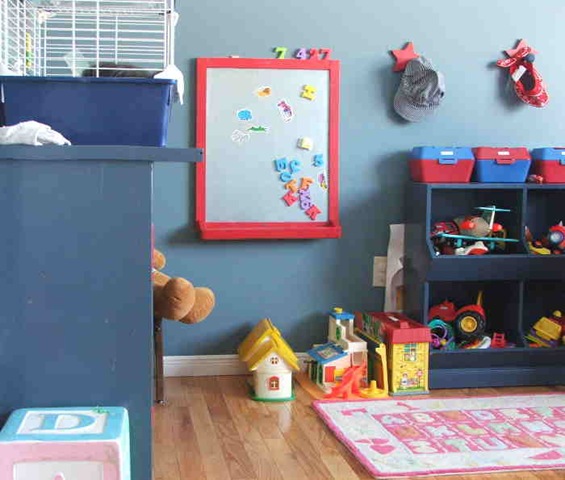
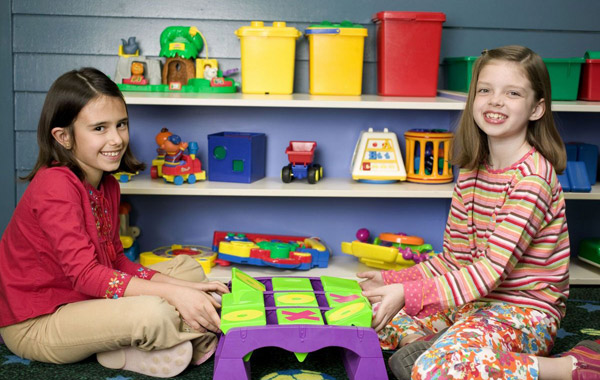
When I had 5 children, those that were of school age went to public school. I didn’t know anything about home schooling and in fact had never really heard about it. However, I had created for my children, what amounted to a huge Spark Station. We had a large basement room. In that room there were shelves containing many different toys and items of interest. Everything was in a bag or a box and was neatly labeled so that you could always find what you were looking for. There was also a cupboard with paper, scissors, glue, tape etc. This was a fabulous place for my children to play. As my oldest daughter Jodie said, “It was magical.”

You might think that I was just so organized and that this was the perfect thing. Don’t believe it. It was a magical place sometimes but it had the same problems that many of you face who have tried to implement the Spark Station as a schooling tool. First, it was open at any time. My children would go down and play for a few days and then it would lose its allure because it was old hat and it was a mess. They would not go down there to play no matter what and just wanted to hang around me doing whatever I was trying to do or would want to park in front of the TV. That was maddening for me because I had provided them a wonderful place filled with amazing delights and they just wanted to pester me. I couldn’t figure that out.

messy playroom pictures

The nightmare!

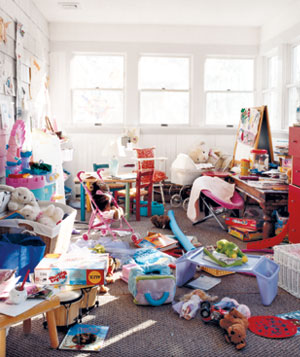
Secondly, it would become a nightmare to clean up. There were two factors which caused this to happen. First I wasn’t present either physically or mentally when the room was being used and second, when they were tiring of the room and it contents they would just get things out and scatter them around until they had run through everything and the place was chaos. Then it would be abandoned until I got tired of them and the mess and put it to rights again.

kids in playroom pictures

Good management keeps it working until they all grow up!

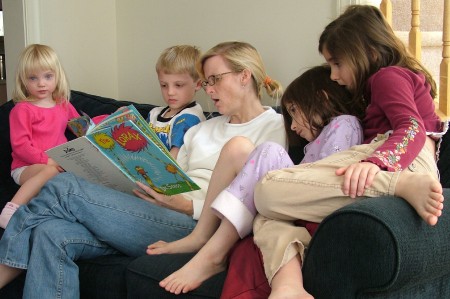
So let’s look at what would have made this room work the way I wanted it to and would have had even more benefit and fascination for my children. I realize now that it would have been a really good idea to pick a space of time every day that was “playroom time.” That would have been a time for me to be with my children, to participate with them if I was needed or to pursue some reading of my own if they were managing themselves. I would be learning and they would be doing the same.

If I was there I could have helped them clean up one mess before creating another. I would have been able to monitor the glue, scissors, tinker toys, Lego’s, etc. I would have been there to read a book to a younger child or to help an older child fix a slide for the microscope. This would have helped to maintain order, keep myself from having a room of total chaos to clean every week and build stronger bonds between myself and my children.

mom with children pictures

Stay present. It counts!

If the room were only available to them for certain periods of time its fascination would not have faded and they would not have fallen into the trap of “mess-creating” in an effort to make it be something new. I know that is an odd sentence but all you mothers out there will probably clearly understand its meaning.

I have an 18 month old grandson who is able to visit at our home either once a week or every two weeks. We love having him and his sister. In the hallway is a built in cupboard with a few drawers and shelves. Within 5 minutes of coming he heads straight for the drawer and wants someone to open it for him. He knows that it is his special drawer and is filled with “new” toys. These toys rarely change yet he is fascinated with the contents of the drawer. The principle at work here is that it isn’t readily available to him whenever he wants it, only when he comes to grandma’s house.

I have three granddaughters who live about eight hours away. When they come they stay 5-7 days. They also head for the drawer and the cupboard. Out come the crayons, glue tape etc. They are so fascinated with all these things and spend great amounts of time creating. If they are allowed to just use the cupboard anytime they want, by day 5 or so things are beginning to lose their appeal and they are making messes. Color books are everywhere, glue lids are off etc. The cupboard loses its excitement and we reach the “creating a mess is something new” stage.

kids playing dress up images

Create a place for fun and learning and manage it well

Management of this tool is important because we want to keep it working until all of our children have entered the scholar phase. And then if we are really wise we will want to keep it going for our grandchildren. If it is always a mess, the kids aren’t interested or we begin to feel overwhelmed, then the whole system falls apart and we quit using it. So let’s recap the important elements of good “Spark Station” management.

1. Schedule time and be consistent. Your children will really look forward to the time that they can use the Spark Station and be with you. They will be excited to see what is new and revisit what they liked from the day before. They will really be excited with your consistency. They will appreciate being able to count on it.

2. Be present. Be with your children both mentally and physically when they are using the Spark Station. You are there to help when they ask, bond and prevent chaos. This is not the time to get your children “busy” and then go off to have some alone time. This will go along way to preventing “creating a mess is something new”.

3.  Keep it simple. Rotate the contents. Do this a little at a time. Think about which items haven’t seen the light of day for a few weeks or months and replace them with something else. If there is an activity or toy that is causing a mess and you can’t stand it replace it until you can stand it again. (Tubs of colored rice are a good example. Kids LOVE this activity but it is messy no matter how careful they are.) Don’t overload your Spark Station.

4. Keep it special. NEVER fudge on this. If your children want into the Spark Station on Saturday or Sunday or other “non structured family learning” times, help them choose a quiet activity while you take a moment to read to them. You could also engage them in what you are doing or help them find another activity. When they want in the Spark Station at “non structured family learning” times, what they are saying is “I am bored” or “I want time with you”.

5. Plan ahead so that you can have what you need on hand, be present and enjoy being with your children.

Remember that everything is an experiment. Have fun, make changes, be flexible and roll with the punches. Your children will love you for it!

reading to children photos

Have fun, make changes, be flexible and roll with the punches.

Possibly Related Posts:


{ 0 comments }