great grandparents picture

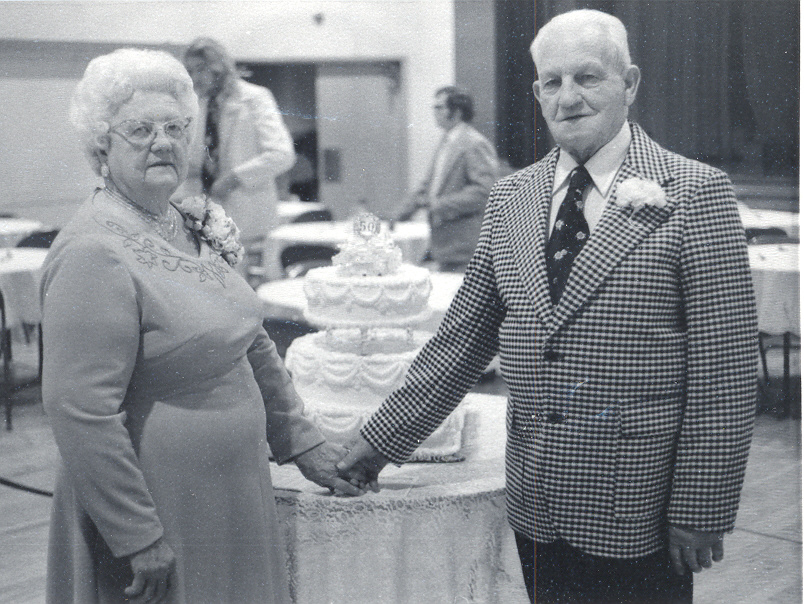
Ted and Rose Cazier, Aubrey's great, great grandparents.

Closet letters are a perfect way for grandparents, other relatives or parents who are away from home to connect with children they love in a meaningful way. It is even fun to send them to your own children even if you are at home. Kids love mail. It is exciting to read and makes them feel special.

Closet letters can have a real impact on children. You can pass on your beliefs and values. You can share your likes and concerns and inspire them to know about new things. You can serve your children and grandchildren.

When you write your Closet letters try to tie them into your family, a holiday, a family tradition, your work or neighborhood  or an event that is current. This makes the information more pertinent and interesting to a child.

Dear Aubrey,
family genealogy tree image

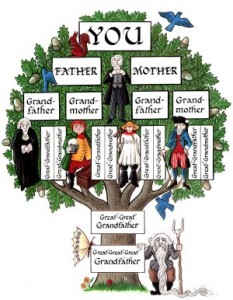
A family tree

I am taking a fun class in church called “Family History”. It is all about finding your old grandma’s and grandpa’s, uncles and aunt’s and people like that. When you learn about people in your family that are dead it is called genealogy. After two classes I went to the big genealogy library in Salt Lake City. The people there know a lot about how to help you find your ancestors. People come from all over the world to work in this library. That night I was able to find 18 relatives. When I got home I was showing grandpa what I learned and we a found another one.

I was thinking about my grandma today. She would be your great, great grandma. Her name was Rozelia Wolfley Cazier. She used to say “a stitch in time saves nine”. Do you know what that means? When I was your age I just couldn’t figure it out. Now I know that it means that if something is torn and you fix it right away it will take less stitches than if you wait until the hole gets bigger. This is called a proverb. Do you know what a proverb is? There is a whole book in the Bible called Proverbs and there are many sayings like this one in it. A proverb is an old familiar saying that has been handed down over many years. So when you hear a proverb it is a bit like hearing advice from an ancestor.

There are many proverbs that aren’t in the bible. People just made them up as things happened. Here are some examples of proverbs with their meanings, “all’s well, that ends well”. That means that in any effort what matters is a good outcome. Here is another one, “Lightening never strikes twice in the same place”. That is a harder one. It means that good luck or bad luck never comes to the same person twice in exactly the same way. (In the real world lightening can really strike twice in the same place.)

I have a proverbs game for you. Here are some proverbs. See if you can figure out what they mean and then send me what you think.
proverbs with pictures

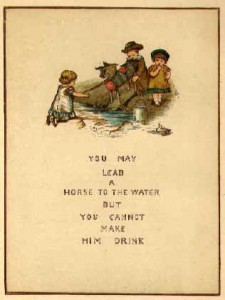
An old proverb

1. The grass is always greener on the other side.

2. Haste makes waste.

3. If the shoe fits, wear it.

4. Mind your p’s and q’s.

5. A fool and his money are soon parted.

(For you reading the blog see the answers below)

I hope you share these proverbs with your familyand you all work together to figure them out. Ask your mom if there are some proverbs that you guys always say in your family and tell me what they are. I always say “better late than never” and “curiosity killed the cat”. My grandpa always said, “Don’t cut off your nose to spite your face”.  That is a hard one too. He used to say that to me when I was mad at someone and wanted to get back at them. It means that you shouldn’t take some action in anger that will hurt you more than the person you are mad at.

Well, Aubrey I love you very much. I love you to the “moon and back”. Hmmm another proverb, of sorts. Let me know what you think about the proverbs.

Love,
Grandma

Since I mentioned  family history, here is how to inspire children to read and write with family histories.

1. The grass is always greener on the other side. (It means that no matter what you have in life, what someone else has always looks better. Think The Three Billy Goats Gruff!)

2. Haste makes waste. (If you try to do something quickly, without planning it, you’re likely to end up spending more time, money, etc, doing it. By the way, this is actually an idiom. A topic for another Closet letter. : )

3. If the shoe fits, wear it. (If it applies, take it to heart. For example: Nobody likes a tattle tail. Are you calling me a tattle tail? If the shoe fits wear it.)

4. Mind your p’s and q’s. (Be on your best behaviour; be careful of your language.)

5. A fool and his money are soon parted. People who aren’t careful with their money spend it quickly.)


Possibly Related Posts:


{ 2 comments }

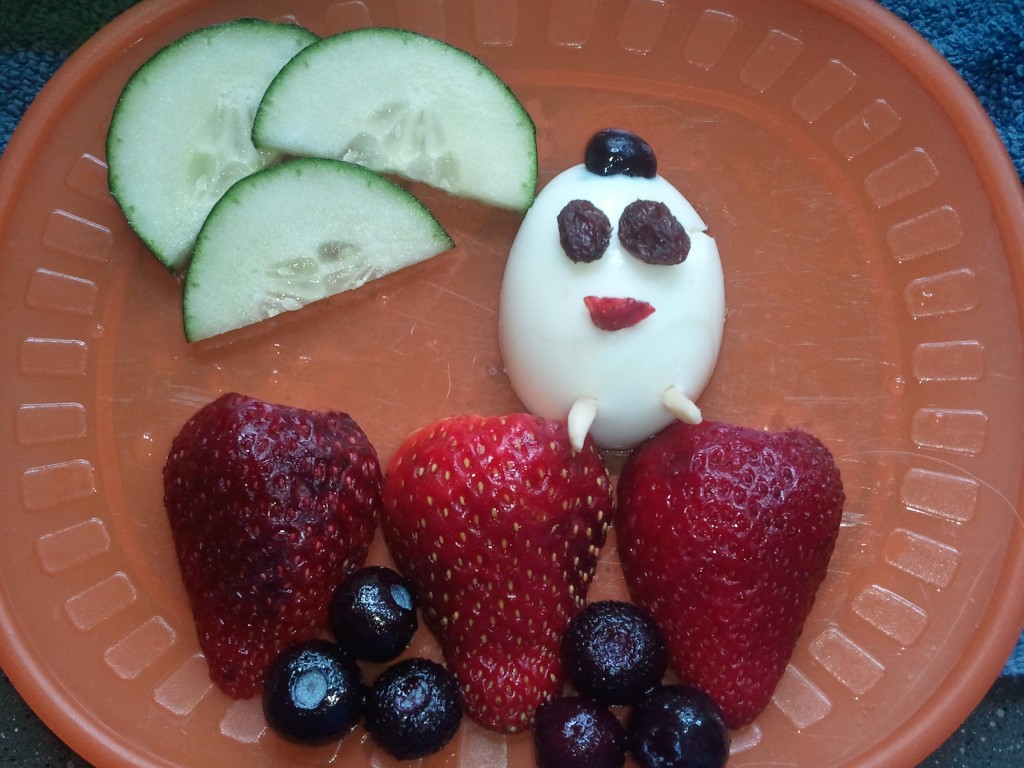
humpty dumpty theme lunch picture

Our version of the Humpty Dumpty lunch – cute isn’t he!

I wasn’t feeling well. I spent most of the day sleeping, on and off. When I got up at 6:30pm I realized that the Spark Station was going traveling at 10:00am the next morning. I also realized that I desperately wanted to go back to bed.

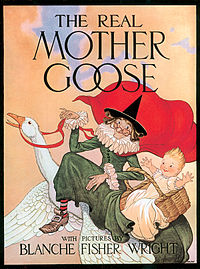
Real Mother Goose book picture

The Real Mother Goose

When I find myself in a place where I need quick inspiration I head for the book shelves. I began doing a search and found my favorite Mother Goose nursery rhyme book, as well as two others that had nursery rhymes. I wondered if I could come up with some nursery rhyme activities. So off to my trusty computer to get some nursery rhyme ideas. Below you will find what wonderful and inspiring nursery rhyme themed content the Spark Station held for Jack, Maggie and Mary, as well as a few ideas we didn’t get around to using. ENJOY!

Of course the first things to always come out of the Spark Station are the books. The children really love them. We sat on the floor and began to read some of the rhymes. Jack knew a few and was very happy to perform them for us.

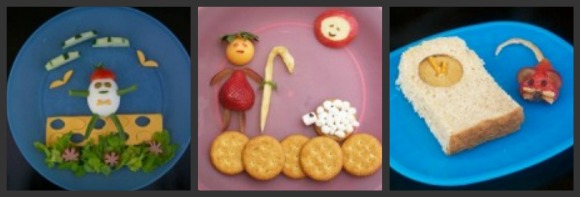
Then because we were running a bit late (we have to be done in time for Maggie’s therapy) we went right to lunch to make sure we got that in! I had found some wonderful Mother Goose lunches. I have shown you the original ideas and then how we modified ours to fit the children’s tastes as well as what we had on had. (I really believe in keeping it simple. I don’t run to the store, I make do!)

nursery rhyme themed lunch pic

Nursery rhyme themed lunch 1.Humpty Dumpty 2.Little Bo Peep 3.Hickory Dickory Dock

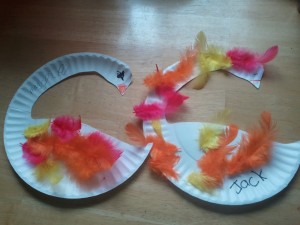
goose puppet picture

When she wanted to wander she rode a goose

As we ate lunch we read more rhymes, again with Jack performing a few. We talked about Mother Goose and where the rhymes came from. If the children were a tad older I would have shared more about the origin, etc. We talked about the goose that she rode and then we made one.

making finger puppet picture

Jack working on his finger puppet

red riding hood puppets pic

We made a little lamb and little girl

I had prepared a few toilet paper tube puppets and we acted out Little Bo Peep, Mary Had a Little Lamb and Baa Baa Black sheep. (Of course a little girl lived down the lane because what we had was a sheep and a girl puppet.)

Then we all made a Humpty Dumpty Finger Puppet so we could recite and act out our lunch. There were so many nursery rhyme craft ideas. You  could never do them all.

humpty dumpty finger puppet pic

Maggie LOVED making this guy dance!

That was really fun. Jack and Maggie loved making the puppets dance. If Humpty never danced before he did on this day!

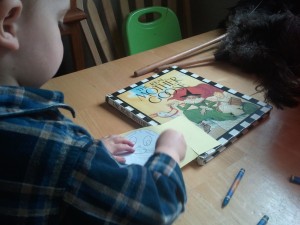
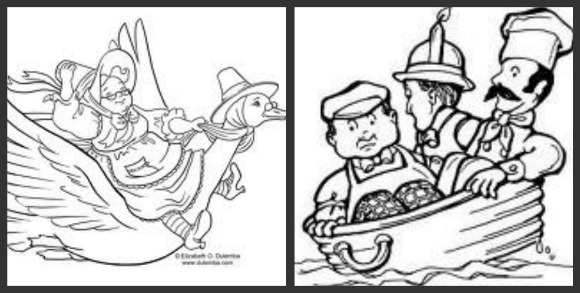
I found some wonderful nursery rhyme coloring pages which we saved for the next day. The assortment available was truly wonderful. If you have no book of rhymes then print off the pictures because older children might want to color a number of the pages and make their own Mother Goose book. (google  images – Mother Goose coloring pages)

Nursery Rhymes use days of the week, months of the year and colors. I’m sure you can figure out how to use those. : ) You can do some counting with nursery rhymes. Cut out a large boot or shoe and let the child draw how many children the old woman had.

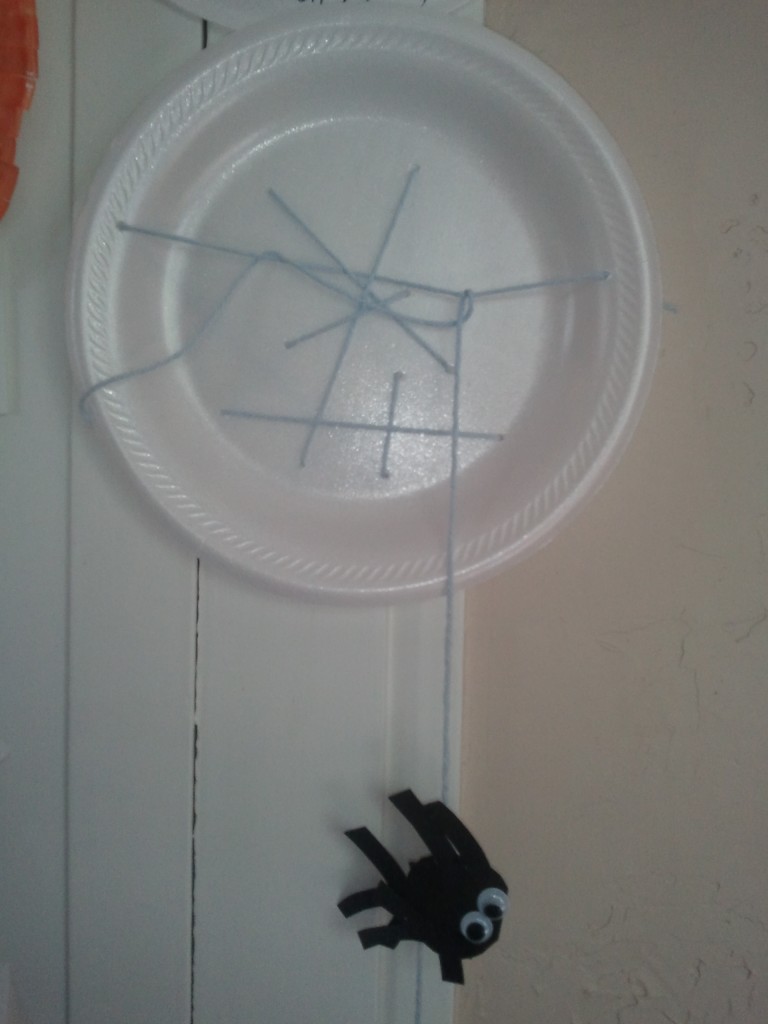
We did some sewing on a Styrofoam plate. We made a spider web with a big spider and recited Little Miss Muffet. We also talked about how many legs spiders really have. As you can see Jack found it challenging to find room for eight legs!

spider puppet picture

Jack’s eight legged spider.

mother goose popcorn picture

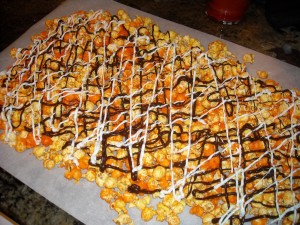
Mother Goose Popcorn. Yummy!

I also found a wonderful recipe for Mother Goose  pop corn. We will be making that to eat while we watch a movie as a family.

Learning Mother Goose rhymes if you live in America and Europe are part of cultural literacy. I am always amazed at how many adults I meet now who are not familiar with very many. People seem to have  stopped reading them to their children. However children love the cadence of the rhymes, the simple concepts and the plain old silliness. They are easy to memorize and so they can be performed by very small children. In fact just a few days later I was at a church talent show where a 5, 4 and 2 year old all performed a few rhymes for their talent.

So share the Mother Goose Rhymes with your children. Here are some ideas if you have children over six. Let them create a Mother Goose book for their younger siblings. Gather information about  the meaning of some of the rhymes and then study the events that inspired them. Ring Around the Rosie is a great place to start. (http://www.rhymes.org.uk/ring_around_the_rosy.htm)

Let them make the lunches to serve and the pop corn for the family later.

One important point from this weeks traveling Spark Station. I was able to pull this together, including making the puppets and gathering materials, in about an hour and fifteen minutes. Of course there is way more here than you would normally find in the Spark Station at one time. So it could have taken even less. I was back in bed before 8pm. This doesn’t need to take a lot of time and can really be wonderful for children.

nursery rhymes pictures

Another tip about the Traveling Spark Station. Each week I hope that I give you enough ideas, websites, information and crafts that you can spread it out over a week or more. When I am working with a new topic I don’t put everything I find in the Spark Station at once. I add something new a couple of times a week over a few weeks or months depending on the topic. So keeping your Spark Station filled with fun and inspiration so that your children will beg for structured family learning time doesn’t have to break your time bank.

Possibly Related Posts:


{ 3 comments }

Making a Change in your Life and Overcoming Inertia

by Dionne Schetzel on May 20, 2011

Schetzel Dionne picture

Dionne Schetzel, guest blogger

Learning any new skill or ability is difficult.  Inertia is such a strong force to overcome.  As Isaac Newton explains in Principia Mathematica: “The innate force of matter is a power of resisting by which every body endeavors to preserve its present state.”  Making changes in our lives requires a stronger power of love, friendship, and truth to overcome our body and mind’s efforts to maintain the status quo.  Since first encountering Thomas Jefferson Education several years ago, I have been making changes in myself and in our home environment.  But I still didn’t feel that I understood how to “Inspire not Require.”  After all, I wasn’t educated in an inspiring way.  I was only familiar with the conveyor belt methods.  Working through the Spark Station Mastery Course is a way for me to learn to inspire my children.  But having a great desire to change and owning the course were not enough to undo my years of ingrained habit.  I needed to invite others to support me (and I them) on this journey.

Making plans and creating new systems for doing things is one of my favorite pastimes, so designing a Spark Station Mastery circle of support was right up my alley.  My first step was to invite about 15 friends who had already expressed to me dissatisfaction with their homeschool or who had core and love of learning phase children (Spark Station Phases), and who might have time and desire to add this to their lives.  Even though I wanted to jump right into the course, from past experience I learned to take a slower approach.  They had time to commit to it, buy the course and have it arrive in their inboxes.  I took time to plan out our schedule and visualize how the group would work.  I challenged them to commit up front to working through the course no matter how long it took and to commit to doing the writing as it would have the greatest impact on their results.  From the original 15 who were invited, a group of seven mothers joined who were excited and committed to doing the course with me.

The circle of support I set up is on the formal side.  This is just my way of applying a principle: Get support when making a change and learning new skills.  Your support group can look like a park day where mothers share their successes or it could look like a one-on-one phone call with a friend, or it could look like an email to an already established support group, like the Spark Station Mastery Yahoo group.  No matter what the application looks like, the principle behind it is powerful.

Our 14-week schedule varies slightly from Mary Ann’s.  I adapted it to fit in some things I felt were important (like personality types) and to give more time to some of the topics (like weekly planning).  Every week, I send out an assignment which usually includes reading, listening and writing, just as in Mary Ann’s Workbook.  Members of the group then post their writing to the group blog during the week.  Sometimes I challenge them to dig deeper and ask them hard questions about how their schedule is going or how busy they are or how they prioritize their schedule. The final, but probably most powerful, component of our group is a weekly conference call on Saturday mornings.  We discuss the week’s topic and the roadblocks we are facing with that principle.

Creating this group has been a tremendous help to me personally and to those in the group.  During one of our conference calls, a friend and I took a close look at what was keeping her from being consistent with her structured family learning time.  Through what she shared, I saw a pattern in their routine: Family learning time was at the mercy of the urgent, and so, wasn’t consistently happening.  I suggested she follow Mary Ann’s sage advice and consider family learning time as sacred.  Her emailed response to me later that week made me smile: “Last Saturday, I finished the call feeling so excited and inspired.”

One of the most important things I have learned came from a seemingly unrelated comment from one of my friends.  She was talking about a time her husband was awaiting surgery.  He was anxious and upset about the coming pain from the surgery.  But when the time came for the surgery, the actual pain was nonexistent!  His fear of the pain was so much worse than the pain itself.  For me, this was a huge epiphany and helped me work through a tough situation in my own life.

Change can be very difficult, even painful at times but there is power in joining our efforts together as we seek to change ourselves.  Leo Tolstoy said, “Everyone thinks about changing the world, but no one thinks of changing himself.”  Working through the Spark Station Mastery Course with a circle of support can provide you with the power to overcome inertia.  What could be more inspiring than to know you are changing yourself?

Dionne Schetzel is the mother of two boys, 14 and 11, and a girl, 8.  Even though she has been homeschooling for 8 years, she feels like she is finally learning how to homeschool by implementing TJ Ed principles.  She is the founder of Shining Light Commonwealth, a scholar phase, once weekly school in the Salt Lake Valley.  She loves to spend her time studying classics, writing, and watching and scoring baseball games.


Possibly Related Posts:


{ 0 comments }

Let children make mistakes and grow up

by Mary Ann on May 18, 2011

messy baby pictures

Learning can be a messy business

“Children are apt to live up to what you believe of them.” Lady Bird Johnson

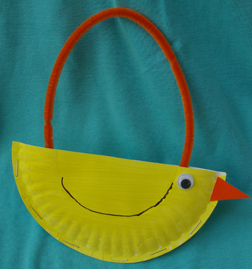
In April I helped Jack and Maggie make a chicken basket for Easter. It was two, half paper plates glued together. Because the Chicken was facing sideways it had one eye and a wing drawn on the side.

paper plate chick picture

The sideways chicken basket

When it came to gluing on the eyes Jack began to have a fit about it needing two eyes. I was explaining to him that it was standing sideways (I demonstrated “sideways”) He kept saying that it needed two eyes, “See it has a mouth”. He was pointing out the wing. No amount of explaining could change his mind. A chicken with a mouth needs two eyes!! I let him have two eyes.

When Jodie was four years old her Dad was fired from his job. Don and I talked about it a lot over the next few days as we contemplated what to do. After a few days I noticed Jodie drawing a picture. She had drawn a stick man and had scribbles all over him. I asked her to tell me about the picture. She said, “Its daddy. He is fired”. As we talked I realized that she was worried that he was going to burst into flame any minute.

A few weeks ago I made the statement that before we could get our butter churned we would all go grey. When the butter was finally done Jack seemed really disappointed. He said to his mom, “I thought we were going to turn grey”. He was talking about our bodies not our hair.

Last week I took some very long bubble wands over so that we could blow some

kid play in grass picture

Children experiment with what is in their environment

ginourmous bubbles. Jack was standing by the front door waiting for us to go outside. He was holding a bubble wand. When I looked at him next he was staring at me and holding the bubble wand sideways as all the soap spilled out. I thought he had done it on purpose to see it spill out.

I said, “Jack what are you doing”. My voice wasn’t mad or loud but it was startled. His mom looked over and said “I’ll get a cloth.” She is really a calm woman by practice and decision, not by personality. I stepped on the cloth, sopped up as much soap as I could and then we left the mess till later and went out to blow bubbles.

Outside I watched Jack tip his wand sideways and begin to unscrew the lid. It hit me what had happened in the living room. Jack was screwing off the lid in what would feel like the most normal way. So I said, “Ah, Jack, I see what happened in the living room. You weren’t spilling the soap on purpose. Let me show you how to keep it from spilling”. Then I showed him how to hold the wand upright and take off the lid. He never spilled any more soap.

When Jodie was five years old she took a potato peeler and peeled the slats on the baby crib until they were about ½” thick. She did this on four or five slats. When I asked her why she did it she responded that she wanted to see how the peeler worked. I assume it was so fun to watch the wood peel off that she just couldn’t stop. : ) It wasn’t funny at the time.

messy boy picture

Children do the darndest things!

All of these examples are funny now. Kids do say and do the darndest things. That is because they think differently than adults. They take things quite literally. They do not understand the multiple meanings of words. They aren’t familiar with idioms. There are many things that they have to figure out how to do and they aren’t always aware of the best way to get a thing done. Sometimes our seemingly simple instructions are Greek to them. And like Jack and the bubbles, they don’t always see ahead to what the consequences of a certain action might be.

When a child says or does something that seems naughty or foolish or silly it is valuable to stop and think it through. Often if we take the time we will find that their intent was good just uninformed. Yelling or becoming angry or silent in the face of a child’s mistakes sends messages that we don’t really want to send. You are stupid. You are naughty. You are clumsy. You aren’t good enough.

If we see children as learning beings and not as naughty people we will be better able to figure out what they had in mind when they did whatever it was they did. When we do this we give children the freedom to make mistakes which is what it takes to grow up well. Mistakes are a part of life. Let children make mistakes and learn from their mistakes.

“Mistakes are a natural part of growing up. They’re to be expected and made light of. But children bloom like spring flowers under praise.” Earl Nightingale

Possibly Related Posts:


{ 2 comments }