Systems for calm and better parenting

by Mary Ann on August 17, 2011

angry mom picture

Without a plan its hard not to lose control

‘No problem can be solved by the same consciousness that created it. We need to see the world anew.’ Albert Einstein

What happens when we feels pushed, disrespected, frustrated, angry, out of control, or just plain worn out and tired? Well, many of us resort to angry words, loud voices, and doing and saying things we later regret.

This type of angry, out of control response occurs when we have no plan or system for managing, to help us respond differently. We want to have better parenting but we just go to our default setting of yelling. Remaining calm comes when we know what to do when we are angry, frustrated or afraid.

I have a friend and I am in her home every week for a few hours working. I have never heard anyone yell, ever! For a while I thought I was just there on a good day. However, I have been there often enough to know that this family communicates; they do not yell and lose control.

The other day I saw a most amazing example of what happens when parents remain calm, when they have a system for handling conflict and then teach it to their children. Here is what happened.

This family has two sons ages 9 and 5. They were in the living room playing Stratigo and I was close enough to clearly hear their
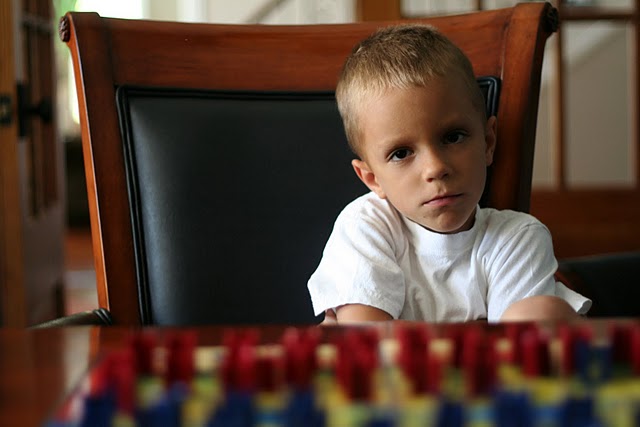
picture of disappointed kid after losing a game

Losing a game is tough especially when you want to win

conversation. The game went well for a while. However, the 5 year old couldn’t understand everything about the game and it was hard for him to win.

His older brother was patiently explaining some things to him; but he is only 9 and his desire was still to win. The five year old began to quietly complain and fuss. Notice I said he did it quietly.

Finally the nine year old said, “If you continue to fuss and have a bad attitude I can’t keep playing with you.” The fussing quietly continued. After just a couple of minutes the nine year old said, “I told you I can’t play if you continue to have a bad attitude.” He cleared up the board and put the game away. The five year olds face fell but there was no yelling or crying. About five minutes later they were both playing a different game and having a good time.

I know, I know, some of you are shaking your heads and saying ‘those kids aren’t real. Kids fight. My kids would never behave like that’. I was amazed myself. Here is another example of a parent with a plan and how  she dealt with a child’s temper tantrum.

As I said I have been in this home a lot. I can make a few guesses about how mom and dad argue with each other. I can make a few guesses about how they discipline their children and talk with them. They obviously have a system which helps them have better parenting skills and self management skills.

There is great power in remaining calm and in communicating in clear terms where we stand. Children learn what they see. You cannot teach one thing and do another. If you are having conflict in your home, if you find yourself losing control and have children that do the same, then the solution is to get mastery over yourself. You need a plan and a system to help you remain calm and parent better so that you can help your children do the same.

For calm parenting here are some of my favorite classics. Read them and then begin designing a system that works for your family.

‘Insanity is doing the same things over and over again and expecting the different results’ Albert Einstein.

Classic Parenting Books – The Best Parenting Books

  • Becoming a Present Parent by Mary Ann Johnson
  • Anything from the Arbinger Institute (Leadership & Self Deception; The Anatomy of Peace; The Choice; Bonds that Make Us Free)
  • The Five Love Languages of Children by Gary Chapman
  • Bringing Out the Winner in your Child by John Croyle
  • Siblings Without Rivalry by Adele Faber & Elaine Mazlish (Anything by these two authors is great)
  • Love and Logic Magic for Early Childhood by Jim Fay & Charles Fay (I love the Love and Logic stuff, but I don’t think it’s totally complete for my taste. The other books really add to my whole system)
  • The five Love Languages of Teenagers by Gary Chapman
  • Parenting Teens with Love and Logic by Jim Fay and Charles Fay
  • Parenting A House United by Nicholeen Peck
  • Here are two links to the best talk on family relationships that I have heard. They are by Jodie Palmer. It is free at both sites and this is worth listening to. The first site is her best presentation but the second link comes with a free parent workbook.

‘If we always do what we’ve always done, we will get what we’ve always got.’ Adam Urbanski

Possibly Related Posts:


{ 0 comments }

It is better to laugh than to cry

by Mary Ann on August 16, 2011

picture of a stressed out ladyI felt very RUSHED!! My daughter and I were heading out for a church event for girls and we were late. I just hate being late and back then it always put me on edge.

You would think that with seven children I would have gotten a bit more accepting of occasional lateness. But I hadn’t and today it was really making me feel anxious.

It had been a warm summer day, no rain in sight. The weather was perfect. However, as I stepped off the curb to get into the car I found myself ankle deep in water. GRRRRRRR. I felt my hackles rising. Who in the world filled the gutter with water!? Yes, that is how we get when we let anger run over, irrational. I mean really, asking who filled the gutter with water!

As we drove down the tree lined street I was sputtering about how ticked off I was, how inconsiderate the whole situation was, how being late is a sign of disrespect and on and on and on and………..

About five blocks from home I pictured myself stepping off the curb into ankle deep water. I saw my shocked expression and myself

mom and daughter laughing

It was always funny!

looking down at the foot I was holding up while it dripped water. The mental vision was so funny that I began laughing. The longer I laughed the harder I laughed. I looked at my daughter who until then had been very quiet (after all it might have been dangerous to make a sound) and she began laughing. We laughed for a good block or too.

Then my daughter turned to me and said “Mom, it was funny when it happened too”. Her comment brought me up short. She was right. It was one of those unexpected and very funny situations that happen in life. She was pointing out in a kind way that I could have saved myself and her a lot of stress if I had just laughed in the first place. That is the best way to manage stress and find happiness.

In July we took one of the few family vacations that we have had. We went with our oldest daughter and our youngest daughter and their families. We had prepared for over six months. It was a BIG deal vacation!

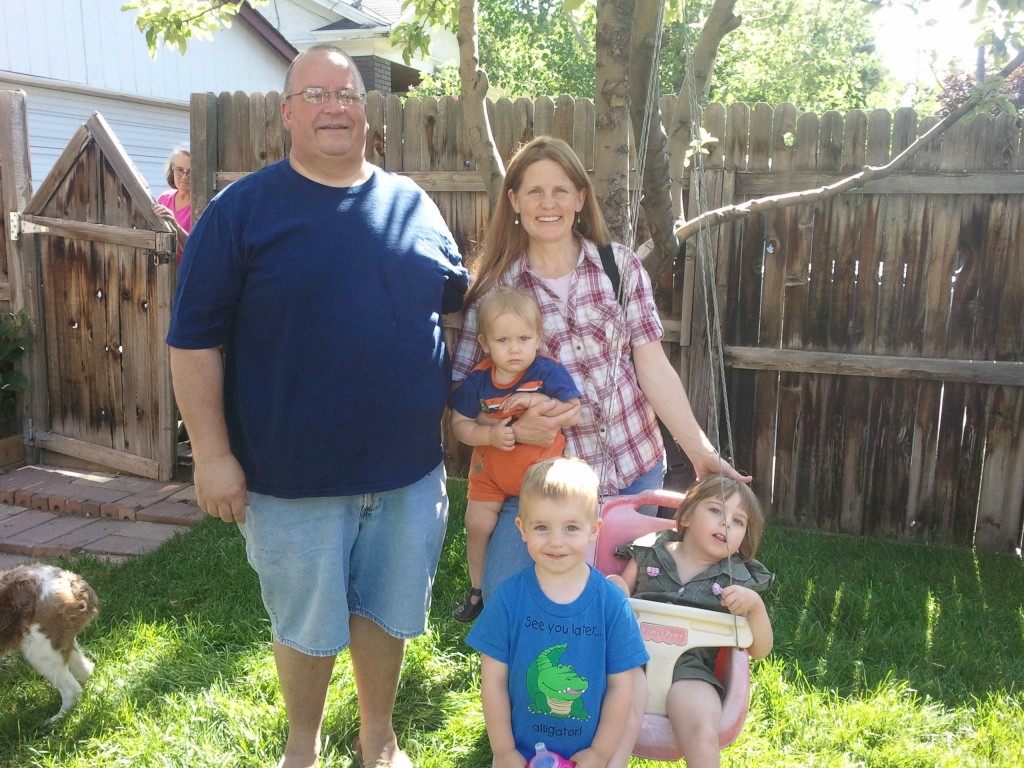
palmer family ready to go on a trip

The Palmer's - Ready to go with no idea of what was ahead!!! All smiling.

One by one everyone got sick. There was a lot of crying, vomiting and sleeping. It became so hard to travel with the children that our oldest daughter and her husband aborted the trip and headed home.

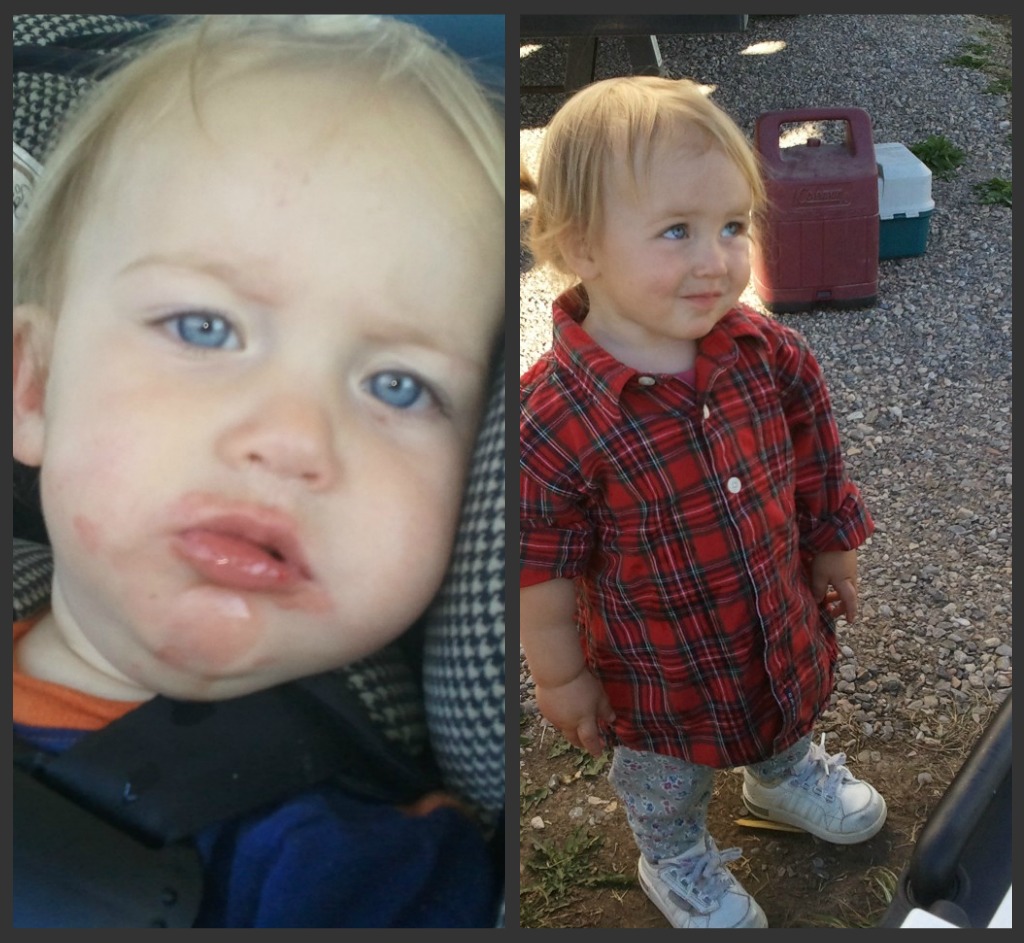
tired cute little girl picture

Mary after throwing up all day and enduring a truck breakdown on the side of the road!! - Still smiling.

Jodie was very ill the day they left. She had two ill children in the backseat throwing up. She had a nursing baby that she draped herself over the backseat to feed. (We’ve all been there right!) They were pulling a big rig and the truck broke down on the way home. They were stranded inKemmerer,WYfor a day and night. Family came fromSalt Lake Cityto help them get home.

I wanted you to see the pictures they took on that trip or more truly when they got home. There wasn’t any complaining or ranting about the spoiled trip, planned for six months. No fussing over lost revenue or time or fun. Doug and Jodie just laughed about one of those unexpected situations that happen in life. They choose to laugh instead of cry. Their children are small but if they remember they will remember it as a good trip with parents who held it together by looking at the humor in a bad situation.

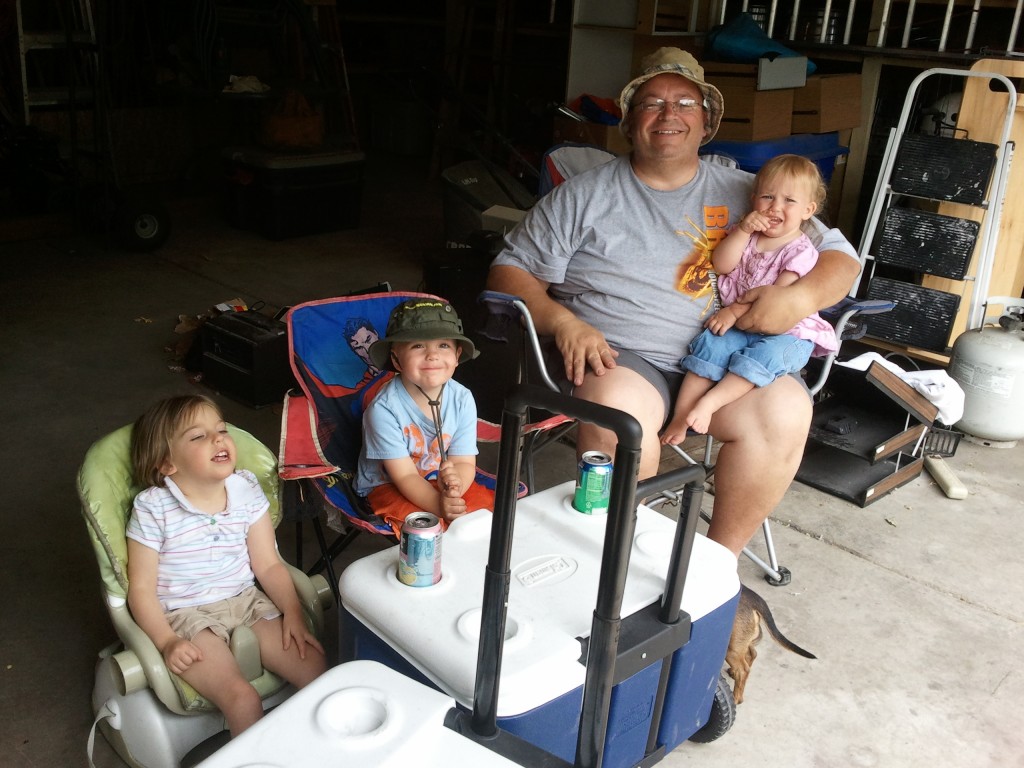
family after a cancelled trip

Ending the trip on a happy note - and still smiling!

And that is what I have learned over the last forty years of being a wife and a parent – it is better to laugh than to cry or yell, almost every time.

Please share how you have dealt with frustrating and unexpected situations. You can also share this smiling moment by clicking the buttons below : )

Possibly Related Posts:


{ 1 comment }

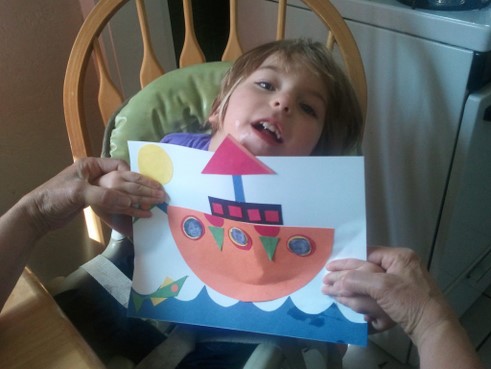
little girl with her ship picture

Maggie and her "ship shape ship"

As a child who sincerely tried but who was poor in math, geometry and algebra I was interested to learn that my failing might have been less an issue of ability and more an issue of lack of experience with spatial relationships and how shapes are used  in the real world.

For young children, shapes are the building blocks to understanding math. In Math Art: Projects and Activities, author Carolyn Brunetto states, “Many children are simply better at understanding and retaining abstract mathematical concepts through physical experiences rather than through . . . drills.” Seeing and working with a variety of shapes in their environment enables children to form basic ideas about how math works.

Understanding shapes is also important to older children. Understanding shapes helps prepare children for higher mathematics.

We teach small children about two dimensional shapes like squares and circles which are used in plane geometry  but we also need to teach older children about three dimensional shapes such as spheres, cubes and pyramids which are used in solid geometry. Did you know there are at least seven triangles that you can introduce your older children to?

In Grandma School this week The Traveling Closet was all about shapes, shapes used in geometry and other types of math. If you have very young children then you can do what we did. If you have children ages 8 and up I have given you some ideas for increasing your child’s awareness of spatial relationships and geometry shapes for kids below.

As always we started by looking at the cool books I had in my basket. I had some especially fine books this week that were so helpful to me that I didn’t have to look any farther for ideas.

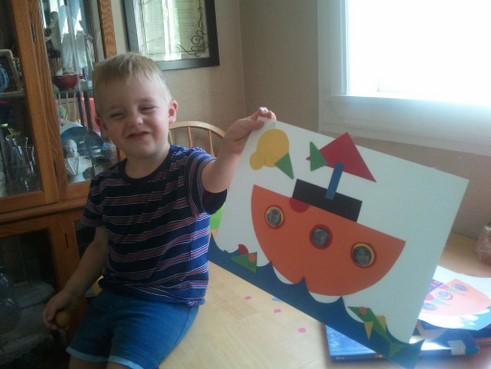
little boy with the shaped ship picture he made

Jack and his "shape ship"

The pictures in one of the books were so wonderful that we just copied them and made our shape creations based on that inspiration. (Shape Capers by Cathryn Falwell) There were shape cars, go carts, rockets, boats, people and a big dragon to choose from. As you can see we chose to make the boat and we put pictures of ourselves in the portholes. The kids loved that!

As we read this first book we talked about each shape, counted how many shapes on each page and talked about what they had created using shapes. Later we took a shape walk to discover for ourselves all the ways that shapes are used in our environment.

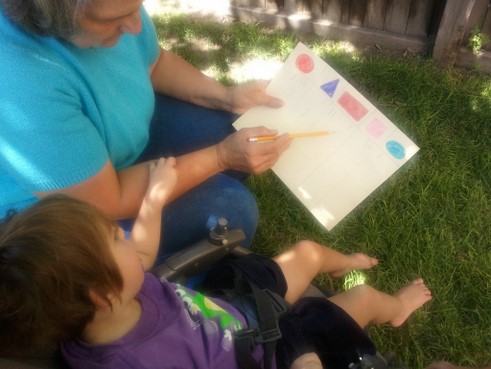
a chart with shapes for kids

Our "shape walk" chart

The idea for the walk came from another wonderful book from the library, Circus Shapes by Stuart Murphy. At the end of this book the author had two pages of ideas and ways that you can help your child have more fun with the math concepts presented in the book. We made a shapes game for kids to use as we walked.

We made a simple chart of shapes that we might see in our neighborhood. Then as we walked we made tally marks on our chart whenever we saw a shape. After our walk we counted the tally marks to see which shape we saw the most times and which shape we saw the least.

I will mention here that we couldn’t point out all the shapes we saw because three year old Jack got tired of the interruptions, and said “Lets get going”. So we just mentioned really good ones. If you have a mixed group of ages older children will want to have their own chart. You could have a contest to see who finds the most of any particular shape. You can encourage writing by having them list each item that they see. You could have a rule that you can only count a window, door or side walk square, etc. once.

little boy eating an oval hard boiled egg

Eggs are ovals and delicious too!

We had shaped snacks which the children really enjoyed. We had oval hard boiled eggs, rectangle crackers and circle oranges.

I had made another shapes game which can be played over and over. I cut out lots of shapes and put them into a container. The children took turns reaching in and pulling them out and naming the shape.

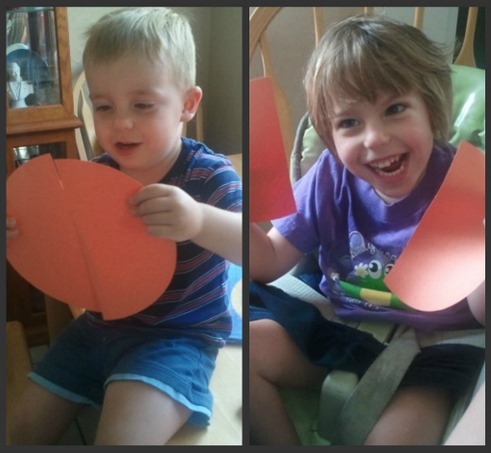
kids playing with semi circle shaped chart paper

The face of the joy of learning something new and interesting

By far the highlight of the day was when I showed them that they could make a circle from two half circles and that I could make a diamond from two triangles. Jack did it over and over again. He was amazed at this wonderful new discovery and was very excited by it.

Make learning math concepts fun and here are more ideas on teaching basic math concepts to preschoolers.

Activities for learning geometry shapes for older children while younger siblings learn their basic shapes:

  • Create some of the 3-D shapes from the book Math Art: Projects and Activities by Carolyn Ford Brunetto
  • Play Toothpick Squares (click this here for directions for all the games below)
  • Play Penny Pyramid
  • Solve the puzzle How Many Squares
  • Have a contest called Triangulation
  • Try your hand at Pencil Patterns
  • Play the game Puzzles for Five Squares
  • Do some creating with Geometrical Toothpicks
  • Make a Geo Board
  • Play Triangle Treat
  • Have a basket of shapes your children are not familiar with such as Rhombus, Elipse, Pentagon, Hexagon, Octagon, Trapezoid, etc. Then play the identification game. Now use your paper shapes to make a picture.
  • Use the shape identification game to learn about all the types of triangles and then create a picture using only triangles. For example Equilateral, Isosceles and Scalene.

Books on shapes for younger children:

  • Shape Capers by Cathryn Falwell
  • Circus Shapes by Stuart Murphy
  • Shapes by Active Minds
  • Round Like a Ball by Lisa Campbell Ernst
  • The Shape of Things by Dayle Ann Dodds
  • Color Zoo by Lois Ehlert
  • Circles and Squares Everywhere! By Max Grover

Books on shapes for older children:

Go Fractions! by Judith Bauer Stamper – Although this isn’t a shape book it would be fun for older children to read or have the story read to them. Provide all the pieces of a circle that has been cut into fractions so that the child can take and add to the circle as they go through the story.

Math Art: Projects and Activities by Carolyn Ford Brunetto – This book has some activities which are shape related.

Why not take a moment and share this with another parent who is interested in inspiring their child by clicking the buttons below.

Possibly Related Posts:


{ 3 comments }

little girl playing karate kid picture

Girl Playing Karate Kid

There were eight Karate belts laid out on the table. They were different colors. Jason was explaining each one to me; what he had to do to earn it and what he was currently working on. Jason is nine and a friend.

He said his karate style was fromKorea, taekwondo. We began talking aboutKorea. We didn’t know much but we each knew a little. I mentioned that I had some Korean money that my dad had brought back to America after the Korean War.

Eisenhower Silver Dollar picture

Jason got excited about that and told me that his dad had a money collection. He disappeared for a little while and then returned with the collection. It was a jar of coins and bills from other countries andAmerica. We began looking through them.

He was most excited about a silver dollar. I asked him if he knew what president was pictured on the front. He didn’t and so I told him President Eisenhower. He thought it was worth a lot of money because it was made of silver. I showed him the brown line on the side. We talked about how the make up of money has changed and now silver coins have other metals in them.

There was a Chinese bill and I asked him if he knew what Chinese money is called? I told him it was a yen. We talked for just a minute about the funny names other peoples money have.

This whole conversation took about 15 minutes while I was doing some work and he was watching me. I happened to get a gold coloredWashingtondollar the next week in some change. I took it to Jason this week so he could start his own collection. (I had printed off a very short explanation about the Presidential dollar collection and their spouse’s dollar collection.) I had a friend give me some bills fromIndonesiathat I will take to him next week. I am digging those old WWII bills out of my cedar chest and I will give him one of those.

Here is how I would turn this “spark” into Closet content, to teach him more about money, Karate, Korea and other countries.

  • A book on the history of Karate, with lots of pictures. The Little Bubishi: A History of Karate for Children  by Andrew O’Brien or Karate (First Book Series) by Larry Dane Brimner
  • This could lead to books about life in China,India,Japan,Korea and Tibet. These are all countries where Karate has been practiced. Find these countries on a large map and trace how the Karate tradition moved from one to another.
  • Story books aboutKorea(see below) There were so many available for all age levels that I couldn’t possibly list them all here.
  • Introduce Sijo poems – Tap Dancing on the Roof: Sijo (Poems) by Linda Sue Park. Have materials available for each family member to write their own Sijo poem. New pencils and pads are always an incentive to write. Then have a family event to read them to each other with treats!
  • A book of Korean proverbs – Tigers, Frogs, and Rice Cakes: A Book of Korean Proverbs by Soma Han Stickler. Make a list of proverbs that the family can think of that we use a lot in theUSA and find those in this book that are similar.
  • A book of Korean Folktales or a chapter book to add to family reading time – The Land of the Dragon King and other Korean Stories  by Gillan McClure or The Karate Class Mystery (Level 4 reader) by Elizabeth Levy
  • The video Karate Kid or Karate Kid 2 to watch as a family with lots of pop corn.
  • Because two children in the family I have been sharing with you take Karate lessons I would have them put on a Karate display for a family evening event.
  • Books and/or pictures of different types of currency and how money got started. Find pictures of each of these monies – ducat”, “florin”, “nobel”, “grosh”, “zloty”, “guinea”, and the “escudos” — better known as the “doubloon. Find pictures of different world currencies here – http://library.thinkquest.org/28718/currencies.htm
  • Books or other information on how our own monetary system has changed. Here is a video on the history of the American dollar that eight and up might find interesting.
  • A book about President Eisenhower – A Picture Book of Dwight David Eisenhower (Picture Book Biographies) by David A Adler
  • A frame for the Eisenhower silver dollar and a hanger for the wall.
  • A book, jar or box for his collection with some type of system to label or track his collection.
  • Download the Olivia the pig coloring book (necessity vs need) http://www.nickjr.com/printables/what-olivia-needs-coloring-book.jhtml
  • Make some coin rubbings
  • Make a birth year coin collection
  • A Korean craft or a craft from one of the other countries that ties in with Karate
  • Cook and eat a Korean Meal
  • Play some Korean games

Karate is a class that the boys in this family take. They really like it. It is a wonderful springboard for learning about a great many things and for sharing it as a family rather than as just a class for a couple of the children.

Books on Korea for Children:

  • Korean Children’s Favorite Stories  by Kim So-Un
  • Mini Picture Dictionary: English-Korean  by Sedat Turhan
  • Bee-Bim Bop! by Linda Sue Park
  • My first Korean Words by Katy R. Kudela
  • The Green Frogs: A Korean Folktale  by Yumi Heo
  • Land of Morning Calm: Korean Culture Then and Now  by John Stickler
  • Look What We’ve Brought you From Korea: Crafts, Games, Recipies, Stories, and other Cultural Activities from Korean Americans by Phyllis Shalant
  • I Love Korea (Bilingual) by Andrew C. Nahm
  •  South Korea (Countries of the world)  by Lucile Davis
  •  South Korea: A Question and answer Book  by Susan E. Haberle

Books on the History of Money for Children:

  • The Story of Money by Betsy Maestro
  • The History of Money (First Facts. Learning about Money) by Roberta Basel
  • History Of The United States Mint and Its Coinage by David W. Lange
  • Ultimate Kids Money Book by Neale S. Godfrey


Possibly Related Posts:


{ 1 comment }