Some Classics of Leadership Education

by Mary Ann on May 19, 2010

Some of you are probably wondering why I spend so much time talking about things other than The Spark Station itself. After all you have come to this site to find out where you can have a Spark Station, what is a Spark Station and what goes in it. Right?

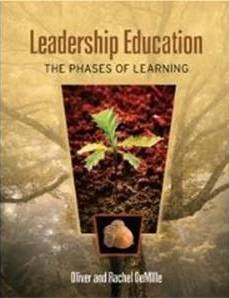
Well simply and, I’m sorry, bluntly put, when I work with families I quickly realize that The Spark Station isn’t their problem. Their understanding of what makes The Spark Station work or not work is usually at the root of their discontent with how things are going in the home. It doesn’t seem to matter if they have a well stocked Spark Station, a poorly managed Spark Station or no Spark Station at all. The ills they feel in their home are rarely related to that and are most likely related to the health of family relationships, the environment, custom-made systems, how clear an understanding of the phases of learning they have (for information on the phases of learning see Leadership Education: The Phases by Oliver and Rachel DeMille), the freedom agreement and whether they believe in and trust the process.

Now if some or all of these terms are vaguely familiar but unclear to you then you fit right in with most of the parents I work with.What I want to help you get really clear on is that The Spark Station is only a tool, just one tool in a great array of possible tools that can help you in creating an environment of learning in your home. Even when it is perfectly understood by itself and is well stocked and well managed it cannot overcome the lack of understanding of what it takes to create a leadership home, and an understanding of the principles that make it work. If parents and grandparents are not clear that the principle of freedom in education work or that they have a certain realm of control and that their children also have a certain realm of control, then their efforts at creating a leadership home based on leadership principles of education will be tough.


One of the things that really amazes me is how many parents have not read some of the classic books on leadership education and how few more have actually studied them. And what is even more astonishing is that we all think we can be successful anyway.  I am going to make a confession here,  for the sake of taking you all off the hook just a bit; I hadn’t read them either, not completely, until recently.

When I took my two youngest out of public school and brought them home I had no idea what I was doing. My oldest was attending George Wythe University and great thoughts from that amazing school were trickling down to me. Then I did my Master’s there and got some more great thoughts for myself, first hand. When the book Thomas Jefferson Education came out I bought it and read it. I did these things while running a poor public school at home! This information helped me do a better job of homeschooling. Later I started and ran a Benjamin Franklin Academy in Montana. I worked with Aneladie Milne and taught some Key of Liberty classes when I moved to Utah. My last child and I participated in mock trials, freedom bowls, and many other great home school activities.

When she went back to public school I stopped thinking about leadership education altogether. I kept learning myself but in a conveyor belt sort of way. After all what else did I really know? I took a class here and there. I read good books like I always had. There was a book group occasionally. I even attended a number of seminars and workshops on Leadership Education because my friends were going.

My daughter Jodie and her friend Diann Jeppson wrote the amazing work The Leadership Education Continuum. I thought it was amazing and wondered how in the world they had come up with it. However, I did not translate it to myself or my family. I was so wrapped up with working for a living, trying to get my last child through the public school system and keeping up with life.

When Leadership Education: The Phases of Learning came out I read a bit of it. But I determined that since my last child was almost “done” with school that it didn’t really apply anymore.
Can you imagine trying to get off the conveyor belt with so little information and help?  If we really want to be successful at a thing then we need to study it. We need to have some depth to our knowledge. We frankly need to do some work!

Then I found The Spark Station concept. It was a topic that resonated so much with me. I wanted to know everything about it. The more I read the more entranced I became.

I read all the classics on leadership education that I knew about. I started talking about the concepts and principles to other people. I took notes as I read. I put in some work. I have learned so much.

I wish I had been wiser 17 years ago when I began. I wish I had read the books that would have given me an education on the thing I wanted to be an expert at, leadership education. I wish

But as my grandmother would say, if wishes were horses then beggars would ride! So I have stopped wishing for what only comes through work and practice. I have read and reread the classics in the field that I want to know about. I want you to do the same. Work is a principle of all true education.

That is why I talk so much about things other than the mechanics of putting a Spark Station together and running it, because the knowledge that parents need in order to effectively have a leadership home, they don’t have. I always hope that I can nudge you over the edge into being inspired to do some scholarly work on the topic you most desperately want to be an expert in, raising a leadership generation.

I encourage you to read the classic literature on this topic. I encourage you to take notes. I hope you will pray about the information and see how it best fits your family. Have your FEC meeting regularly. If that is not a familiar anachronism to you, read the classic Leadership Education: The Phases of Learning! I hope you will practice, practice, and practice the principles that you learn in these classics. Then I hope you will read them again as I am doing.

Possibly Related Posts:


{ 0 comments }

Children Create The Outcome

by Mary Ann on May 19, 2010

When you are engaged in a project what matters to you? For many adults it is the outcome. We want the cookies to taste good, the tomatoes to grow large and red, the dress to look store bought and the painting to be perfect. I know that doesn’t apply to every adult but it does apply to many of us.

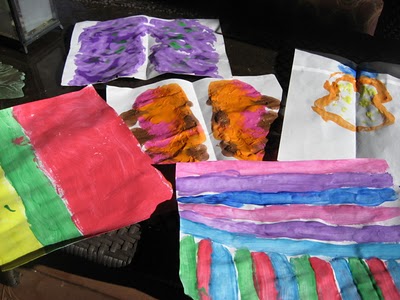
When children are engaged in a project what matters to them? I think that for the most part, it is the process. Have you every watched a five year old paint. They like digging the brush deep in the paint and swirling it around. They like lots of paint on the brush. Then they swipe it onto the paper. They smile at the brightness of the color. They aren’t all that concerned if the red bleeds into the green just a bit or if the red turns the yellow a tad orange at the edges. It is the act of painting that they care about.

We can really increase the effectiveness of The Spark Station if we let go of the outcome of what is in there. If an item is used differently than we planned when we put it in The Spark Station let go of the outcome. The act of using that item in a new and creative way is what children love, it’s what makes a learning time just that, a learning time.

Our job as parent mentors is to provide the materials and the inspiration; and theirs is to create the outcome.

Possibly Related Posts:


{ 0 comments }

Maggie Jack and Mary

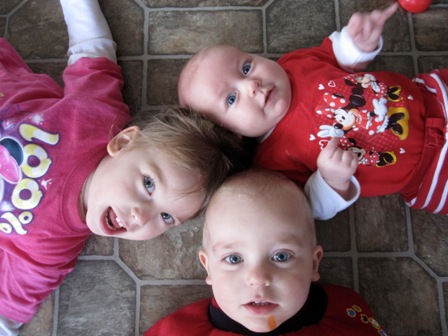
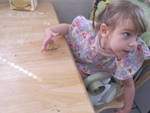
Three of my grandchildren live just a couple of blocks away. Maggie is almost four and Jack just turned two. Mary is brand new. Maggie has cerebral palsy. She is sharp as a whip but working her arms and legs is a real challenge. They belong to my oldest daughter. Today is her birthday. I had planned to make her a cake and then decided to have Jack and Maggie help me.

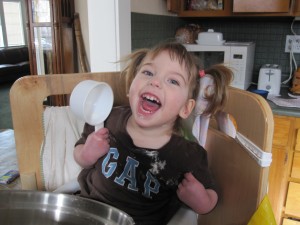
Maggie cooking

My intention was to allow them to experience new things, really help make a cake, and have a lot of fun. I knew that there would be a huge mess, something unexpected might happen and I would be worn out when we were through. That knowledge has come from working with hundreds of children of all ages.

Because of Maggie’s condition she has a special chair that she sits in. It isn’t high enough to reach the table and so I just put her and the chair on the table. Jack, of course, took his position on one of the kitchen chairs. I opened the cake mix bag and allowed each one to pour half of the contents into the bowl. Some made its way to the table top and some to the floor. Next I filled three measuring cups with liquid, 1 cup water, ¼ cup water and 1/3 cup water. I helped Maggie get hold of the large cup and pour it into the bowl. Because this isn’t the first time that I have cooked with them I wanted to see if Jack could pour the cup himself so I said “pour it in Jack.” He took hold of the 1/3 cup and gently tipped it to one side onto the table. Ok… I see that he still needs help. So we emptied the ¼ cup and refilled the 1/3 cup and poured it in the bowl, with help.

Next came the eggs. I showed Jack and Maggie how to break one and how to get the contents out. Wohoo!! Whacking eggs suited Jack

Jack Cooking

just fine. He gave it a whack and voila! egg all over the table. Not to worry. We just picked out the egg shells and scraped the egg into the bowl. Good thing we started with a clean table. Next I helped Maggie get hold of her egg and smack it against the cup edge. That was necessary to make it pliable enough for her to squeeze the contents out of it; and squeeze she did. Some was dripping down the front of her shirt, there was a small stream running down her knee and the rest was oozing out her fingers. We did get all the egg out of the shell, the shell pried out of her little fist and hands wiped clean. Whew!

My sister had come in just as we began and was observing what we were doing. As I got a cloth to wipe up egg Maggie, who was just desperate to “do it herself”, reached way down and plunged her arm into the batter. I turned around at that same moment. It was perfect. I took hold of the bowl and said, “Stir Maggie, stir.” She really had a tremendous time stirring that batter. It is very difficult for her to hold a spoon and when she does I have to help her stir. For a 4 year old that is so lame. But stirring on your own, now that is living! I would have never come up with the solution she found. I was so glad my sister was there because she was able to video that small moment of magnificent success and joy for Maggie. You can see Maggie make cake here.

Of course being unable to control her limbs, her hand and arm went in and out of the batter a couple of times and so we had cake mix on her, Jack and the table. Not to worry, there was enough left to bake!

A taste test!

I put the bowl on the mixer stand and turned it to stir and smiled. Watching them learn to cook was so fun. Each time I accelerated the mixer the change in sound would make Maggie jump. She is very sensitive to sound. I would pat her knee and say, “its OK Maggie.” After a few times Jack reached over patted her little knee with his littler hand and said, “It’s loud.”

Soon the cakes were in the oven, all hands were wiped and the table cleaned. Then I put on Winnie the Pooh and made the frosting myself. :  )  When the cakes were done and cooled I invited the kids back in and we got to work. Maggie, like any 4 year old wanted to lick the beater. I gave her the rubber spatula. She held it in place on her knee, bent her head down that low (ah, the flexibility of children) and got busy. For the next half hour we didn’t see her face once but we heard lots of smacks and slurps. She cleaned that spatula completely off. While I was frosting the cake and Maggie was smacking her lips on the spatula,  Jack was sucking frosting out of the decorating bag. It was a grand sight. Grandma letting her little friends experience new and enjoyable things. There was no nagging about being neat, quiet or being patient. We just did our thing however it happened to happen.

The cake was beautiful and I suspect despite the fact that it didn’t get its full measure of egg, it will taste just fine. On the way home Jack almost fell asleep. He was totally worn out with a fabulous day at grandma’s house. Maggie cried because she knew we were going home and it is so much fun at grandmas!

Let’s Make Some More

Reading about our cake baking adventure is fun but there are some important things that I want to point out that will help many of you. When you work with children, no matter the age, your intent and your expectation really do matter. This experience with my grandchildren would have been very different if I had worried about keeping my kitchen clean or making sure that everything was in order and done a certain way, or trying to keep clothing clean. It wouldn’t have been as much fun if even once I had said, “don’t be so messy”, or “don’t spill”, or “look at your clothes”. You know what I mean. We all do it. That’s because our expectation is that it will be a well run project, go smoothly, and the end product will look wonderful or taste wonderful.

As we begin to feel the tiredness that comes from working on a project where things don’t always go smoothly or right we start to feel impatient, frustrated, and possibly even angry. That is because we expected to have this perfect time with out kids and it wasn’t perfect, at least not in our eyes. But think about that; when we work with children whose eyes matter, whose interpretation of what should happen matters. I have learned that for most children it isn’t the end result that they care about, it is the process. They like doing. They like experimenting. Sometimes cookies will taste bad, be too dry, or burn. Sometimes the plaster of Paris is too runny or the paint too thick or the glue, too much. It doesn’t matter to kids.

Neighbor’s enjoying cooking at our home

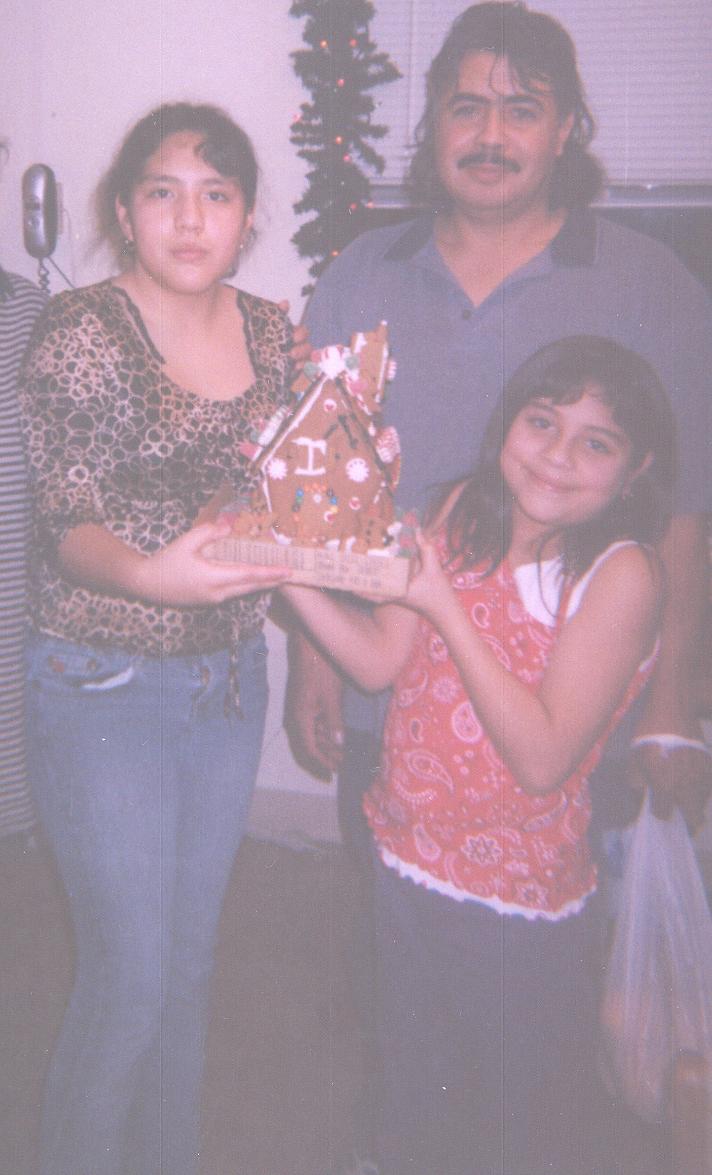
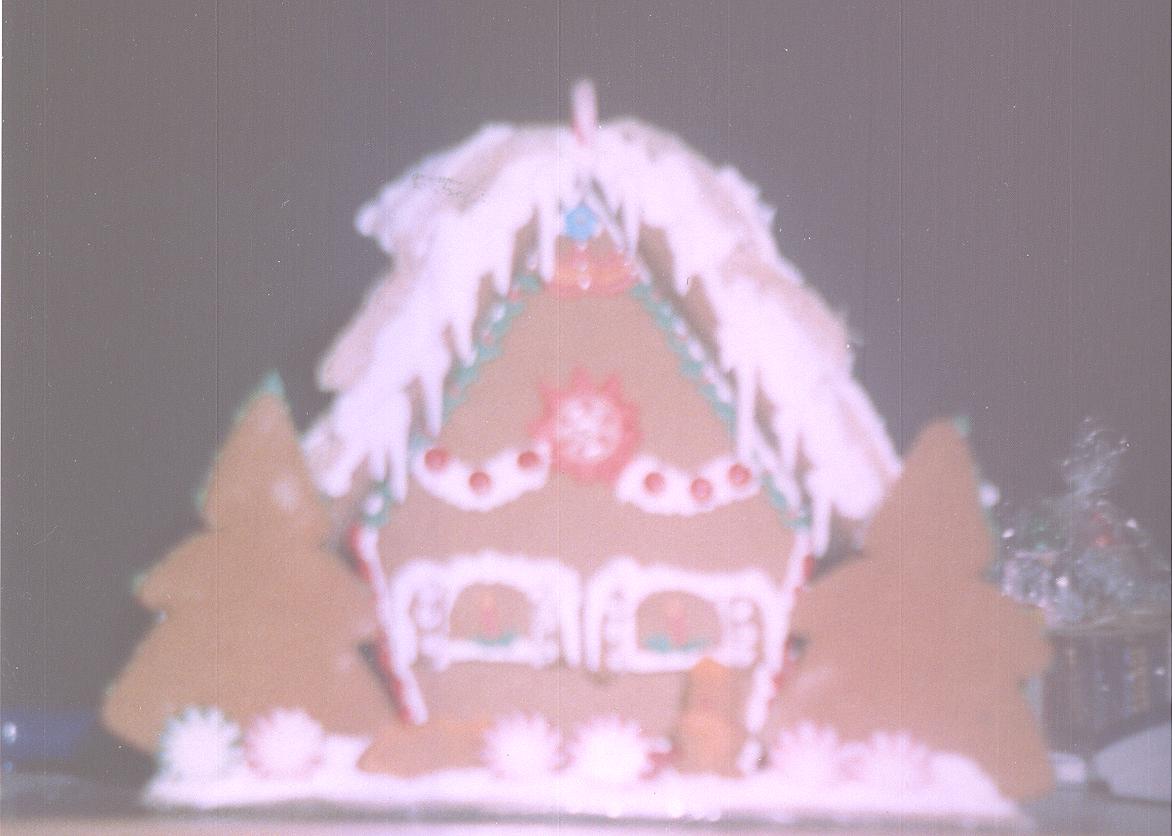
I used to go to my children’s school class every December to make gingerbread houses. I had my stuff really well organized so it was a pretty smooth project. I could help 25-30 kids make a wonderful house, that is, after I gave up needing to see the project in a certain way. I am going to be really honest here. When I first started it mattered to me how the houses looked when they were done. I knew they were going home and I wanted those parents to be so amazed, to see what a great teacher I was. So when the kids were doing their thing I would go around and make sure that the entire milk carton was covered up, that candies were evenly spread on the house. In short, I meddled with everyone’s creation. As I got older and wiser I stopped doing that. I learned that kids don’t always care if milk carton is showing. Sometimes all the candy will be on one side of the roof and no where else. I learned that not everyone wants icicles that look like icicles. Some kids would rather do it themselves even if they are just bumps on the side of the house.  And you know what; I never talked to a parent yet who didn’t think their child’s house was great, no matter what it looked like. The truth is that in my early days the project was about me, not the kids.

I suspect that that is true for a lot of you if you are really honest. It is your expectations you think about. It’s your outcome that matters. It isn’t about just being with your kids and letting them learn and enjoy. Be honest. When we are honest about that we will approach projects with a different set of expectations and a very different intent.

If we can accept what is really likely to happen, then as we begin to experience the tiredness we don’t get frustrated or angry because we knew it would be some work and we might be tired. We knew there would be a mess and that something unexpected might happen. We will realize that the process of creating whatever it is, is what counts, not how the end result looks or tastes.

Made by Kate, age 6

Now I want to share two examples so that it’s really clear what kind of meddling I am talking about. I want it clear because the best intentioned of us do it when the agenda is about us not them. I had a lot of experience with teachers in the schools. One year after I wised up and let the agenda be about the kids and not me, I had a kindergarten teacher who had a plan for the houses. She had a table covered with white paper. It was going to be a beautiful snowy village. Then all the other classes were going to march through her class to see the wonderful work. She was very excited about that.

Here is what I noticed. She made sure all the milk carton was covered even if the kids didn’t want her to put frosting there. She made sure candies weren’t all clumped in one spot. One little boy took the tin foil the candies were wrapped in and made a cool lopsided ball which he glued onto his roof with frosting. She made him remove it. After all it wasn’t part of the decorations, the candies were. One little fellow put the door on his roof. So his house didn’t have a door. She made him change it. Doors are on the side of a house and not on the roof.

It was a beautiful village. It looked so colorful and all the kids from the school really thought it was great. But for a few children it wasn’t as great as it could have and should have been. And the other children heard loud and clear, don’t go out of certain boundaries. This isn’t really your project.

The Spark Station works like this. You provide fabulous materials. Then you let children create and play and experiment. You don’t worry about the outcome or if an item is being used the way you think it should be or planned for it to be used. You will put things in there with a certain outcome in mind and your kids won’t get it. They will do something totally unexpected with the materials. If it isn’t dangerous, harmful to others or damaging to furniture then let them go. Let them love learning.

Possibly Related Posts:


{ 0 comments }

New Eyes To See

by Mary Ann on May 18, 2010

Recently I had the privilege and joy of attending and presenting at the Thomas Jefferson Education Forum in Salt Lake City. What a good time I had! I reconnected with old friends, made many new friends and learned so much. Iwas also able to share my vision of family education with others.

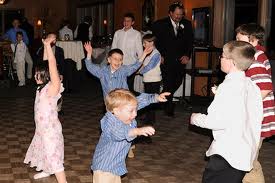
It was interesting to observe a remarkable dynamic at the Family Ball. The huge ball room was filled with people of all ages, dressed to the nines, learning to dance, how to behave in social groups, and connect with one another. It was so amazing to see sons dancing with mothers, daughters with fathers, brothers with sisters and sisters with brothers. How great for parents to watch and smile as sons and daughters danced with the sons and daughters of their friends. How enlightening for children to watch parents and grandparents laughing, dancing and conversing with each other. It was wonderful!

This put me into a special frame of mind as I returned home. On a book shelf in my bedroom (yes I have books in the bedroom!) there is a picture of my 33 year old daughter, taken when she was about 6 years old. She is gently sleeping, clutching a stuffed toy. I experienced a very tender moment, as I remembered that when she was six I did not recognize how sweet and precious she was to me. Oh, I loved her deeply and I took very good care of her and the other five children that shared my space. However, I was busy with cleaning, cooking, having friends, my own education, and all the things that come with motherhood. My eyes were not open to the exquisite nature of children and the absolutely remarkable opportunity to serve as a parent mentor and guide.

Some years later I began to feel that something was missing in our family relationships. I started searching for information. I talked to other moms and dads. I made this change and that change in the systems we used in our home, how we disciplined, how we talked and so forth. But nothing really filled that space that I felt inside; something was still missing.

Lest I offend anyone let me say that I believe in inspiration which comes from outside of us, I believe in God. So I took my need to Him. I prayed about the issue, what I wanted, what I felt might be missing. He in turn took me on a journey. I had worked with hundreds of children in our community, in clubs and in public schools; but I began having opportunities to get to know them in a different way. I won’t share those stories as they are personal and sacred to me. I will say however, that I was guided and inspired and taught from that spiritual source.

One day as I was driving my car, heading to complete some mundane errand, I saw a small child playing on the sidewalk as small children do. In that moment the scales fell from my eyes and I saw the miraculous nature of a child. I began weeping because it was such a powerful moment. I could hardly breath for the knowledge that flooded through me that the opportunity to be with, mentor and love children was not a responsibility or a job but a gift; one of the greatest.

I have never been the same since. Many years have passed since that day but I am still overcome with that sensation on occasion, as I was last night when I looked at the picture of my sleeping six year old daughter, who is now 33. Whenever I feel sad about the years that I didn’t recognize the opportunity to love and mentor my children as a gift, as opposed to a responsibility or job, I am in the same moment gladdened that I now know the difference. My hope is to have a part in helping parents start their own search for a new way of seeing and feeling about their children and the gift they have to mentor them.

Possibly Related Posts:


{ 0 comments }