From Black and White to Brilliant

by Mary Ann on May 21, 2010

Today my daughter and I went wedding announcement shopping. Not being a shopper of any sort these are the times that try my soul. I love my daughter and weddings are exciting, but shopping!! Despite my trepidation I girded up my loins and off we went. We stopped at a couple of places, choked on prices and then found just the perfect thing. The perfect thing was way out of our budget but being crafty, we can do anything sort of women, we decided that we could recreate it ourselves.

So off we went to my sister’s house. She felt that we were right on; we could certainly duplicate those invitations ourselves. We then spent a good hour measuring, talking paper and looking at photos. It was fun and I liked doing it with my youngest daughter, my soon to be married daughter.

While we were talking about photos my sister mentioned that she thought that people just looked better in black and white. An animated conversation took place over her comment. Then she said a very profound thing. “Maybe black and white makes people look better because we are so used to seeing them in color.” Wow! That got me thinking about when we were kids. All of our photos were in black and white. I was well into grade school before any of my photos were in color. So I said “Do you remember the first time we saw ourselves in color. Remember how we thought we looked so much better.” Isn’t interesting that what is unfamiliar is so much more appealing at times, than what we see every day. You know where I’m going with this don’t you?

As we were leaving my sister said, “Mary do you remember the Wizard of Oz. Do you remember that the movie was all in black and white at the beginning and then there was the magical moment when color burst onto the screen; wasn’t that astonishing?” I could clearly recall that exact moment. I remembered how the breath was knocked out of me from sheer amazement. I was stunned. It was so beautiful. I hadn’t even realized how drab it was before because I was used to seeing movies in black and white. It was so unexpected. I just assumed that the whole movie would be black and white.

That is what happens when you open your Spark Station and it is filled with color, new things, and excitement. That is what happens when parents are present and family learning time is consistent, when inspire and not require is the norm. That is what it is like when The Spark Station is only open during family learning time. It literally takes your children’s breath away. It isn’t that what you were doing before was so bad; it’s just that it was in black and white.

When I tell you that creating an environment like this will change your families experience during core and love of learning forever, I hope you believe me. I have seen it happen over and over again.

Remember the third rule of engagement, make it special – The spark Station is only used during your structured learning time. Remember my grandma’s cupboard.  When you throw open the Closet doors it’s like turning on the color; it is new, it’s different and it has been anticipated. It inspires! When that happens there is no need to require. The back and whiteness of nagging, cajoling, manipulating or bribing children to learn turns instead to the brilliant color of “love of learning”.

Possibly Related Posts:


{ 0 comments }

Be An Example of Love of Learning

by Mary Ann on May 21, 2010

I just talked with a mom who attended a class that I taught. She had never heard of The Spark Station before and hadn’t read any of the classic leadership education books. So I asked her what made her take a class on a subject that she knew nothing about. She replied that when she read the class description she said to herself “That is a good idea.” So what did she see in that description that she thought was a good idea?

Here is the class description.  “Do you want to nurture your child’s feelings of “love of learning?” Do you want to give your children an environment in which to engage in their love of learning? Are you tired of asking the unproductive question of, “What do you want to do/learn today?”  Would you like to create a system in which your core and love of learning phase children can watch older siblings experimenting, learning, exploring, etc. while engaging themselves in the same system? Would you like to have a system in which you can more effectively structure productive time, not content? Then this class is perfect for you. Don’t have a closet? Come and learn how to overcome the common barriers of no space, no money and no ideas.”

The key sentence for her was “Would you like to have a system in which you can more effectively structure time, not content?” That one sentence answers a score of difficulties parents face when trying to inspire their children to love learning. They just need a workable system that helps get them get off and keeps them off the “conveyor belt”.

When I work with parents one of the tough things they deal with is how to inspire a child without requiring them to do specific learning at a specified time. After all that is how we were all taught.

Cedar and Tannin Jones

The Spark Station is a tool that facilitates inspire not require. It is used within a system that helps families create a culture of learning and takes the pressure off of parents and puts it where it does the most good, on the child. Parents model love of learning and young children follow that model.

There are some keys that make the system and the closet work. The job of the parent is to master these keys and the job of the child is to observe, copy and self educate. I have talked about these keys before but it bears repeating because even parents who attend a class or workshop seem to miss one or more keys. Robert Collier said “Constant repetition carries conviction”.   I want you to have the conviction that you can and should inspire your children. You can create an amazing culture of leadership and education. You can trust the process of learning that your children are in.

To begin you need to remember that you should model what you want your children to do. If you want them to learn you have to be learning. If you want them to read you have to read. If you want them to be interested in math and science then you need to be reading the math and science classics and sharing your aha’s with them. If you want them to enjoy history you enjoy history. If you and a child are on a plane which is going down it is wisest to put on your oxygen mask first. Then you will be able to help them put on theirs. Once you get clear about this, that you have to model what you want, then following the Five Rules of Engagement will assist you to make The Spark Station more successful and your family life more successful.

  1. Structure time for family learning and then be consistent. Consider it important time, even sacred time.
  2. Be present with your child. This is not only physically, but mentally and emotionally. You can’t watch TV, talk on the phone, cook dinner or clean house and be present.
  3. Make it special. The Spark Station is used only during your structured family learning time.
  4. Keep it simple. When The Spark Station and life are full, if you put something new in, take something else out.
  5. Plan weekly

Possibly Related Posts:


{ 2 comments }

A Repetition Of Principles

by Mary Ann on May 20, 2010

I want to share something that I received from a mom I am working with. “I did have a hectic day last week in which the three year old was napping, it was “spark station” time, the ten year old was doing it and I was trying to cook dinner (plus I had a headache and wasn’t terribly engaged, even if I was present). The ten year old told me it was more fun when I played with them, so if an emergency comes up, I put off The Spark Station [time].”

When I asked this mom what her greatest mental hurdle to using The Spark Station effectively was she replied that she didn’t have any mental hurdles. However, her email told me otherwise. She had some difficulty understanding some of the key elements to success in working with The Spark Station as an educational tool.

Let’s look at the elements in her email and talk about each one. First she had chosen a time when her three year old was napping to have “structured family learning time”. I feel that it is important to start this culture of family learning from the time children are born. They need to see you learning and being excited about learning new things. They can watch that process in your family learning time. Even though you spend significant time helping them, if you are excited about what you are doing and what is being learned they will be too. It is also very valuable for them to observe older siblings learning and I can’t say enough about older siblings assisting and teaching younger ones.

I feel that it is beneficial for the family, as much as is possible with dad’s being gone to work, to study, play and learn together. There isn’t a time when we finally introduce our children to this process. That is what happens on the conveyor belt at about 5. Learning as a family should be part of what they have always done.

I know that it is a challenge for mom’s to have a number of children of different ages all together in the same space. Helping each one has its difficult moments. But I can assure you that this effort pays huge dividends in happiness, and a warm and inviting family culture.

Three is a magical age. You’ll notice that it is at three that preschools start and churches provide Sunday School classes. That isbecause three is ready to participate and not get in everything. They observe and are anxious to learn. They want to be a part of what is going on.

I will also mention here that if you have some little ones under thee then it can be a challenge for them to be involved without  making it difficult for older siblings because they grab and chew and tear…..  If they nap it isn’t a disaster. If you have them during your structured time then you have to be really present for them. They will need your attention.

Second, she mentioned that she wasn’t engaged even though she was present. She really wasn’t present.  Being present is one of the five essential keys to the success of The Spark Station and doesn’t refer to being there physically. It refers to a state of mind, a way of being. I ask parents to be present in the truest sense, to be focused on their child, what they are doing or to be doing their own studying, if they are not needed by the child. That means that you aren’t talking on the phone, getting the mail, looking at the computer, doing dishes, picking up or cooking dinner. That means that you don’t put in a load of washing and then just take a minute to throw it into the dryer. What it does mean is that you and your children enter a space and time where you help one another, laugh together, learn together and have fun together.

Third, she said “The ten year old told me it was more fun when I played with them, so if an emergency comes up, I put off the closet [time].” In other words if something comes up and she can’t be present then she just moves learning time back or lets it go for the day. One of the major keys to success is to set a structured time and be consistent. Keep it almost sacred time. Whether we are talking about The Spark Station or some other part of family life, what your children want and need are structure and consistency and you!

So set the time whether it is 1, 2, or 3 hours or more, depending on your family. Then avoid the temptation to allow things to come up. Don’t schedule doctor appointments unless it is truly an emergency. Don’t have meetings or talk to someone who comes to the door. If a neighbor or friend comes unannounced tell them you are having family time and to come back later. If the phone rings don’t answer. You get my point I am sure. It is a choice to be consistent and present.

I want you all to know that this email is typical of what I receive from moms and dads. This is an average parent learning to use a new tool, learning to think and function in a new way, learning to get off the conveyor belt and learning to self educate. It all takes time and practice and repetition of principles.

Possibly Related Posts:


{ 0 comments }

Teach by Example

by Mary Ann on May 20, 2010

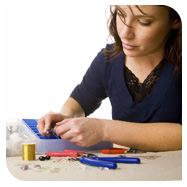
One of the great things about working with families is seeing all the different ways that parents inspire and teach. One mom is so talented. She makes the most beautiful jewelry. It is not run of the mill! It is unique and takes time.

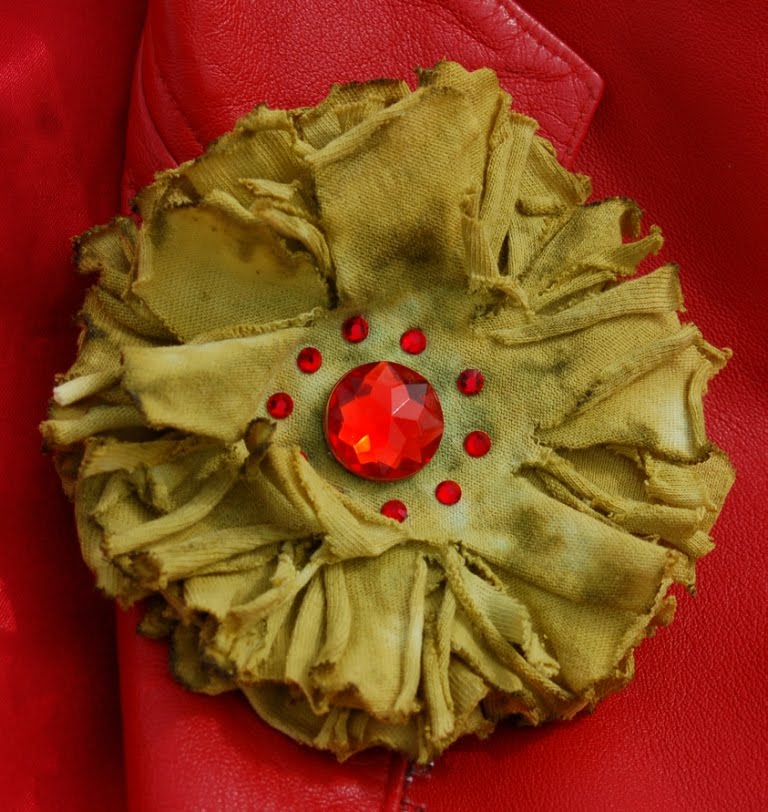
When I went to their home for the first visit we talked about The Sprk Station and school and all the things I was there to see. When it was time to go, she mentioned her workshop and being a very creative person myself I really wanted to see it. I had noticed her earrings earlier and thought they were just beautiful. When we finished with her workshop her 10 year old daughter asked me if I would like to see some pins that she had made. Her mom had taught her how to make them out of scraps of material, yarn, feathers, etc. I was astonished at how professional some of her pieces were. She had also created head bands and hair clips.

I was impressed that her mother had taken the time to inspire her daughter, share a talent and help build her confidence. Anytime we learn something new it builds our self confidence. It tells us that we can!

On my last visit I took a friend to do some videoing for me. She was involved with a fund raising project to help a student in Africa attend George Wythe University. Being on the ball as any good fund raiser would be, when she saw the jewelry that the mother was wearing she asked about it. Then she asked if the mom would like to donate a few items to the silent auction to raise the funds. Being the generous soul that she is she readily agreed.

However, here is the crux of what I want to say today. Without a pause she said, “Would you like to see what my daughter has made.” She included her daughter in the opportunity to shine. The fund raiser was impressed and asked the 10 year old if she would like to help raise money for the student. The 10 year old was so excited. What a feeling of accomplishment to be asked to participate in the same way as her mother.

It is wonderful when we can inspire our children, share our talents with them, help them excel and then involve them in service. This is one of the aims  of leadership education, to gently lead children into new areas of learning so that they can find their own talents and strengths; so that in time they can repeat what you have done, raise a leadership generation.

You can use The Spark Station to help you do this. If you want your child to play the piano introduce it to him. Don’t require that he learn it. Take him to a concert. Visit a piano store. Invite a friend over who teaches piano to give a little concert in your home. Put a CD of beautiful music in your Spark Station. Add a book about great composers. Dover has a coloring book of great composers. Use your Spark Station and the other educational tools at your disposal to inspire not require. The end result is that your children will love learning. They will feel confident in trying new things. They, like my ten year old friend, will discover their strengths and will gain self confidence. When that happens they, like her, will be given opportunities to serve.

Possibly Related Posts:


{ 0 comments }