Create A Culture of Togetherness

by Mary Ann on June 1, 2010

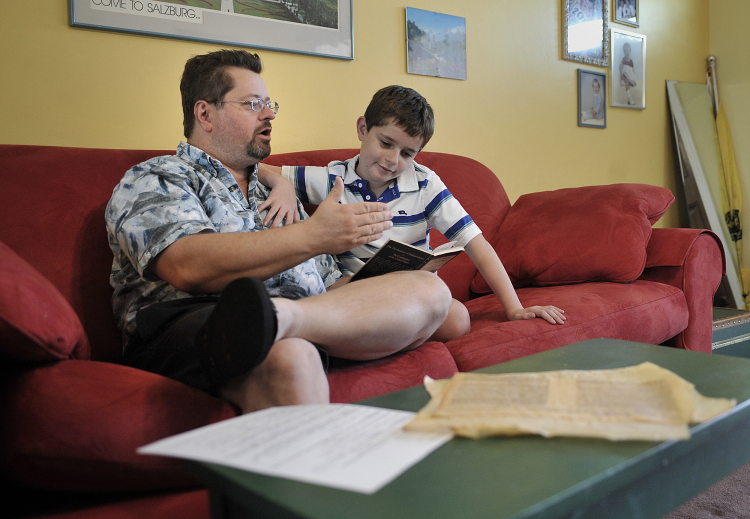
One of the ideas that I find most appealing about the leadership education model is the encouragement for parent and child to share the educational experience. Parents read a great classic and either have their child read the classic or read it to them. Then they talk about it. That process repeats over and over. The parent shares their aha moments and hears about the child’s.

Parents are counseled to keep clubs and classes to a minimum and to allow children to spend more time with the family modeling life’s activities, cooking, repairing something, learning a new skill, or playing. Parents are taught to “stay present” with their kids and to enjoy working and playing with them.
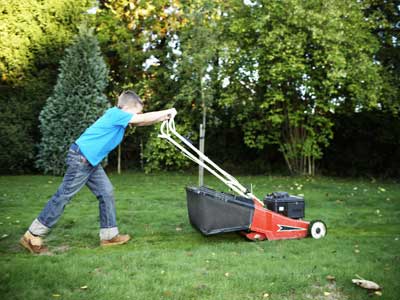
Every family has a culture. They are all different.In our family culture kids and adults didn’t play or work together. Even at family reunions that theme played out. There were activities for kids and different ones for adults.

My mom and dad did a lot of stuff for us but not with us. My dad loved to garden but he did it alone. If we needed to weed or water we were sent out to do it. He did his part and we did our part. My mom planned fabulous birthday parties. She did it all and they were great. We attended. We didn’t plan together, organize them together and then participate together. I know that there are lots of families with a culture just like this. It makes it more difficult to incorporate the leadership model into the home. The public school model parrots this culture. Kids learn separately from parents and families spend many hours each day divided from one another.

When I was a young mother I had a beautiful garden in our back yard. I usually gardened by myself. I liked the solitude. I would send the kids out to weed. But at some point I realized that I wanted a different family culture. I wanted a different bond with my children. So each weekday when I got up at 6:30 I woke a different child up to help me in the garden. I did this all summer. They were not happy about it. But soon we started taking about all kinds of things. They shared what they were feeling with me and I was able to share my faith, my hopes, and my dreams with them. It was a remarkable summer. The fruits from the garden that year seemed sweeter than ever before.

What are the advantages of parents who are present with their children? Being with a child tells them you are concerned about them and that you like them. It allows them to model what you are doing and to ask questions. Deep and thoughtful conversations can come out of casual activity with a mom or dad. These are usually better received than when we go to the child and let them know we have something we want to talk about. They tend to open up more to us. There is shared laughter and sometimes tears.

The Spark Station is a remarkable tool for helping families accomplish a portion of this together time. Whether you are home schooling, your kids attend public or private school or you are a concerned and loving grandparent, The Spark Station can assist you to create marvelous, consistent and together moments with your children and grandchildren.

Put a Spark Station together and then set a structured amount of time to use it. For home schooler’s it will be during their structured family learning time. For those who attend school in the public or private sector it might be an hour before dinner or bed. Grandparents can choose an hour or two each day grandchildren are visiting.
This week decide on one thing that you can do as a family, together. Maybe it will be setting a specific structured family learning time, maybe it will be a morning devotional, and possibly reading together each night or you could choose one or two evenings a week to do something together.  For some families just sitting down at the table and eating would be a big thing. Whatever you and your spouse choose, make a commitment to it. Be consistent and be present. Don’t talk on the phone, fold laundry or watch TV out of the corner of your eye. When you have gotten that one thing really set in your family tradition then choose another and go to work again.

Possibly Related Posts:


{ 0 comments }

“Inspire not Require”

by Mary Ann on May 31, 2010

How is The Spark Station a dynamic tool that allows parents great latitude with the “inspire not require concept”? When parents understand how to use The Spark Station to inspire their children they find a freedom and peace of mind that might have eluded them before. Every parent is concerned that their children learn what they think is important. Children, on the other hand, especially older children, don’t appreciate being told what to learn. There in lies the conundrum.

When The Spark Station is well structured and the Five Rules of Engagement are adhered to children find it a magical place and they gravitate to it’s use. They look forward to what might be in The Spark Station and to engaging with the contents. They like being with their family in this consistent structured learning space. A sense of well being, delight, warmth, and satisfaction is generated. Children look forward to this time. There is no fight in getting them to participate in family learning time when an atmosphere like this has been created.

This means that parents have a child’s attention for a few hours. Parents can think about what matters to them, what they want their children to learn. They can then put things in The Spark Station to spark a child’s interest in that topic. Let’s look at a possible scenario.

What if you want your children to know more about the world, geography for instance? Decide which part of the world you want to focus on or which country. Let’s choose the island of Japan. A good place to start is the library or Google. You do some research yourself and decide what topics you would like to explore with your children.

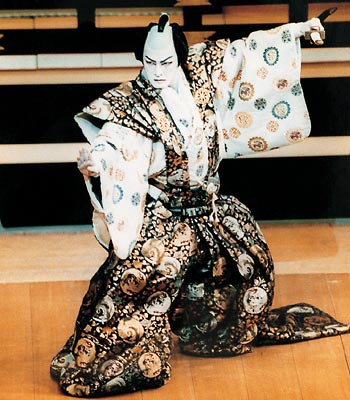
What about Kabuki, the ancient drama-dance art form. You get a book from the library with lots of pictures. You could downloadsome traditional music from the Japanese theater. If your library is large enough you might even find a video showing a Kabuki presentation. You can see about finding pictures of the interesting and different musical instruments used in Kabuki. This all goes into a container in The Spark Station.

You might venture into paper folding. Purchase the right kind of paper and get a book of directions. You could have materials for turning the folded paper items into a mobile or place cards for dinner. You can integrate some math concepts into the paper folding.

You could include some Japanese folklore stories in your devotional time or family reading time. There might be a coloring book of Japan available. You might want to include a map showing Japan or a globe. You could even print off some blank maps, perfect for filling in and coloring.

Are there any cultural events about Japan that happen in your community or city? What about a Japanese dinner out or a Japanese recipe added to The Spark Station. Some adventurous child might want to try his hand at Tempura.

Its spring and the cherry blossoms are in bloom. There are some children’s books that talk about the festival that is held at this time of year in Japan. Maybe you can have your own festival to celebrate the budding fruit trees of your part of the world. What kind of treat can be created with the fruit of that tree? Even that can go in The Spark Station for an exciting day in the kitchen for children who want to learn to cook. You can add something new to The Spark Station every week that has to do with Japan, for the whole year if you want to. You can add something new just once a month. You do what you have time and desire to do.

Now the thing to remember about The Spark Station is that this is an “inspire not require” space. Your children might get all excited about Japan and then they may not. All your efforts might seem wasted if they don’t. I want you to remember though, that you are also supposed to be a student, continually learning and expanding your own education. So whatever you found out about Japan wasn’t wasted at all.

A tool that can help parents decide what it is they really want their children to understand, know, see and experience is a Master Inspire Plan. It is worth the time to take a class and learn how to create and use this wonderful tool. I teach the concept and how to use it in my one day workshops.

Whether you have a Master Inspire Plan or not you can use your loves, likes, interests, sparks, and imagination to fuel The Spark Station for your children and take them on an educational journey with you.

Possibly Related Posts:


{ 0 comments }

Play from the Past

by Mary Ann on May 28, 2010

I have noticed that with all the advances in technology kids don’t play like they used to. In today’s world I wonder if we haven’t lost many opportunities for children to exercise their thinking, problem solving and creative skills. There is also tremendous pressure to cut children’s play hours short to make room for more clubs, classes and school time, all in the effort to help them get into the best schools and get the best jobs. This pressure has even reached into our preschool population.

One of the purposes of the Thomas Jefferson education model is allowing, in fact encouraging, children to take responsibility for their own education, to be their own teachers. We start that process when they are small by giving them plenty of time to play, create, and observe. Parents are encouraged to consider play as the child’s work and not as wasted time. Arthur Koestler said, “Creativity is a type of learning process where the teacher and pupil are located in the same individual”.

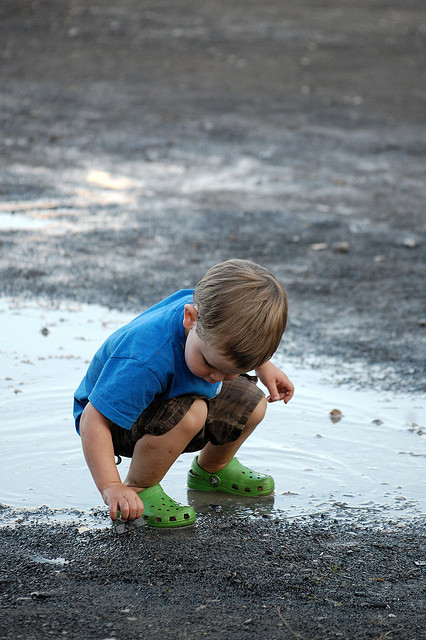
What I have been doing to help my grandchildren play without using the computer, TV, or electronic games, etc. is to introduce them to what I liked to do as a child. These more antiquated types of play are engaging because they encourage thought, imagination and observation.

My mother lived on a farm and she had a favorite past time. She would collect empty bottles that had pretty shapes; empty perfume bottles or small jars that pickles, olives and the like come in. Then she would head down to the creek with a box full of crepe paper scraps and make colored water. She kept her jars down there as a hidden treasure. When mom told my sisters and I about doing that we tried it. It was fun watching the small bits of paper color the water. Then we lined our jars up on a sunny window sill. They were beautiful in the sun.

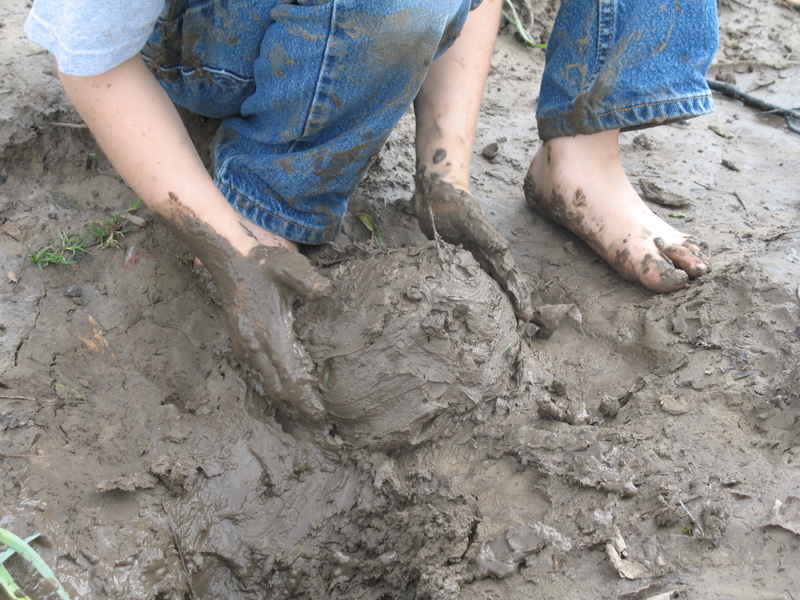
My favorite pastime when I was between eight and ten was making mud cakes. My sisters and I would find very large stones, about 5×8 or so. (I found one recently on the side of the road by an underpass) Then we made a big pan of mud which we frosted the stones with. As soon as our “cakes” were frosted we decorated them with bits of leaves, grass, twigs and flowers. Then we set them in the sun to dry. We got pretty creative. We played that game over and over all summer long.

At my grandma’s house, in back, was an old set of shelves. We played store out there every time we visited in the summer. We would name the store and make a sign. We made play money and took turns being the shopkeeper. We picked weeds and flowers, priced them and then went shopping.  Queen Ann’s lace was cauliflower, yellow flowers were butter and we collected seeds and berries from plants, like her honeysuckle bush. We just picked whatever was available. It was really fun.

In school during 4th through 7th grade there were many tall trees in the school yard. That translated into tons of leaves in the fall.  During lunch hour we would use the leaves to design floor plans for a house. We would shape the leaves into rows along the ground to designate the living room, kitchen, bedroom etc. By the time school was over the “house plans” would be blown away but we didn’t care because we knew we would just create them again the next day.

I had a friend who had small children. Her eight year old son loved to dig in our large sand box. So one day I took some brokenjewelry and assorted beads and buried them in the sand. You should have seen the delight as they unearthed the treasure.  Most of the children only dug for treasure occasionally after that first time but the eight year old dug every time he came until he was well over ten. Even after all that time he would occasionally find a bead or two.

The Spark Station can really facilitate some of these activities. Find a small shoe box and put some pictures of the child who played the games in it. Maybe it’s you or a grandparent or even a great grandparent. In my case I would add some crepe paper and small jars. When my children asked about the box I would tell them the story. That is all. If there was interest they would take care of the rest.

I could find a few good “cake rocks” to put with the pictures. I could  have pictures of myself and when asked, tell the story of shopping in the garden and making cakes. Then I could make a statement, “You know I have always wanted to make a picture book of that activity”. It wouldn’t surprise me if one or two children wanted to do just that. They could draw the pictures and write the story. You could put it into a folder or take it to a print shop and have it bound. What a treasure and a keepsake.

Put on your thinking cap and remember what you and your friends did when you were five, seven, eight, and ten. Ask your parents and grandparents what they liked to do. What was it you or they liked about that activity? What materials were needed and did you put those materials together your self or did you need adult help. Then help your children recreate the experience. Don’t do for them what they can do for themselves. Tell them your stories and how much fun you had and get them excited about having the same type of experience. Then stay present and play with them and feel again the joy of pure fun. You’ll all have a great time.

Possibly Related Posts:


{ 2 comments }

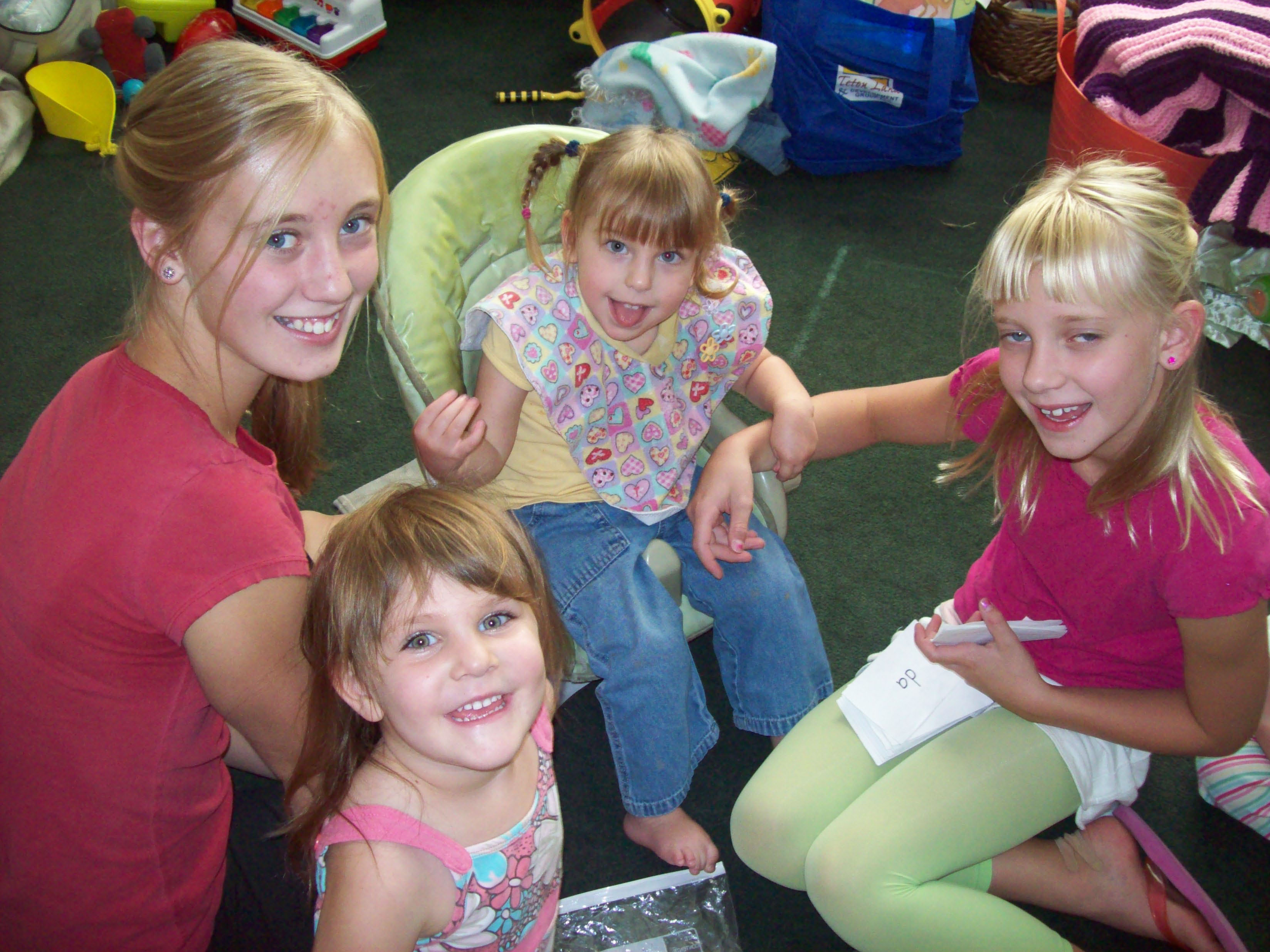
I want to talk about how structured time and consistency really matter to children. In our church we have a new family. It is a mom with three daughters under the age of 7. She hasn’t been to church since she was about 14 or so. No one else in her family is active in any church and she joined our church in middle school because she had school friends there. So her experience with religion is very small, for her children it is nill. This is a whole new experience for them.

My husband and I have adopted her and her family. She was having a hard time getting to church on time. Each Sunday she would come late, just about the time the Sacrament was being passed. It was disruptive. So we began going over on Sunday morning to help her out. Then we really started liking her family and the kids started calling us grandpa and grandma and so we started going on Monday nights to help her teach them gospel principles and principles to help them with their family culture.

It wasn’t easy when we started. It was a challenge for me to stop early enough in the day to prepare some type of lesson and an activity. It was a challenge for the mom and dad to get home from work, eat and then have strangers over to teach a class, of sorts. It was difficult for the kids to sit quietly and pay attention to something that was all new to them. But we have persevered and amazing things have been happening.

The children can’t wait for us to come. We get hugs and kisses. It is always very chaotic when we first get there but it doesn’t take long and we are all kneeling around the coffee table coloring and talking, reading and singing. The mom is involved more and more. Even the dad stays in the room and smiles on his children and on us. It is nice.

Monday at about 6:15 I got a call from the mom. She works full time and goes to nursing school. She is tired at night and gets home at about 6:00. She called to say that she had a paper due on Thursday and she had just picked up the kids and thought we should cancel so she could get her paper done. I was relieved. It had been a particularly busy day for me, it was raining cats and dogs and I was grateful not to have to go out. Thirty minutes later I got another call. “Mary Ann, can you still come. I told the kids you weren’t coming and they threw a fit!”

Well I did go over and we had another great evening together. When it was time to go the oldest girl begged us to stay. She really wanted to make smoothies for us. I knew her mom had a paper due and yet they all wanted to make smoothies. They were delicious.

Now I don’t want you to think that everything is going perfectly. That Monday night the 2 year old cried the whole time. She was really fussy. The 4 year old nephew from downstairs came up and he and his 4 year old cousin don’t get along well. That caused some contention. It didn’t matter at all. We carried on, the overall feeling in the family was still warm and inviting and we stayed later than usual and had smoothies.

Here is the dynamic I am talking about. 1. We have a structured time that we consider really important. 2. We are consistent in having that time every week. 3. It is special. It doesn’t happen every day, all day. It is something to anticipate and look forward to. 4. In order to make room for it, we had to take something else out of our schedule. We have to keep it simple.  5. We plan.

The five rules of engagement apply to just about everything that has to do with family. They are the keys to success and to a healthy, warm, successful family culture.

Possibly Related Posts:


{ 0 comments }