Five principles for family success

by Mary Ann on February 21, 2011

pointing finger pictures

YOU are the most important element of the Spark Station!

“For years I have been thinking, if I only had more money I could buy the perfect items for my Spark Station; things I see in the Timberdoodle catalog like Wedgits and other manipulatives. But after studying Mary Ann’s Five Rules of Engagement I had this major epiphany. I, when I am fully engaged with my children, am the most important element in the Spark Station, not any art or craft item or manipulative or cool educational toy.” Celestia S.

This is a perfect example of rule 2 of the Five Rules of Engagement; Be present. I love the Five Rules. I didn’t have them fully formed in my mind when I began working with parents and helping them implement their Spark Stations. I just knew what children needed the most from parents, to learn really effectively.

As I watched families struggle to implement the Spark Station in their learning time the 5 rules became clearer to me. It was an exciting day when I had them fully formed in my mind in a way that I could share with parents; that’s when I began to see major changes in success with the Spark Station and with families themselves.

Let’s review the Five Rules of Engagement. These are the most important elements in your Spark Station and are really not negotiable if you want to create a truly magical learning environment and family culture

1. Structure time and be consistent. In order for anything to really happen in life we have to carve out time for it and then make a commitment to that time; we have to be consistent.

teaching kids homeschool pictures

Make your learning time consistent

2. Be present. Being present means that you are engaging with your children, you are in the same space with them physically , mentally, emotionally. It doesn’t mean getting them settled and then going off to do your own thing. It means, being together as a family.

girl mom reading photos

It doesn’t matter what you do, just do it together

3. Make it special. When we want someone to really look forward to something then we have to make it special. We do that with the Spark Station by only having it available at a certain time during the day.
boy reading photos

Keeping it special enhances everything in your Spark Station

4. Keep it simple. Parents can stop being consistent with their structured family learning time if they make it too big of a hassle to handle. The Spark Station is a simple tool, which uses simple materials. Keep it simple and everyone manages better.

5. Weekly planning. Taking a bit of time each week to think about your family, your children’s needs, and what they are interested in is your key to great content in your Spark Station. It doesn’t take hours of time. What it takes is thinking and then follow-through.
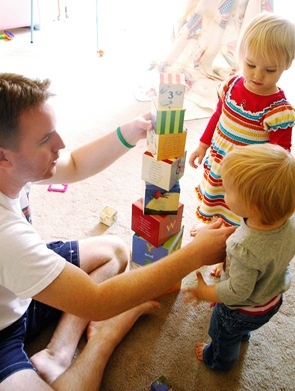
family playing blocks pictures

Make it special and plan ahead. Think!

I have seen these principles work over and over again. The principles that make the Spark Station, work make families work, and lead to family success and happy families.

While practicing being present have some fun with keelboats. You can find a bit more information about the five rules of engagement here.

Possibly Related Posts:


{ 0 comments }

Ten valuable tips for parents about parenting

by Mary Ann on February 20, 2011

happy family images

Families are important

At the end of November I began a pilot with seventy one families to test out the Spark Station Mastery Course. On February 15 the pilot ended. That last conference call was sweet and sad! I am going to miss my weekly conversations with some of the best parents around!

I have been so amazed by the love I have seen in parents for their children and families. I have been touched by their efforts to learn new skills and put them into practice.

I have made some interesting observations about things I already knew and have had reconfirmed. I want to share them with you.

1. Parents, really good, caring parents, are too hard on themselves. They are so willing to focus on their perceived failures and inadequacies and to neglect to celebrate their successes. Whatever we focus on we get more of; so focus on your successes.

family reading time images

Focus on your successes

2. Parents, women in particular, are plagued by the 100% devil. If they don’t feel they are doing it all then it must be a failure. What is forgotten is that success happens 1% at a time. There is no quick fix.

3. When parents feel they are behind or not making enough progress in learning a new skill, the temptation is to quit. Don’t quit. Remember that real results in anything come 1% at a time. Slow and steady wins the race.

grandparents cycling pictures

Don’t quit; learning and change take time.

4. Accountability when setting goals helps you achieve them. When you are venturing into new territory, making significant changes, treading where you have not gone before, then you need support and accountability. Get a group or even one other person that you can share your failures and successes with that will help you keep your promises to yourself and not quit.

5. Loving our children is not enough! Love doesn’t keep us from focusing on runny noses, messy bedrooms, spilled milk or vomit and other frustrations. Love doesn’t keep us from seeing our children as problems to be solved instead of people to understand. That takes a change of heart and new eyes to see!

family get together pictures

Children are not problems to solve or irritations to get over.

6. When parents decide that being present matters and make even the smallest effort to give the gift of themselves to their children magic happens. It does! Every time.

7. Families are too busy with good things. They are so busy making sure their lives are filled with good things and that their children don’t miss out on anything, that they have a difficult time taking care of the BEST things. Families need time, at home, with one another, to really thrive.

father son outdoor photos

Don’t be too busy. Families take time.

8. Homeschool parents tend to be perfectionists and that sometimes allows them to fall into the trap of taking what they hear and throwing it whole hog into their families. They tend to go overboard. Remember it is your job to take what you hear, think it through carefully and then utilize what best suits your family; don’t over do a good thing. If one pill is good it doesn’t mean that 10 are better!

9. Planning ahead does not mean the death of flexibility or spontaneity. It just guarantees that you are prepared for whatever happens and when you are working with children that is a must.

family picnic pictures

Don’t forget to plan ahead.

10. The real truth is, when we make an effort to get better at anything, our intention brings positive energy to us. It does make a difference in our ability to make change. So no matter how inadequate you feel, how big the problem seems, start! The first step is the key to the door of change and the first few steps are always the hardest.

I want to send my love and appreciation to those seventy one brave families that took this journey with me. Continue on, you are wonderful.

Possibly Related Posts:


{ 1 comment }

A few tips for raising creative children

by Mary Ann on February 17, 2011

Connors kits for kids pictures

A wonderful and creative kid!!

This is the sequel to the article on creative children, Encouraging creativity & creative thinking in children.

Tip 3

*Listening to your children’s ideas and valuing them as worthwhile is a great way to encourage creativity in your children. It gives them courage to keep on thinking.

Refrain from judging your kids ideas. I think about Connor, the science loving kid, who started Connors Kits for Kids, an online company which makes kid-friendly science kits for kids.

When all he was interested in was science his parents didn’t freak out. They didn’t think “Oh my gosh, he has to learn math and reading”. They came on board with his interest and he and they bought a lot of science kits. When Connor decided that most kits were not worth the money and wanted to find a way to provide great kits for kids that really worked his parents listened and helped him figure out how to do it. He was in fourth grade then.  I like Connor. He is a great and creative kid!

girl singing pictures

Children are naturally creative in their play. Let them play and amazing results happen.

Tip 4

*Children are naturally creative in their play. Let them play and amazing results happen.

I loved this example of encouraging children’s creativity from the Wall street Journal article. “When Maureen Dougherty’s three kids were small, she and her husband Brian encouraged them to make up their own lyrics and dances to nursery rhymes, says Ms. Dougherty, of Stephens City, Va. Hearing Mr. Dougherty and the kids laughing one night years ago, Ms. Dougherty opened a door to find them stumbling around with their eyes closed, singing original lyrics to “The Three Blind Mice.”

“After inventing spontaneous lyrics for years, their children, now 14, 18 and 20, enjoy public speaking and “can think of things to say right off the cuff,” Ms. Dougherty says.

child painting pictures

Don’t focus on the outcome. Children love the process.

Tip 5

*Don’t focus on the outcome too much.

Adults tend to be outcome driven but for children it is the process that counts. Creativity is in the process of doing. If it fails then they will try something else if you don’t fall apart. Give them permission to fail and in the long run they will succeed.

One final note, it is important to realize that if you are raiseing creative children they may not always behave like other children. They will feel free to talk, express their ideas; they will be bolder, more courageous. This can land them and you in trouble. You will have to be brave and face up to what you have raised. Like me, you may get a pink slip from school stating that you’re 6 year old is insubordinate. That experience really made me laugh. Imagine 6 and insubordinate.

Let me end with this wonderful story from one of my own very spontaneous and creative children, the insubordinate 6 year old.

fire dancing pictures

The insubordinate 6 year old has grown into a fire dancer!

In the mid 80’s flannel shirts were in. I sewed myself quite a few of them. My six year old daughter Jenny loved them and started wearing them to school. Of course they were way too big for her, actually like a small dress. She solved her problem by pinning them at the neck with a large safety pin. Yikes, she looked like a street urchin; and yes I had made some in just her size! I just said, “Oh well”. She had solved the problem to her liking and was happy with the result. She wore one of my shirts to school every day.

It wasn’t too many days later that I was called into the school to visit with the teacher. She wanted to know if everything was OK at our home; was our money situation OK. (This was a very small school, in a very small town!)

I got what was up right away and explained to her what Jenny was doing. The teacher was worried that the pin might pop open during play time and that Jenny might get stuck. “Well, if that happens, I suspect she will change her wardrobe”, I responded.

Jenny wore those ridiculous shirts for a few more weeks. Then she decided that they hampered her ability to play ball and other games and her wardrobe did change.

Raising creative children is an adventure worth having.

Why not read about the importance of stories in children’s lives.

Possibly Related Posts:


{ 2 comments }

creative play pictures

Jacob Kaufman plays with his father James at their home in Redlands, Calif. Michal Czerwonka for The Wall Street Journal

“When art teacher Kandy Dea recently assigned fourth-graders in her Walnut, Iowa, classroom to create a board game to play with a friend, she was shocked by one little boy’s response: He froze.

“While his classmates let their imaginations run wild making up colorful characters and fantasy worlds, the little boy said repeatedly, “I can’t think of anything,” Ms. Dea says. Although she reassured him that nothing he did would be judged “wrong,” he tried to copy another student’s game, then asked if he could make a work sheet instead. She finally gave him permission to make flash cards with right-and-wrong answers.

“Americans’ scores on a commonly used creativity test fell steadily from 1990 to 2008, especially in the kindergarten through sixth-grade age group, says Kyung Hee Kim, an assistant professor of educational psychology at the College of William and Mary in Williamsburg, Va. The finding is based on a study of 300,000 Americans’ scores from 1966 to 2008 on the Torrance Tests of Creative Thinking, a standardized test that’s considered a benchmark for creative thinking.”

The above story and test results came from an article in the Wall Street Journal on December 15, 2010, A Box? Or A Spaceship? What Makes Kids Creative. I am not particularly interested in test results and I don’t place a lot of credence on tests themselves. However, as a mom, grandmother and teacher, I have certainly seen this trend. Children seem to have more difficulty being creative now than when I was a kid.

There are some researchers who feel that the growing amount of time children spend on computers and in watching TV has decreased their ability to be creative and to enjoy play time. Others feel that children today have as much creativity as ever but that public schools get a D in encouraging it. The belief is that schools are doing a very poor job of encouraging and supporting creativity in children.

boys at play pictures

My mother said, "Go out and play"!

As parents it would be good to have some ideas about how to support and encourage our children’s creative thinking. Right? I have to laugh at that. In my day, what our parents did to encourage and support our creativity, was to send us outside and say “go play”; and we did. We had a lot of creative play. We made up games, we invented amazing machines, we made mud cakes and ran and skipped and hopped and created jump rope games, etc. That is how my parents did it.

Here are some ways for encouraging creative thinking.

Tip 1

*Solving problems is a way to practice and encourage creativity.

Have family councils. Let your children in on problems that need to be solved. Give them an opportunity to voice their ideas. Listen to them with respect. Avoid the tendency to decide that their answers are wrong or silly or naive. You may be surprised at what great ideas they come up with. I might also add that when answers to problems come from the children in the family they are much more on board with putting the ideas into practice.

child shovelling snow pictures

When ideas come from children they are more on board with putting them into practice.

Maybe in your family council you mention that your elderly neighbor is sick and needs help. What can you do to help her? Your children might volunteer to shovel her walks, water her yard or sit with her and read; things they might not be willing to do if the idea came from you.

In your council you might mention that you aren’t sure that you can save enough money for the annual trip to the family reunion and you wonder what ideas they have to solve the problem. Some may suggest jobs they can do for neighbors, allowance money they can save and donate to the cause, or heaven forbid, they might even suggest you cut off cable for awhile.

sitting by lake pictures

Have “familiar conversations” with your children.

Tip 2

*Thinking, discussing and voicing an opinion are ways to encourage creative thought.

Have “familiar conversations” with your children about current events, historical events, books that you are reading. Don’t dumb it down for your children. Make your open ended questions and comments age appropriate but dare to talk to your children about things that matter. Even four year olds have a view point on what happens in their world.

If you find this topic of interest be sure and read tomorrows blog, Tips for raising creative children and check out the article activities to build executive functioning.

Possibly Related Posts:


{ 0 comments }