Make learning chemistry fun-in the kitchen

by Mary Ann on May 4, 2010

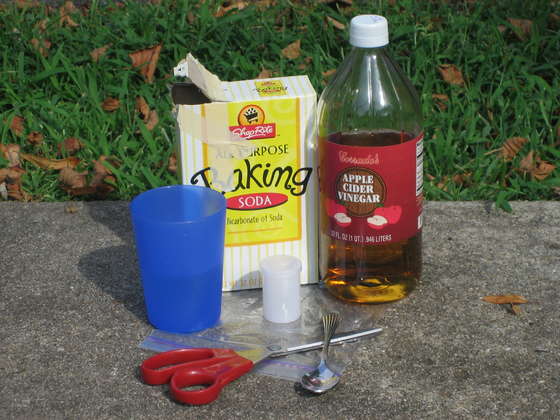
The second item on my kitchen list was soda and vinegar. Of course most of you have seen or heard of making a volcano by mixing soda and vinegar. One family I worked with made a wonderful bubbling swamp. They had a great time but when asked why it did what it did no one was prepared to tell the children. So parents need to be students too. You can find out about anything you want to know on the web.

We want our children to have a ball learning about all kinds of things and so we want to be able to answer their questions or lead them into finding the answers for themselves. If we are watching them do a project or helping them and they don’t ask why, we can just engage in conversation. We can say things like…Do you know what I discovered…Can you believe…How do you think that happened…What do you think would happen if…and so forth. That is why we are there, that is why we need to stay present; that is what makes our family learning time really tick!
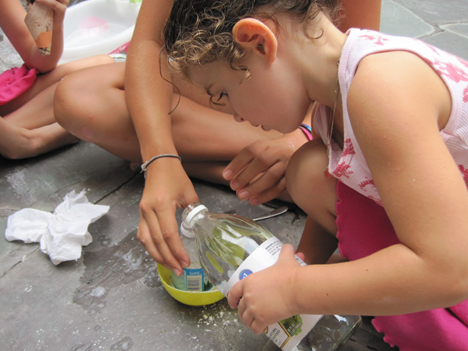
This baking soda and vinegar reaction demonstrates a chemical reaction. The reaction between baking soda and vinegar is actually two reactions, an acid base reaction followed by a decomposition reaction.

When the two ingredients are mixed, hydrogen ions from the vinegar react with the bicarbonate ions from the baking soda to form a new chemical called carbonic acid. You can tell even a 4 year old that they just created a new chemical. How cool is that.

The carbonic acid thus formed then immediately decomposes into carbon dioxide gas and water. It’s this carbon dioxide gas that you see bubbling and foaming as soon as you mix baking soda and vinegar together.

Here are some more ways that you can see this chemical reaction happen.
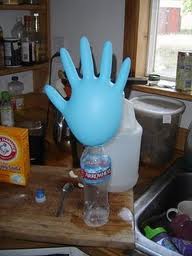
1.  Vinegar & Baking Soda Foam Fight

2.   Build a volcano

3.   Propelling a Rocket

4.   Making a bubble bomb

5.   Demonstrating the chemical reaction

So how can we use these kitchen substances in our Spark Station? On the day that they appear for the firsttime have the materials for making a volcano. Why not go all out and create a chicken wire armature and use paper mache or old newspaper strips and flour-water paste to make a volcano. When it is dry paint it. Then do the experiment. (See How To below)
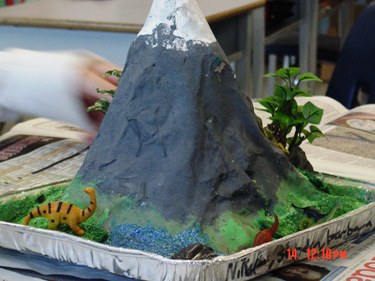
Have a book on Pompeii, maybe some pictures and articles on Mount St Helens and why not newspaper articles about the current eruption in Iceland. Have a good book of pictures about volcanoes. Get a book on Iceland and have a map. Find Iceland and Mt. St. Helen’s in Skamania County, Washington. Have a book on Italy and find it on the map.

Pompeii was a Roman town-city near modern Naples in the Italian region of Campania.

Why not get a book on Rome. Then make a Roman soldiers costume. There are books that show simple ways to do that. Can you see how one thing just leads to another? And all we started with was a bottle of vinegar and a box of soda. Every few days or once a week add the makings for another experiment or activity having to do with vinegar and soda or any other thing that relates to it in any way.
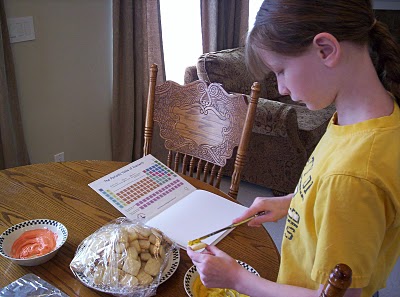
If you have older children  they might be interested in seeing a Periodic Table. Help them write out what the chemical reaction would look like using the table.

All this information is easy to find. In fact I couldn’t remember what the Periodic Table was called so I just typed in “chemistry chart” and voila! Let me also say that I never took chemistry but that doesn’t stop me from introducing my children to it. I can learn what I need, that is age appropriate, via Google!

Do you see how just a few simple items and a tiny bit of thought and time can give your children days of wonder and fun. I found everything I needed in thirty minutes. I could gather most of the suggested materials right in my home. I could have them in the closet by tomorrow.

As I have said over and over, don’t wait. Start today creating a magical learning space for your children so you can hear “Mommy is it time for school yet?” “Can we have school again, now?” “Mom, I can’t wait until tomorrow to do home school and sit in our library and read.”
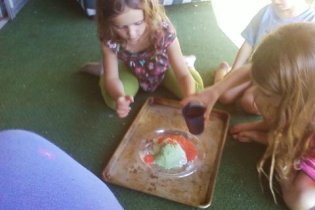
How To Make A Volcano: A simple way

We used chicken wire to form the armature but you can also use Armature wire. It is just bendable aluminum wire and can be formed into any shape you want. It can be purchased at most craft or art supply stores. Use an empty plastic bottle of some sort to form the wire around. This is the aperture that you will use to fill with soda and baking powder. (I have also tapped balls of foil to the jar, covered it with paper and then the paper mache) Then tear newspaper into many, many long strips. Dip the strips into paper mache glue. Use your fingers to strip off excess glue and place the newspaper strip over the armature. (If you use chicken wire, cover the armature with paper before adding newspaper strips) The pieces will need to over lap and you will need a couple of layers. This will take at least a day to dry.

Paper Mache Glue

This no-cook paper mache paste is good because it doesn’t use heat, so children can make it themselves.

Marerials Needed: Water and Flour

Instructions:

To make this paper mache paste, simply mix together 1 part flour to 2 parts water. You will want it to be the consistency of thick glue, but you also want it to be runny and not thick like paste. Add more water or flour as necessary. Mix well to remove any lumps. (A whisk and a strong arm work well here. It doesn’t have to be perfectly smooth and won’t be if children are making it. : )

Here are a couple of sites that use different techniques to build the volcano.

Possibly Related Posts:


{ 0 comments }

Science in a box activities in home school

by Mary Ann on May 3, 2010

Here are some more cornstarch uses for loads of interest and fun.

  1. You can let children sprinkle cornstarch all over the carpets. For easy sprinkling pour the cornstarch into an old parmesan cheese container, or a large spice shaker. Let it sit for thirty minutes while you read a good story to them and then let themhelp you vacuum it up. They will have fun and you will have fresh smelling carpets.
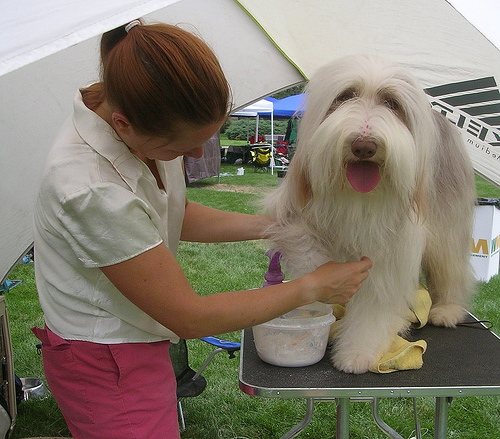
  2. If you have a dog your kids will love this. Use the same shakers. Let the kids sprinkle Fido all over and then brush it out for a fresh smelling pooch.
  3. Mix it with water for glue.
  4. Make finger paint by boiling ¼ c. cornstarch in 2 cups of water. Add a few drops of food color. Cool.
  5. Make face paint by mixing 2 parts cornstarch with one part vegetable shortening and then add some food color. Get a book on face painting from the library to add to The Spark Station on the day you put in this recipe or the finished product. You could also add a book on the History of Clowns with lots of great pictures. Maybe you can find someone in your area that is a part time clown or juggler and invite them to your home to share with your children. When my son was about 11 he took clowning lessons from a neighbor and he did little shows at nursing homes. He had a ball.

RECIPES

Edible Playdough

1 ¼ c. dry powdered milk

1 c. peanut butter

1 c. cornstarch

1 ¼ c. powdered sugar

Mix dry milk and peanut butter together. Add sugar and cornstarch. Knead till smooth.

Store in air tight container until all gone (and that shouldn’t take too many days!)

Mexican Wedding Cookies

1 ½ c. cornstarch

1 ½ c. powdered sugar

3 c. flour

3 sticks of butter, softened

½ to 1 c. finely chopped walnuts or pecans

Mix ingredients. (I find using my hands works the best. So this is right up your childs alley!) The dough will appear to be dry and crumbly sometimes. Just remember the cool aspects of cornstarch. Take some in your hand and squeeze it and press it until you have a ball about the size of a walnut. Place it on a cookie sheet and bake at 400 degrees for 10-12 minutes. Roll warm cookies in powdered sugar. (Let them cool just enough so they don’t fall apart. These are very tender cookies when they are hot)

Playdough

2 c. white flour

1 c. salt

½ c. cornstarch

1 Tb. Alum

1 Tb. Oil

2 c. colored water

Put all dry ingredients in a large pan and stir together well. Add all liquid ingredients and stir well. Place on low heat stirring constantly until it looks like clay. You will be able to tell. Take it out of the pan and knead. Keep in a container with a lid. Alum is a must have ingredient. (buy it in any grocery store in the spice aisle) It is a drying agent and keeps the dough from becoming sticky. This will keep a long time if kept in an air-tight container. You can use baby oil or cooking oil or glycerin. Eventually the cooking oil will go rancid but usually the clay has been played into oblivion long before that. Baby oil will scent the clay.


Possibly Related Posts:


{ 0 comments }

Science in a Box in Your Spark Station

by Mary Ann on May 2, 2010

In my last post,on creative home schooling ideas I talked about items in your kitchen that would be inspiring in your closet. For the next few blogs I am going to show you that what we think of as play can be and in fact is learning for a child. I also want to show you how to take an idea and use The Spark Station to provide days of interest and fun.

The first item on the kitchen list was cornstarch. I have used this fun corn starch idea with children for over 30 years but I never knew why cornstarch behaves the way it does. So recently I did some internet sleuthing and here is what I found.

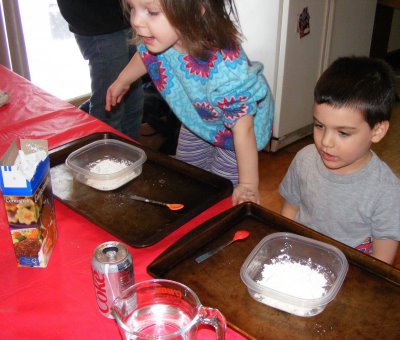
Mix a box of cornstarch with water in a bowl. When you mix the cornstarch with water you want it to have the consistency of honey. One box of cornstarch takes approximately 1 to 2 cups of water. You will have to work a bit to get the consistency just right.

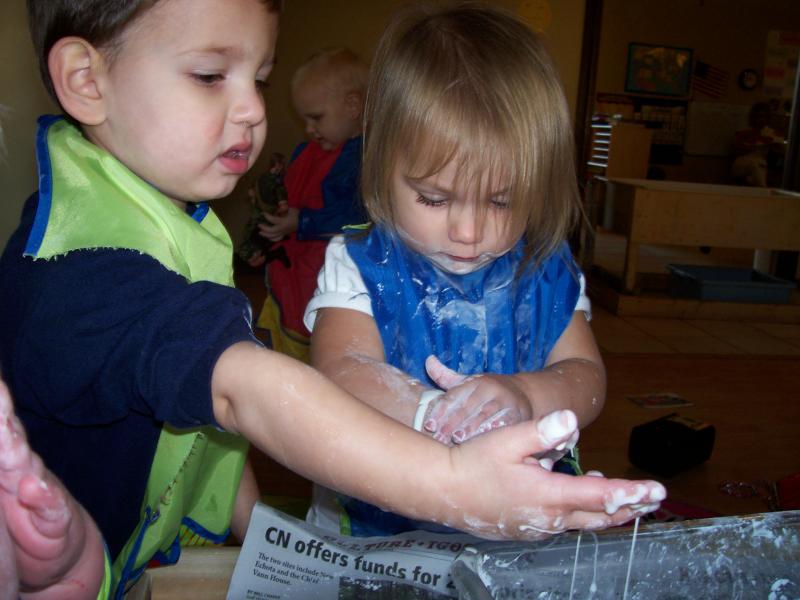
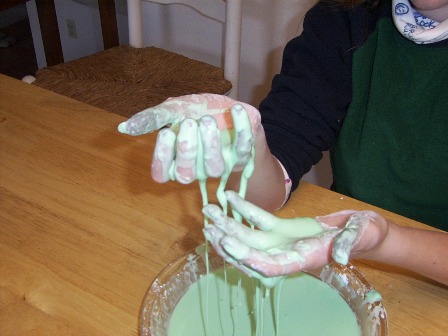
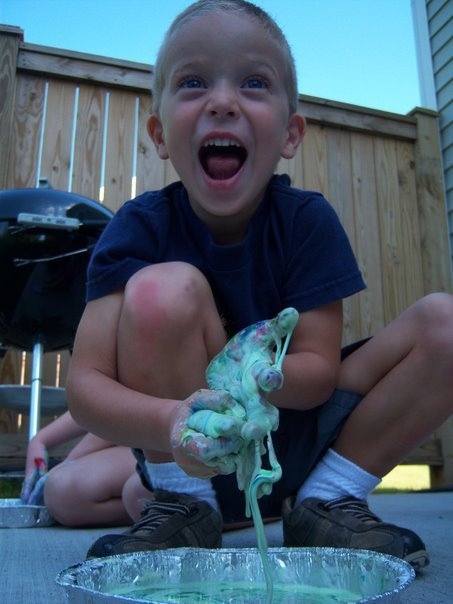
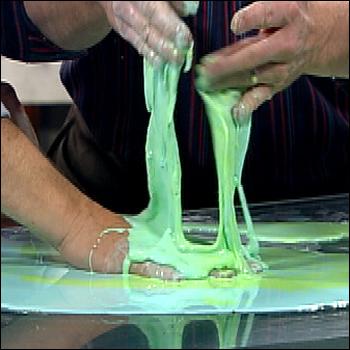
When it is mixed you can show your kids a few things about it. Have them sink their hands into the bowl of “cornstarch quicksand” and notice its unusual consistency. Compare what it feels like to move your hand around slowly and then very quickly. You can’t move your hand around very fast! In fact, the faster you move your hand, the more like a solid the cornstarch becomes. Sink your entire hand into the goo and try to grab the fluid and pull it up. That’s the sensation of sinking in quicksand! Skim your finger on the top of the cornstarch mixture. What do you notice? Grab a fist full and squeeze across. What happens? Release the pressure on the mixture in your hand. Now what happens? Roll the fluid between your palms to make a ball.

The cornstarch and water mixture acts like a solid sometimes and a liquid at other times. This concoction is an example of a suspension – a mixture of two substances, one of which is finely divided and dispersed in the other. In the case of the cornstarch quicksand, it’s a solid dispersed in a liquid.

Viscosity is how easily a liquid will flow. Water and honey are both liquids but they certainly flow differently. Sir Isaac Newton said that viscosity is a function of temperature. If you heat honey it flows better than when it is cold. The cornstarch and water mixture and quicksand are both examples of non-Newtonian fluids because their viscosity changes when force is applied, not when heat is applied.

Quicksand is just a soupy mixture of sand and water, where the sand is literally floating on water.

Ok, let me show you how to use this project in your family learning time. Let’s say you have 4 children ages, 2, 5, 8, and 12. Put a box of corn starch in the closet, unopened, in a bowl. Put an index card with the website address on it into the bowl. Place a children’s book about Sir Isaac Newton next to the bowl or under it. Add a book on quicksand or swamps. Have a plastic bag of small plastic animals, including some found in swampy areas. Have a recipe of how to make “cornstarch quicksand” in the bowl.

When the closet is opened one of your children will ask you, “Mom what is this”. The best answer is “Cornstarch, check it out”. Then wait! Let them get the bowl out. Let them check out the contents. They will probably ask for help. Just direct them where to find what they need. If they need help reading the directions help them. Let them make it and experiment with it.

They may look at the books alone or ask you to read to them. Talk with them about what they are reading, what they are experiencing. Share your thoughts. You have been a student yourself and so when they ask you why or how it does what it does you  can share what you have learned or you can take them on a journey and help them discover the answers. Have a conversation. Let it go where it goes without a preplanned agenda. They may want to take the cornstarch out to the sand box and make a swamp with plants and animals. Let them. (Add a few drops of food color for more fun)

While the older two (or three) are doing the suggested experiments and others they will think of, you pour a bit on the table and let your 2 and 5 year old just play.

The next day you can add a pudding or cookie recipe. After a day or so you can add a recipe for cornstarch play dough or pre-made play dough depending on the ages and interests of your children.

Playdough

2 c. white flour

1 c. salt

½ c. cornstarch

1 Tb. Alum

1 Tb. Oil

2 c. colored water

Put all dry ingredients in a large pan and stir together well. Add all liquid ingredients and stir well. Place on low heat stirring constantly until it looks like clay. You will be able to tell. Take it out of the pan and knead. Keep in a container with a lid. Alum is a must have ingredient. (buy it in any grocery store in the spice aisle) It is a drying agent and keeps the dough from becoming sticky. This will keep a long time if kept in an air-tight container. You can use baby oil or cooking oil or glycerin. Eventually the cooking oil will go rancid but usually the clay has been played into oblivion long before that. Baby oil will scent the clay.

There are many other ways that you can use cornstarch over the next few days or weeks. In the next blog I will give you more ideas and recipes.

Clean up is easy. Cornstarch dries and can be vacuumed up like any powder; if there is a bit left just take a damp cloth to it. The cornstarch and water will not stay mixed long term so if you dispose of it, don’t pour it in your sink as it can cause a clog. If you save it just put it into a zip lock bag. That is also how to dispose of it.

Can you see how much fun your children will have learning new things about a new substance…all from utilizing your Spark Station!

Possibly Related Posts:


{ 0 comments }

Treasure Hunt Your House to Create a Magical Learning Space


Let’s continue to look at what you already have in your home that can get your Spark Station started. When I am coaching a parent who is reluctant to start until they have the perfect spark Station or the perfect stuff to go in it I give them an assignment. I tell them to go into every room of their home (except their children’s bedrooms) and look around. I tell them to have a pad and paper with them or a box. I ask them to make a list of everything in each room that could be inspirational and fun for a child. Then I tell them to get a Closet and put those things in it.

So I am going to take you on a tour of my home in the next few blogs and let’s see what we can find. I am going to start in the kitchen because of all the rooms in the home it usually has the most to offer.

  1. A box of corn starch. Corn starch models the behavior of quicksand and it is so much fun to play with. We take 5-10 boxes to our family reunion every year and the corn starch table is always a BIG hit with both kids and adults. When you mix the cornstarch with water you want it to have the consistency of honey. One box of cornstarch takes approximately 1 to 2 cups of water. You will have to work a bit to get the consistency just right. Children love to play with cornstarch. They will often play with it until practically nothing is left. This is fun for an 18 month old and an 18 year old.
  2. Vinegar and soda, they cause an eruption when mixed together.
  3. Rice. This is great fun for small children. Pour rice in a tub and supply a few spoons and cups. Rice can be colored to add to the fun. Put a sheet underneath for easier clean up because it doesn’t all stay in the tub.
  4. Assorted macaroni, peas, dried beans and lentils. These are great for making pictures either right on a table top and then scooped back into a jar or bag…or glued onto stiff paper.
  5. Instant pudding. Do your kids like to finger paint. Well this is a non-staining and yummy way to do that, right on the counter or table top.
  6. Styrofoam or paper cups and plates
  7. Pop corn. Add a book about Squanto or the Pilgrims. A good idea to add in November.
  8. Here is what I found to add to my junk box: straws, plastic lids in assorted sizes, metal canning rings, wire, rubber bands, old keys, plastic forks, spoon, cork, and twist ties.
  9. Save some empty boxes and cans until you have enough for a store. Add some play money, maybe a till and voila, math for a few weeks play.

10.  Recipes – Every now and then put a recipe in The Spark Station with a main ingredient like a can of pumpkin or a bag of chocolate chips. Someone may want to cook. A fun project is to purchase some small recipe boxes and cards; possibly a colorful pencil. Put them in a tub with pages and cards of your families special recipes, especially those your kids love. Let them make their own recipe box if they want to. Then periodically let one choose a card and be in charge of dinner.

In the next few blogs I am going to show you how to use these items in your Spark Station to delight and inspire your children to LOVE learning.

Possibly Related Posts:


{ 0 comments }