Levers Part 3

by Mary Ann on June 8, 2010

Here is what I have learned about “simple machines”.
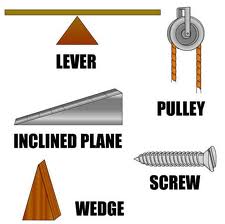
A simple machine is a mechanical device that changes the direction or magnitude of a force. In general, they can be defined as the simplest mechanisms that use mechanical advantage (also called leverage) to multiply force. A simple machine uses a single applied force to do work against a single load force.

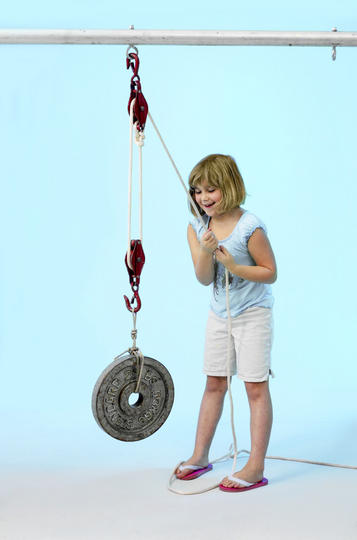
Usually the term refers to the six classical simple machines which were defined by Renaissance scientists: Lever, Wheel and axle, Pulley, Inclined Plane, Wedge, Screw

They are the elementary “building blocks” of which all complicated machines are composed. For example, wheels, levers, and pulleys are all used in the mechanism of a bicycle.

Simple machines fall into two classes; those dependent on the vector resolution of forces (inclined plane, wedge, screw) and those in which there is an equilibrium of torques (lever, pulley, wheel). (Yes, I had to look up some of these terms!)

The idea of a “simple machine” originated with the Greek philosopher Archimedes around the 3rd century BC, who studied the lever,
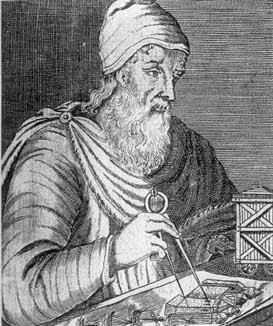
Archimedes

pulley, and screw. Heron of Alexandria (ca. 10–75 AD) studied the winch, lever, pulley, wedge, and screw. During the Renaissance  simple machines (excluding the wedge) began to be studied as a group. The complete dynamic theory of simple machines was worked out by Italian scientist Galileo. He was the first to understand that simple machines do not create energy, only transform it. (Wikipedia)

From this information there are tremendous possibilities for Spark Station additions. Add new tools to your box; screwdriver, plane, wedge and screws. That stump is going to come in very handy. Even I would find planning off bark to be enjoyable. I like putting screws in. It’s fun. If you have older children why not have dad help them make something using these tools, a small book shelf for example. None of these things have to be complicated. You are introducing new concepts. The shelf isn’t important in how it turns out. It matters because it gives your child an opportunity to see the concept in action.

One Christmas I helped my then nine year old son make foot stools for his grandparents. We got cheap scrap lumber from the lumber yard. We used a wide piece for the foot rest and pieces of 4×4 for the legs. He used tools to attach the legs to the foot rest. Then he planned it off, sandpapered it smooth and we covered it with padding and some vinyl scraps from an upholstery shop. We could have painted it instead. I know very little about building but it was a great success.

Perhaps you don’t think too much about using mechanical advantage but there’s no way you can live through a day without utilizing it in some way. Levers are everywhere; the light switch on the wall, for example, and the stapler on your desk. You use levers when you shift gears on a bike and when you hit the brakes. A doorknob is a type of lever. And then there’s your body. Your body contains many, many levers—wherever there’s a movable joint there’s a lever.below.

You can find a very good illustration of this principle at this site:

http://www.pbs.org/wgbh/nova/egypt/raising/lever.html

Whenever you pick up anything heavy, your elbow acts as the fulcrum of the lever, and your arm bone acts as the lever itself.

Some kinds of animals figured out how to use artificial levers to get work done. Sea otters, for example, use rocks to pry openseashells to get sea urchins or abalones to eat. Orangutans use sticks to pry open pieces of spiny fruit to eat the seeds inside.
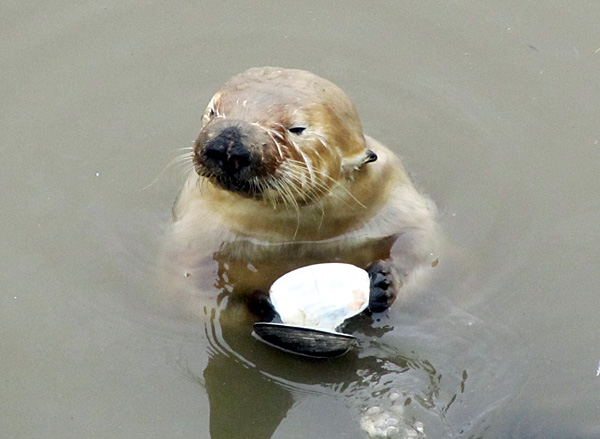
You can find pictures of animals using tools and levers on line or in the library.

People have probably used levers as long as there have been people on earth. At first, people used levers the way otters and orangutans do, to break into shells and fruits to eat the food inside.
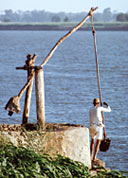
By the time people were living in cities they used levers for many more things. Take a look at a shaduf. It is a very important tool for lifting water in many countries.

Can you see in the information above all the possible conversations, activities and information that can be put into The Spark Station and shared with your children? If you are showing them a picture of a shaduf then you can give them information about countries where they are used. Then you can find those counties on a map and learn about them. You can make the food they make, see how they dress, what school is like, what families are like. You can make a simple shaduf.

You can do experiments with the levers in your body. You can have a leg wrestling contest. You can play the game of stick pulling. You can study animals that use levers. What else do those animals do? Where do they live?

You can expand your study of levers into the other simple machines, wheel and axle, pulley, inclined plane, wedge, screw. Where can you find them around your home, in your environment? Can you make some of them? Can you use them and talk about how they make life easier? Can you see how one spark of an idea can lead you to dozens of others; how just a bit of thinking time can give you weeks and months of ideas to work with.

What if all you did for 6 months was build, identify, use and learn about simple machines. Wouldn’t your children have learned a whole lot about a very important scientific principle and had a lot of fun doing it. Wouldn’t they have learned about the mathematicians who came up with all the ideas and theories? It doesn’t matter if they are 4 or 12, you will have planted tons of seeds, learned things for yourself and inspired your children. Now go do it!

Possibly Related Posts:


{ 1 comment }

Teaching Science – Levers Part 2

by Mary Ann on June 3, 2010

Levers for The Spark Station part 2

A lever

Yesterday I explained a game that I saw on a television program for kids using the principle of levers. Today I would like to help you see what else you can use to teach the principle.In physics, a lever is a ridged object that is used with an appropriate fulcrum or pivot point to multiply the mechanical force (effort) that can be applied to another object (load). This leverage is also termed mechanical advantage. A lever is one of the six simple machines. http://en.wikipedia.org (I will talk about simple machines in my next blog)

Did you know that many common tools are based upon the lever?  Crowbars, pliers, scissors and row boat oars are all based upon levers and fulcrums.

http://www.cool-science-projects.com is a site where you can see a very simple illustration of how a lever works.

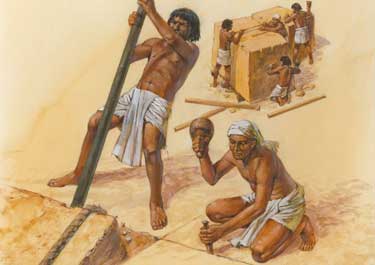
Because it is theorized that levers were used to build the ancient pyramids in Egypt you could add things to your Spark Station about Egypt. You could add an interesting book about how the pyramids were built. That could extend into a general learning about the country itself during the age of the Pharaohs. What did the people eat? Do we eat those foods today? How did they dress? What was their art like? Can we recreate some of their art? You can find some information here http://www.historyforkids.org/learn/egypt/ and I am sure there is much more. It really doesn’t take a lot of time to get ideas and information on line. This is a help for busy moms.

For kids as young as 3-4 or even older look for books that show how heavy machinery such as cranes use length and leverage to move heavy objects into place. Buy a toy crane for your child and talk about how it works. This is an example of a familiar conversation that can occur naturally as a child plays. It is always amazing to me what they take in when you think they are just playing. Play is the great learning tool for core and love of learning children.

Remember that basic tools use the concept of leverage (Crowbars, pliers, scissors). Put these tools in a box or tub in The Spark Station(although it’s not a lever add a screw driver or two). Have some items like clocks, radios and toasters from a thrift shop that can be taken apart with the tools. Talk about how the tools work and how they make it easier to do a job.

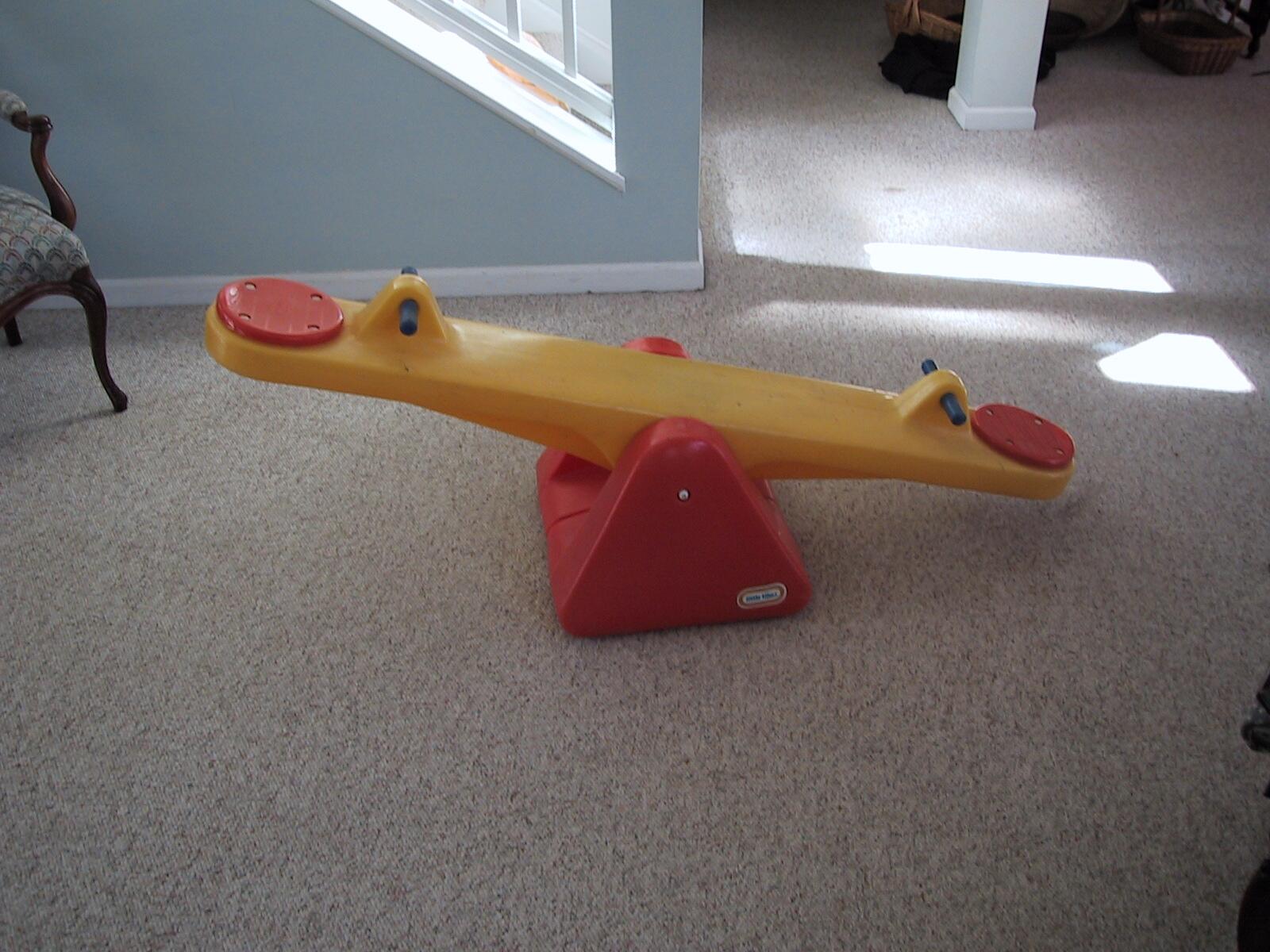
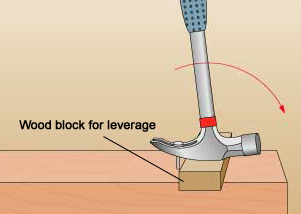
Some modern examples of levers are using a hammer to pull out a nail, using a bottle-opener to open a pop bottle, using a screwdriver to pry the lid off a can of paint, a pair of scissors, using a balance scale to weigh things, and playing on a see-saw (teeter-totter). Can you identify the fulcrum in each of these examples? (Hint: it varies, because there are three different kinds of levers. You can find the answer to the fulcrum question here http://www.historyforkids.org/scienceforkids/physics/machines/lever.htm

Get an old tree stump, a box of nails and a hammer. Put the stump in the back yard and just let them hammer in and remove nails. This is another opportunity to have a familiar conversation about this wonderful science concept. I can tell you that it is a super fun activity!

The earliest remaining writings regarding levers date from the 3rd century BC and were provided by Archimedes. “Give me a place to stand, and I shall move the earth.” is a remark he made. (Quoted by Pappus of Alexandria).  He also formally stated the correct mathematical principle of levers. Put some information on this scientist in your Spark Station. Read to your children during your reading time about what he thought, did and discovered. Pappus was a Greek Mathematician of Alexandria. Add some information about him and introduce your children to some math concepts. Your job is to inspire, to plant seeds. The child’s job is to learn and grow and he/she will, when inspired by great ideas and great people.

Now I understand that this all may seem a bit overwhelming. Let me remind you that I took very little science and math in school, only what was absolutely required. I was afraid of both subjects. What I did take I didn’t do outstandingly well at. However, I can look things up. I can think about them and how they relate to what I do every day. I am learning myself every day. I certainly know more than any 4 year old and most 12 year olds. All a mentor is, is someone who is a step ahead of you and moving in the direction you want to go. You are that for your children. You are the expert in your home. You can sow seeds, build enthusiasm and inspire. I know you can!

Possibly Related Posts:


{ 0 comments }

Teaching Science-Levers

by Mary Ann on June 2, 2010

Whenever the topic of Leadership Education or home school comes up one of the main questions I hear is how to make sure kids get math and science. That is one thing I LOVE about The Spark Station. It is a wonderful tool to introduce math and science projects and information in fun ways without requiring children to do math and science.

Another thing that I LOVE about The Spark Station is that it doesn’t take tons of time to come up with great things to put into it to introduce science and math. You can have games and projects that can even introduce fairly complicated concepts to children as young as four and five.

Today I am going to present something that I happened to see on television the other day that gave me a “spark” of an idea for my Spark Station. I took that “spark” and I spent about thirty minutes on the computer. I found enough material about levers and simple machines to use in my Spark Station for weeks. I want you to see what I found and some of the thoughts that I had on how to use the information in your Spark Station. My desire is that you see how easily you can keep interesting and informative things in your Spark Station if you just get into the habit of watching for “sparks” of inspiration. In fact I found so much information in that short amount of time that I may need two or three blogs to present it all.

What I saw on television was a game which was explained to a group of children and then they made and played with it. The children were all about nine years old. With help younger children could also make and play the game. The game uses leverage. This is the scientific concept that would be taught.

If your child was four you would just make and play the game together. As you played you could mention the words lever and leverage and even name the applicable part as a fulcrum. If they are older then you would really talk about what makes the game work and give more interesting information about levers, leverage, etc. as they built and played. Refer to the blog on “Familiar conversations”. Rather than some type of lecture, you would just have a conversation while helping or watching them engage in this particular project.

Put materials in The Spark Station to make a game using a lever. Take a piece of PVC pipe (about 4-5” diameter) or other material for the fulcrum. Use a flat piece of wood 2 ½ to 3 feet long as the lever. Tape a paper bowl to one end of the lever. Use a tennis ball to launch on the lever.

Use three hula hoops on the grass each marked with a paper sign as to its point value. The point of the game is to launch the tennis ball with the lever so that it lands inside the hula hoop with the most point value. Your children can experiment moving the lever back and forth on the fulcrum until they find the length that will land the ball in the hoop of choice.

So this is what to put into The Spark Station:

A piece of PVC pipe or other item for the fulcrum
A flat board for the lever
Masking or duct tape to secure the bowl to the lever band point placards to the hula hoops
A paper owl
A tennis ball
3 hula hoops
Paper
Markers

The closer the fulcrum is to the object being moved, the easier it will be to move the object – that is, the closer the fulcrum is to the object being moved, the less force is required to move it.

If your children are old enough to read or are at an age where they want to know how something works then add to the above materials something from the internet explaining how a lever works or a book from the library.

Click here for a simple illustration of what makes the game work.

In the next blog I am going to show you some great illustrations that I found on the web and more ideas on how to extend this one idea into other learning experiences.

Possibly Related Posts:


{ 2 comments }

Volcanoes In The Closet

by Mary Ann on June 1, 2010

Recently I shared an email that I received from a very excited mom. She had purchased some dollar items at Target that her kids loved. She saw some insect items and got them for the closet. Her point was that it doesn’t take a lot of money to really inspire children and give them very exciting learning experiences. She is absolutely right about that.I happened to be in the neighbor hood of a family that I coach so I stopped in just to see how their structured family time was going and how the closet was working out. It was going very well. The mom felt some success and the children loved it.

She shared an experience that they had and I want to share it with you. A while back a volcano erupted in Iceland. It has been causing quite a few problems in the world and people are stranded in airports and can’t get home. This mom gathered her children around the computer and showed them pictures of the volcano and they talked about what was happening. They talked about the chunks and crystals of ice that were being blown into the air. They talked about how a volcano could have ice in it. What was it doing to planes and so forth?

A few days later she found a children’s book on Pompeii at a garage sale and bought it and put it into the Closet. Her children were entranced. Imagine an entire city buried in ash. They wanted to know all about it. Later she was telling her mom about their school day only to find out that mother had a book that actually showed pictures of the excavated city and its inhabitants. That found its way into the closet. The children poured over the pictures. I suspect they talked about how scary it was, the fact that the people were not prepared, that they couldn’t run away. (A garage sale and a mother aren’t necessary to carry out this step. The public library will work)

Then some soda and vinegar found its way into the closet and the children had fun making a volcano and watching it erupt. Can you see how one spark, one idea can just keep going on and on.

I might have added all the supplies to make individual emergency bags the next week. I would have talked about being prepared, how our family should be prepared. I might have talked about being prepared in other situations like a fire. We might have agreed to have an “in the middle of the night” fire drill to practice what we should do if there ever was a fire. (My mom used to do that with us) I might have suggested that we pretend that we don’t have electricity for 24 hours and see what that would be like. I did that with my family of nine and it was hoot I can tell you!

The Closet is a great tool to get something really going and then see it mushroom into something else. The more you focus on what is happening around you and what your children are thinking about and like the more ideas you will have. The more you practice this “focus” the more ideas you will have. The time will come when you won’t be able to use all the ides that you have. That is a great place to be!

Possibly Related Posts:


{ 0 comments }